
Global

The Nixon tapes are still in the news! My God, they’re still spewing bile, still making America’s eyeballs roll.
They’re as relevant as ever.
Donald Trump, it turns out, is merely the inner Richard Nixon, live and uncensored. He’s also the inner Ronald Reagan — the inner voice, suddenly made public, of every white male racist who has ever occupied the Oval Office (which is probably most of the occupants).
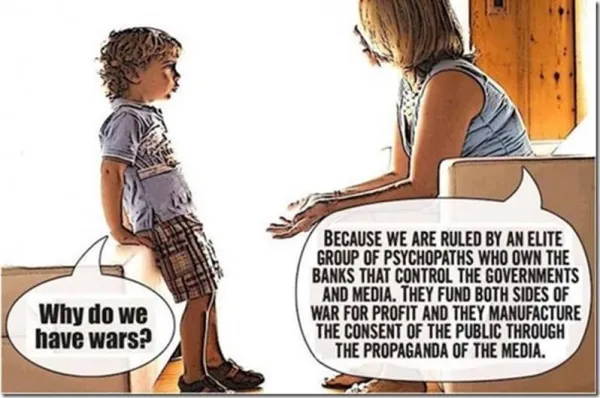
The first casualty of war is truth. The victors in war, who are liars from the beginning, write history.
If any question why we died,
Tell them, because our fathers lied. -Rudyard Kipling
Some journalists in the Jewish media are starting to complain that President Donald Trump is “loving Israel” just a little too much since he keeps citing his concern for the Jewish state as the driving force behind some of his erratic behavior. It is a viewpoint that I most definitely share, though I would describe the apparent White House lovefest with the Israel as a “lot too much.” When the President of the United States calls a congresswoman an anti-Semite and demands that she apologize to him personally and also to Israel it is definitely a lot too much.
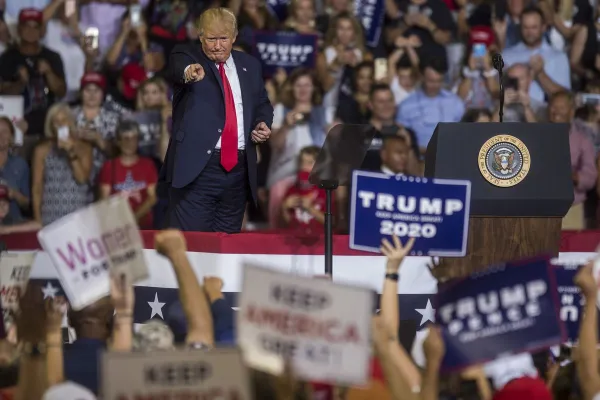
“Send her back! Send her back!”
The chant: Is it merely a case study in collective stupidity or is it a signal of rising fascism? When I look at the viral video — the latest manifestation of Trumpism and the freeing of good old American racism from the constraints of political correctness — I can’t help but think of the 8-year-old girl I met the other day, who traveled two years with her mother to reach this country from the Democratic Republic of the Congo.
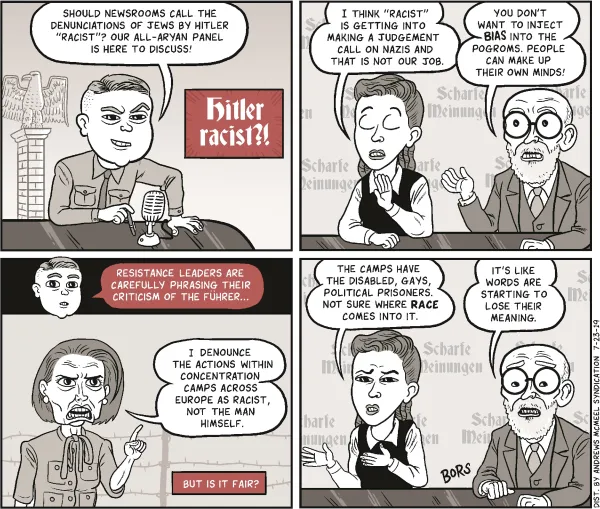
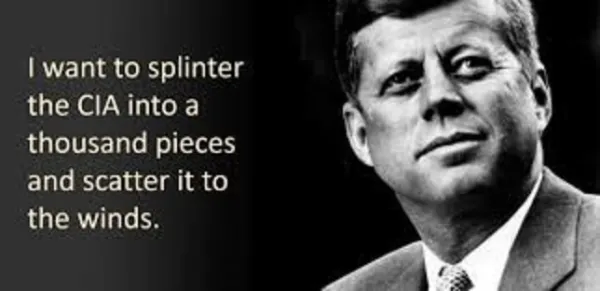
Every government on earth, beginning with the United States, should shut down and be done with secret agencies, spy agencies, agencies used for murder, torture, bribery, election-manipulation, and coups.
While these agencies prevent the public from knowing what is being done in its name, they do not acquire any knowledge that benefits the public and that couldn’t have been acquired openly, lawfully, through simple research, diplomacy, and law-enforcement actions that respect human rights.
While these agencies occasionally succeed in their criminal enterprises on their own terms, those successes always create blowback that does far more damage that the good — if any — accomplished.
The CIA and all of its relatives in the U.S. government and around the world have normalized lying, spying, murdering, torturing, government secrecy, government lawlessness, distrust of foreign governments, distrust of one’s own government, distrust of one’s own qualifications to participate in self-government, and acceptance of perma-war.
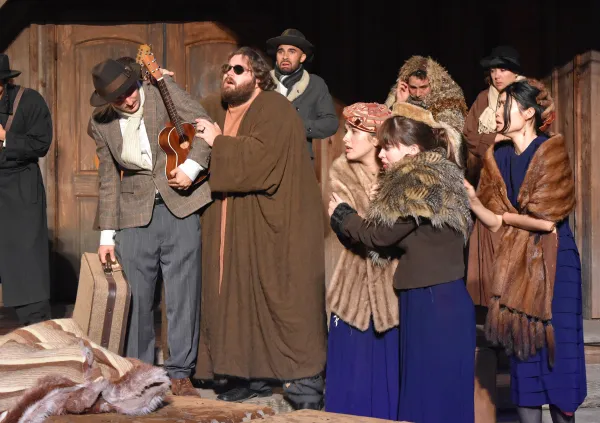
Three-time Pulitzer Prize winner Thornton Wilder’s perplexing play The Skin of Our Teeth is arguably a precursor to the Theatre of the Absurd. It opened on Broadway in 1942 as America entered World War II and Wilder described it as “the history of mankind in a comic strip.” Speaking of strips, the surreal two-acter borrows from Burlesque’s bump-and-grind conventions, and in the production currently on the boards at Will Geer’s Theatricum Botanicum, Willow Geer portrays a buxom, ginger-haired seductress gloriously clad much of the time in a cross between a French maid’s outfit and lingerie. Her character is named Sabina (rhymes with…?), and she alternates between being a housekeeper, beauty queen and warrior, often with great comic panache.
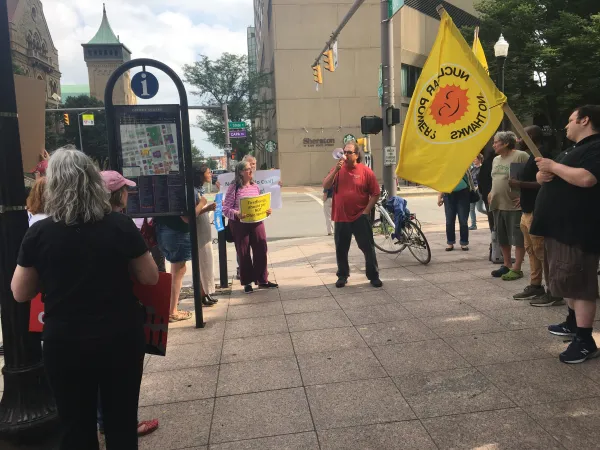
It was supposed to be just another round of pork in Columbus. The nuclear power industry, which was flush with success from winning billions in bailouts from state governments in New York and Illinois was again prepared to play Ohio's government like a fiddle. Ohio had, in the past, ponied over $9 billion in subsidies for such flimsy reasons as "stranded costs" to keep the Davis-Besse and Perry nuclear plants running. This time, though, it's proven to be much more complicated. Fierce opposition from every part of the political spectrum meant a reduced payoff, and even though Governor DeWine signed House Bill 6 (HB6) into law on July 23, the money may never be delivered.

In my town in the United States — as is not especially unusual — we have big memorials in prominent public places marking some of the most catastrophically immoral actions of the past. Unfortunately, all five of these major monuments celebrate and glorify these past horrors, rather than reminding us not to repeat them. The University of Virginia is building a memorial to the enslaved people who built the University of Virginia. So, we will have five celebrations of evil, and one cautionary remembrance thereof.
Two of the five monuments celebrate the genocide of the westward expansion across the continent. Two celebrate the losing and pro-slavery side of the U.S. Civil War. One honors the troops who participated in one of the most devastating, destructive, and murderous assaults on a small part of the earth that humanity has yet produced. In the United States people call it “the Vietnam war.”

The preface below - as well as the choice of some of the photos in the article below is by Duty to Warn columnist Gary G. Kohls, MD (2,137 words)
"Until the latest of our world conflicts, the United States had no armaments industry. American makers of ploughshares could, with time and as required, make swords as well…We have been compelled to create a permanent armaments industry of vast proportions."
"In the councils of government, we must guard against the acquisition of unwarranted influence, whether sought or unsought, by the military-industrial complex. The potential for the disastrous rise of misplaced power exists and will persist." – From the farewell address of President Dwight David Eisenhower – January 17, 1961