
Global
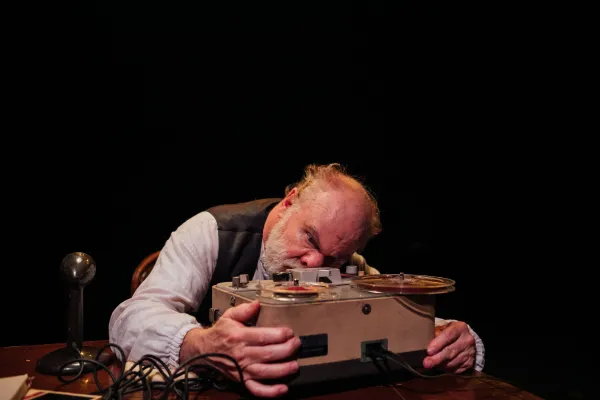
The Actors’ Gang’s One Act Festival includes a show featuring two one-act plays by 20th century maestros of the avant-garde stage. Irish bard Samuel Beckett was a pioneer of the Theatre of the Absurd and best known for his late 1940s masterpiece Waiting for Godot. Written and performed about a decade later, Krapp’s Last Tape is a one-hander starring the ineffable Steven M. Porter, a 30-year stalwart of The Gang.

By Mairead Maguire, Nobel Peace Laureate, Co-Founder, Peace People Northern Ireland, Member of World BEYOND War Advisory Board
Mairead Maguire has requested UK Home Office for permission to visit her friend Julian Assange whom this year she has nominated for the Nobel Peace Prize.
“I want to visit Julian to see he is receiving medical care and to let him know that there are many people around the world who admire him and are grateful for his courage in trying to stop the wars and end the suffering of others,” Maguire said.
“Thursday 11th April, will go down in history as a dark day for the Rights of humanity, when Julian Assange, a brave and good man, was arrested, by British Metropolitan Police, forcibly removed without prior warning, in a style befitting of a war criminal, from the Ecuadorian Embassy, and bundled into a Police Van,” said Maguire.
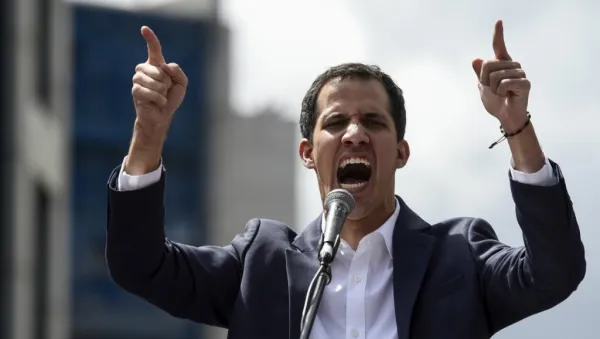
The U.S. government gets little credit for it, doesn’t even like to brag about it, but as of 2017 provided military “aid” to 73% of the world’s dictatorships. Ocassionally, the U.S. turns against one of its dictators and chooses that moment to tell everyone about him: Hussein, Noriega, Gadaffi, Assad. Sometimes it loses a dictator for other reasons: the Shah of Iran, Hosni Mubarak.
Sometimes the U.S. imposes a U.S. dictator on a foreign colony: as historically in the Philippines, or Haiti, Chile, or post-“liberation” Iraq. More often it selects and trains, imposes and props up a dictator from within the population of “natives” or “savages.” And sometimes such a dictator spends many years in the United States preparing and awaiting opportunity.

Last month, Fox News host Jeanine Pirro suggested that Omar's hijab may well mean that she opposed the U.S. Constitution. A few days later, New York resident Patrick Carlineo allegedly phoned Omar’s office and threatened to “put a bullet in her f------ skull.”
Carlineo has been arrested. According to the criminal complaint, he told the FBI that "he was a patriot, that he loves the President, and that he hates radical Muslims in our government."
Please click here to support Rep. Omar’s outspoken courage.
Congresswoman Alexandria Ocasio-Cortez has made the connection between the outlandish media comments and the death threats, tweeting:
"Understand when Jeanine Pirro goes on Fox + rallies people to think hijabs are threatening, it leads to this. Folks who imply we’re ‘bad’ for politics, the party, the country, etc. have no idea the threats we deal w/ because of that kind of language. Talk policy, not personal.”
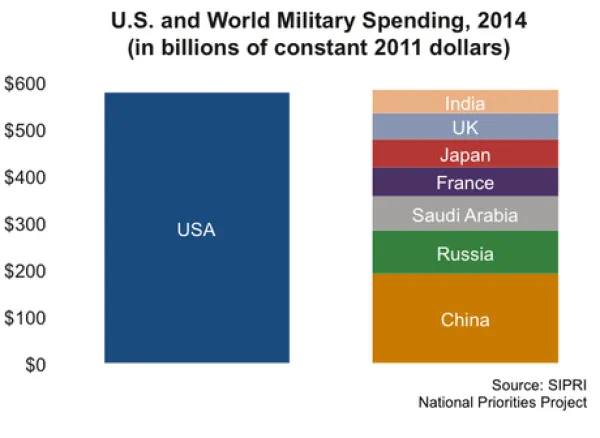
This is an actual headline at Common Dreams: “Progressive Democrats Threaten to Tank $733 Billion in ‘Crazy’ Pentagon Spending If Social Programs Not Also Boosted.”
They keep using that word, “crazy.” I do not think it means what they think it means.
Dumping over $1 trillion per year into the Pentagon plus militarism in other departments eliminates the need for hospitals, schools, parks, and even budget proposals. It kills us all. Our nuclear luck will run out. And if it doesn’t run out soon, the military’s destruction of the climate and our water and air will do us in. While it may be taboo to notice the environmental damage of wars and war preparations, and may be strictly forbidden to become aware of the military budget as the potential source for a serious effort to mitigate the coming environmental collapse, the news is now full of stories of the climate destruction of military bases, which ought to at least make people aware of how many bases there are.
When a wonderful program like Democracy Now does a story on the White Helmets in Syria, the
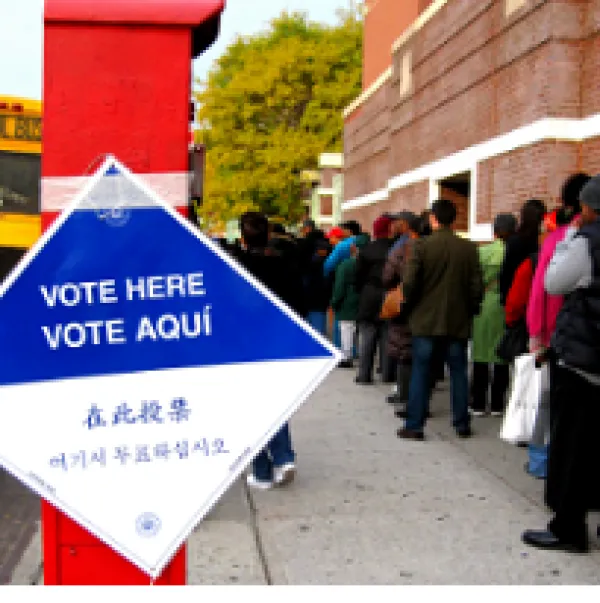
This section shall not prevent any officer or agent of the United States Secret Service from providing armed protective services authorized under section 3056 or pursuant to a Presidential memorandum at any place where a general or special election is held. [emphasis added] – H.R. 2825, section 4012
 he single sentence above, which amends current federal law, would give the president unprecedented authority to send armed Secret Service agents to any US polling place for any reason. The law allows the president to send armed Secret Service agents to every US polling place if he has enough agents.