
Global

What is Politicon?
Politicon is to politics what San Diego’s annual Comic-Con is to comic books and superheroes - a convention geared for news junkies, avid followers of current affairs, talking points and of the talking heads who spew them in the rarefied realm of cable TV, talk radio, ripped-from-the-headlines books, newspapers, magazines, the Internet and beyond. This fourth annual confab has provided Angelenos with another encounter, live and in person, with pundits, commentators, spinmeisters, speechwriters, journalists of the chattering class, etc., who are mostly based in Washington, DeCeit and Manhattan. There weren’t any current candidates or officeholders per se in the various forums, panels, etc. - but rather those who comment upon and cover politicians and politics.

Date: Friday November 9th
Time: 9:00pm
Venue: Skully's Music Diner, 1151 N. High St.
We are transforming one of your favorite venues into Hogwarts and throw a huge dance party!!! Errol the Owl's delivering cheap presale tickets and special ticket options to join the festivities! Reminder wizard fest is 18+ and you have to be 21 to drink the butterbeer!

By the time this column is published in the Duluth Reader and also around the world, the mid-term election of 2018 will be over. So, whether there is a blue wave or not, I have decided to update – and actually shorten (!) - a 2016 column that will make important points that might help make sense for future voters, whether they will feel relieved, triumphant, sad or angry - or not. The electorate still needs to understand what really motivates divisive or tyrannical politicians that have sought power and wealth no matter the era or nation. Please read it carefully.
____________________________________________________________________________
A sociopath is a person whose behavior is antisocial, often criminally greedy, and who lacks a sense of moral responsibility, empathy or social conscience. Sociopaths never sincerely apologize nor are they capable of exhibiting remorse for wrongs that they have committed.
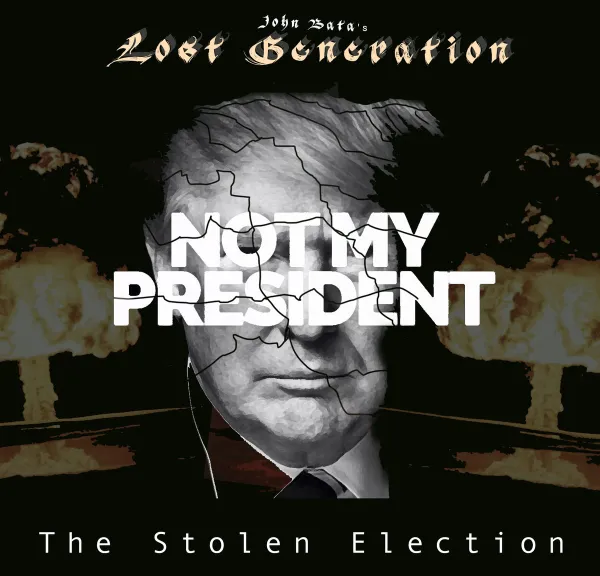
As sure as death & taxes, the Trump Party means to steal today’s election.
From Florida 2000 to Ohio 2004 to Wisconsin/Michigan/Pennsylvania/North Carolina/Florida 2016, we’ve seen it all before. Here are some sure signals:
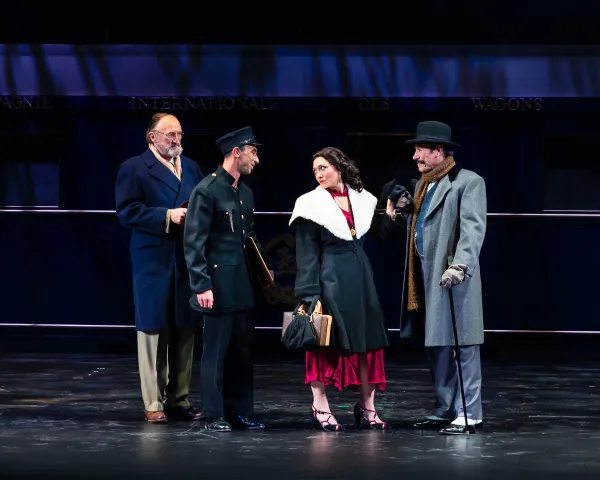
La Mirada Theatre for the Performing Arts’ crowd pleasing production of Agatha Christie’s beloved 1934 Murder on the Orient Express is a highly entertaining combination of murder, mystery, mirth and morality. Stage and screen stalwart Tony Amendola steps into the spats-covered shoes of Christie’s character Hercule Poirot, the quirky Belgian detective previously portrayed by Albert Finney and Kenneth Branagh (sporting the world’s worst mustache) in star-studded 1974 and 2017 movie versions of Christie’s bestseller, and by Alfred Molina and renowned Poirot portrayer David Suchet in 2001 and 2010 TV versions of Orient Express. The iteration currently on the boards is the West Coast premiere of the first stage rendition of Christie’s novel, written by Ken Ludwig (whose comedic Lend Me a Tenor has also been performed at La Mirada’s beautiful venue).

The election will be a moment of truth for the country, and then what?
 erhaps enough Americans in enough numbers in enough places have woken up to the wildfires consuming our country. Perhaps these woke Americans will throw some water on the fires in the November 6 election. Perhaps an emerging American majority will slow the Republican burn of American idealism, decency, and justice. Perhaps an emerging American majority will elect enough new Democrats to prod old Democrats out of their lazy collusion with burning the country down. Perhaps.
Some are inclined to recognize that Trumpies are dwelling in an alternative universe in which neither climate collapse nor nuclear apocalypse is a concern but terrifying wild hoards of Muslim Hondurans are skipping and dancing into the Fatherland armed with gang symbols, deadly rocks, and socialistic tendencies.
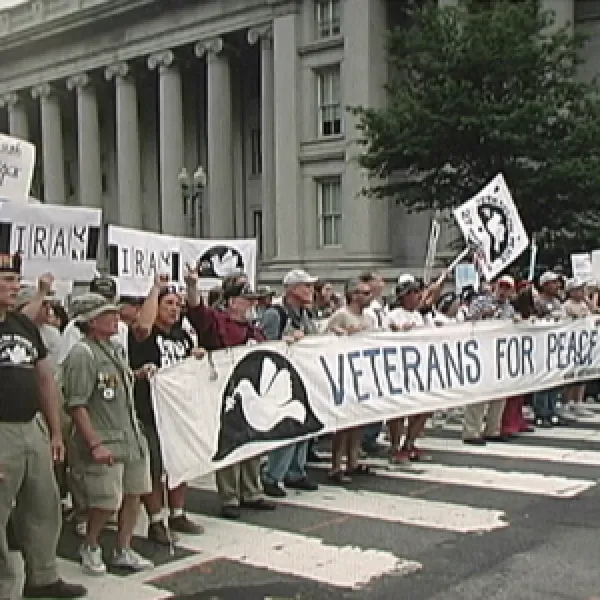
Others are alert to the fact that the so-called “mainstream” — the viewpoint of pro-status-quo, anti-improvement institutions — is also fabricated in a wishful dream factory. As exhibit one, I offer: Veterans Day.
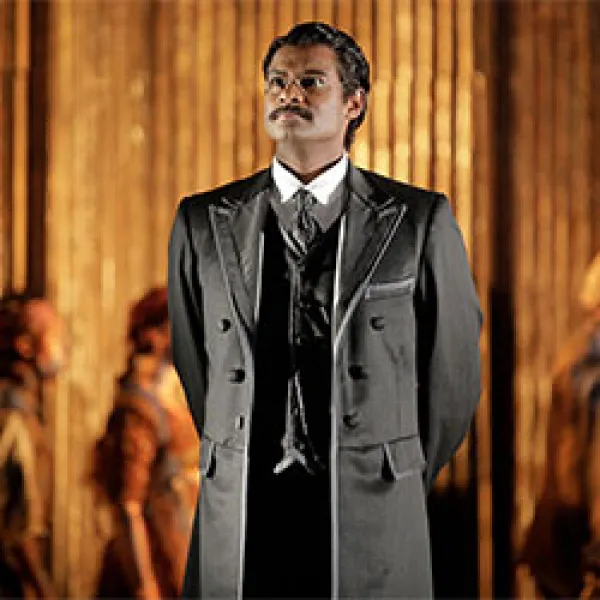
A Bravura, Colossal Opera of Activism
To support his musical habit and pay the bills, for 20 years among other day jobs composer Philip Glass was a cab driver in New York City. But being a hack finally paid off in 1980 as the Glass ceiling was shattered when Satyagraha burst upon the Schouwburg’s stage in Rotterdam, Holland.
There’s a tendency to look down on opera as a centuries’ old art form that’s an outdated medium for old maids, stuffed shirts and all-around fuddy-duddies. But Glass’ revolutionary Satyagraha gives the lie to that clichéd canard. Through mesmerizing music, magisterial stagemanship, surreal scenery, radical politics and more, this three-act, three-hour-plus operatic extravaganza about Mohandas K. Gandhi’s (tenor Sean Panikkar, Pennsylvania-born son of immigrants from Sri Lanka) struggle for social justice is a tour-de-force.
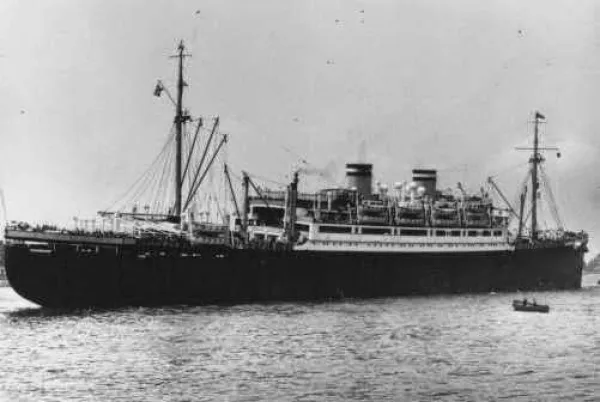
In 1939 the luxury liner St. Louis brought 937 desperate, mostly Jewish refugees to Miami. They were fleeing the Nazi Holocaust. They had already been turned away by Cuba.
Amidst a Red Wave of "nationalist" hate, American "conservatives" screamed that these people were poor, didn't speak English and would take away our precious resources.
So Franklin Roosevelt did not let them into the United States. The ship was sent back to Europe. Nearly every Jew on it perished in Hitler's concentration and death camps.
Throughout Germany, Poland and everywhere else Hitler spread his hate, fascists were marching into synagogues like the Tree of Life in Pittsburgh, gunning down Jews.
Today a caravan of desperate refugees is making its way from central America. They are fleeing a slaughterhouse of fascist murder and violence, as well as desperate poverty imposed by the relentless exploitation of imperial corporations.