
Global

In Moscow earlier this week I mentioned to a Russian friend that racists in my town in Virginia were chanting fascist and confederate slogans plus “Russia is our friend!” He replied: “But we never had slavery; we had serfdom.” He didn’t grasp why Russia was being grouped together with slavery.
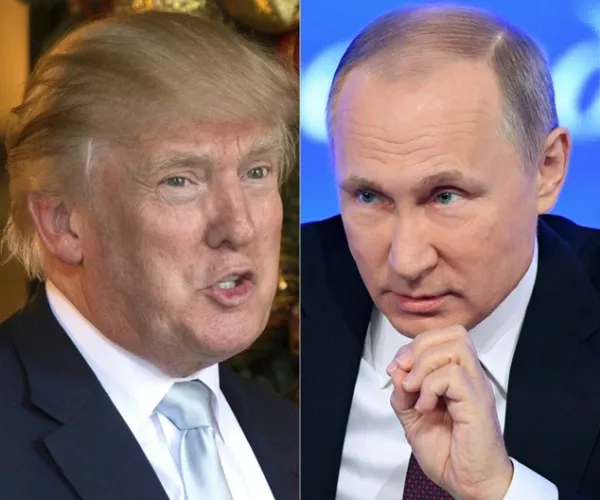
“Trump emphasized the need to work together to end the conflict in Syria” . . . and “emphasized his desire to build a better relationship between the United States and Russia.”
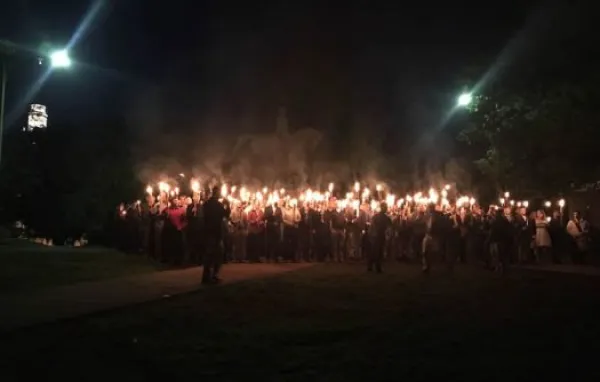
While I’ve been in Russia trying to make friends, back home in Charlottesville, Virginia, USA, a group of torch-bearing supporters of Robert E. Lee has held a rally generally understood as a proclamation of white supremacy.
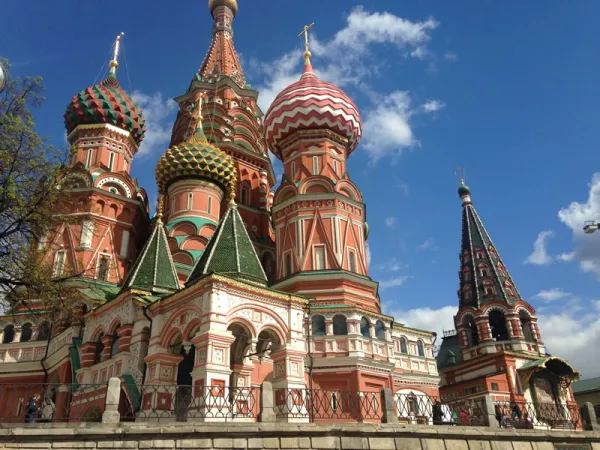
Just back from a week in Moscow, I feel obliged to point out a few things about it.

One inevitable outcome of the phenomenal violence we all suffer as children is that most of us live in a state of delusion throughout our lives. This makes it extraordinarily difficult for accurate information, including vital information about the endangered state of our world and how to respond appropriately, to penetrate the typical human mind.
'Phenomenal violence?' you might ask. 'All of us?' you wonder. Yes, although, tragically, most of this violence goes unrecognised because it is not usually identified as such. For most people, it is a straightforward task to identify the ‘visible’ violence that they have suffered and, perhaps, still suffer. However, virtually no-one is able to identify the profoundly more damaging impact of the 'invisible' and 'utterly invisible' violence that is inflicted on us mercilessly from the day we are born.
So what is this 'invisible' and 'utterly invisible' violence?
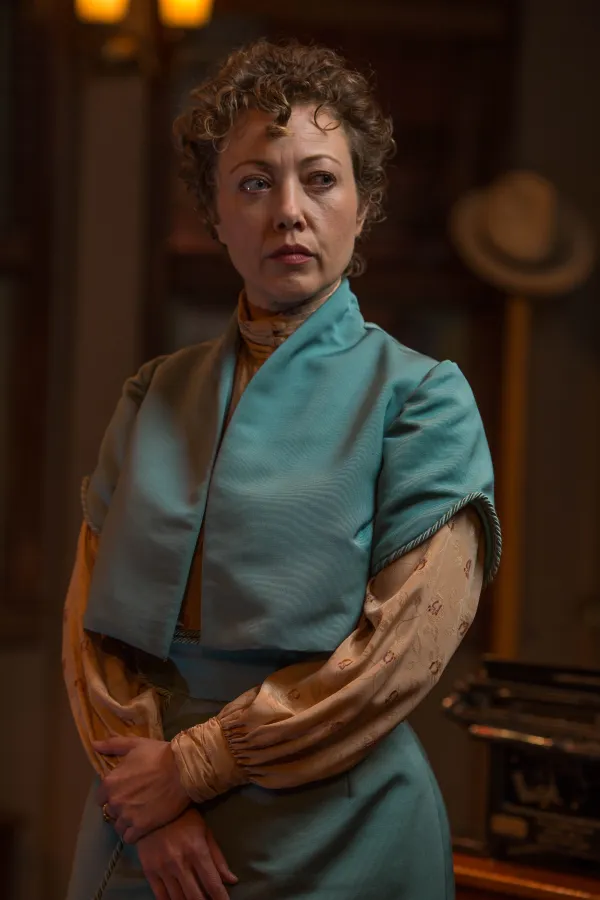
One of the wonderful things about the page, stage and screen is how they can introduce us to historical figures and eras, often long ago and far away. This week is your last chance to spend an evening with W.E.B. Du Bois (Ben Guillory) - or as close as one can get to meeting this Civil Rights giant more than a half century after his death (Roy Wilkens announced Du Bois’ demise during 1963’s famed “March on Washington”). And at its best, witnessing the West Coast premiere of Dr. Du Bois and Miss Ovington in the intimate setting of the Los Angeles Theatre Centre complex’s Theatre 4 is like being in the presence and company of the brilliant (he was the first Black to earn a Ph.D. from Harvard) anti-racist leader (circa 1900 Du Bois and Booker T. Washington were the most prominent African Americans) and author of the 1903 classic The Souls of Black Folk and the pacifist, suffragette and socialist Mary White Ovington (Melanie Cruz, who appeared in productions such as the HBO series Big Love).
Intelligence agencies and senior government officials tend to use a lot of jargon. Laced with acronyms, this language sometimes does not translate very well into journalese when it hits the media.
For example, I experienced a sense of disorientation two weeks ago over the word “sensitive” as used by several senators, Sally Yates, and James Clapper during committee testimony into Russiagate. “Sensitive” has, of course, a number of meanings. But what astonished me was how quickly the media interpreted its use in the hearings to mean that the conversations and emails that apparently were recorded or intercepted involving Trump associates and assorted Russians as “sensitive contacts” meant that they were necessarily inappropriate, dangerous, or even illegal.
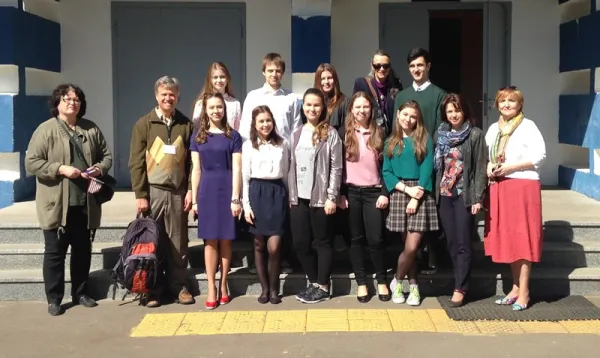
As I was heading off to visit Russia, a friend told me of a friend who knew a Russian school teacher. I asked if I could visit the school, and I brought along a couple of American friends.
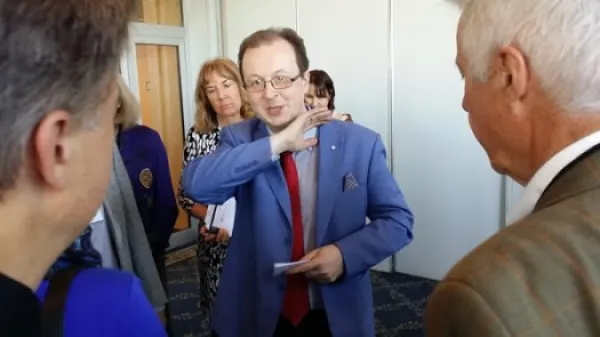
Dmitri Babich has worked as a journalist in Russia since 1989, for newspapers, news agencies, radio, and television. He says that he used to always interview people, while lately people interview him. According to Babich, myths about Russian media, such as that one cannot criticize the president in Russia, can be dispelled simply by visiting Russian news websites and using Google Translator. More newspapers in Russia oppose Putin than support him, Babich says. If Russian news is propaganda, Babich asks, why are people so afraid of it? Was anyone ever afraid of Brezhnev’s propaganda? (One might reply that it wasn’t available on the internet or television.) In Babich’s view the threat of Russian news lies in its accuracy, not in its falsehood. In the 1930s, he says, French and British media, in good “objective” style, suggested that Hitler wasn’t anything much to worry about. But the Soviet media had Hitler right. (On Stalin perhaps not so much.) Today, Babich suggests, people are making the same mistake that the British and French media made back then, failing to appropriately stand up to a dangerous ideology. What ideology? That of neoliberal militarism.

I’ve been in Moscow some days now and have yet to meet an oligarch (although perhaps they don’t identify themselves). I have met an entrepreneur named Andrei Davidovich.