
Global
Five years ago, the British Parliament said no to an attack on Syria that its prime minister wanted to join the U.S. president in launching. That action, combined with public pressure, was instrumental in getting the U.S. Congress to make clear that it would say no as well, were it absolutely forced to — you know — admit it existed and do anything at all. And that was key to preventing the attack.
So, when Britain’s prime minister this week joined the U.S. president in launching a war despite various members of Parliament and Congress warning against it, one might have thought that Prime Minister May was landing herself in deeper legal trouble than President Trump. Not at all.
The ban on war found in the United Nations Charter and the Kellogg-Briand Pact applies exactly equally to all nations except the five biggest weapons dealers and war makers on earth, and effectively not at all to any of those five because thay have veto power over anything the UN or its dependencies — including courts — attempt to do.
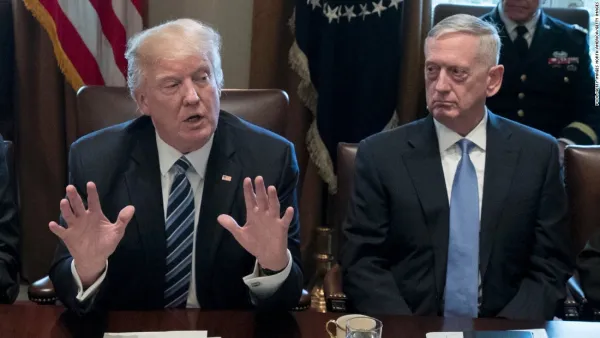
There is a vast industry in the United States that wants a hot war with Syria and Iran as well as increased confrontation with Russia and China. It is appropriate to refer to it as an industry because it has many components and is largely driven by money, much of which itself comes from Wall Street and major corporations that profit from war related business. Some prefer to refer to this monster as the Military Industrial Complex, but since that phrase was coined by President Dwight D. Eisenhower in 1961, it has grown enormously, developing a political dimension that includes a majority of congressmen who are addicted to receiving a tithe from the profits from the war economy to finance their own campaigns, permitting them to stay in office indefinitely and retire comfortably to a lobbying position or corporate directorship.

When history is looked at in its complexity, it plays havoc with the present moment.
“This wasn’t done by the Klan, or people who had to wear a mask. This was done by teachers and clergy and law enforcement officers.”
This is Bryan Stevenson of the Equal Justice Initiative, talking to Oprah Winfrey on “60 Minutes” last week about the lynching 80 years ago of Wes Johnson, in an Alabama cotton field. It was one of multi-thousands of lynchings in the South and across the country in the wake of the Civil War — lynchings meant both as acts of terror to African-American communities and acts of public celebration and patriotism, with children present, dressed in their Sunday best. The lynchings were often commemorated as postcards . . . souvenirs.
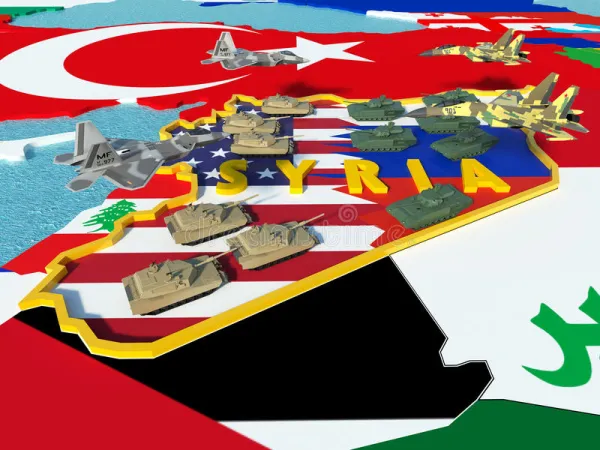
Politicians, pundits and activists who’ve routinely denounced President Trump as a tool of Vladimir Putin can now mull over a major indicator of their cumulative impacts. The U.S.-led missile attack on Syria before dawn Saturday is the latest benchmark for gauging the effects of continually baiting Trump as a puppet of Russia’s president.

Ludwig van Beethoven’s “Symphony No. 9 in D Minor, Opus 125”, aka the “Ode to Joy” or “Choral”, has long been my favorite piece of music. But oddly enough, your itinerant critic had never actually heard it performed live in his entire life - that is, not until fate corralled me and I attended Tucson Symphony Orchestra’s season finale on April 8. But after I heard Ludwig van’s final symphony performed live way down yonder at Tucson Music Hall, would I feel the same way about the fabled “Ninth”?
Before the TSO performed Beethoven’s immortal masterwork, which had premiered in 1824 at Vienna, the Arizona orchestra opened the matinee with another thought-provoking, powerful work by a different musical giant. If Ludwig van’s piece de resistance is a homage to happiness, John Adams’ elegiac “On the Transmigration of Souls” is a paean to pity, tragedy and grief. One of the 20th and 21st centuries’ greatest classical composers, the 1947-born Adams is one of contemporary classical music’s top composers - and no stranger to controversy, often creating operas and other works about touchy topical topics.
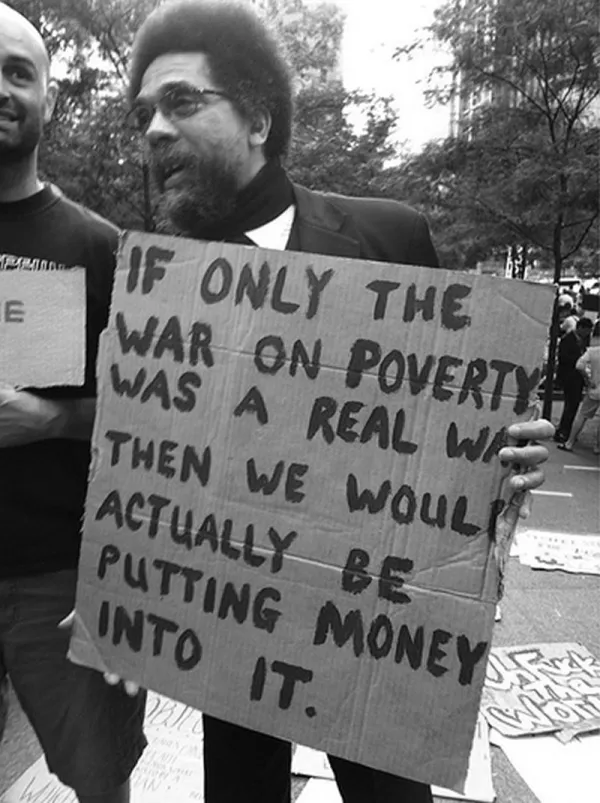
Movements that are serious about human survival, economic justice, environmental protection, the creation of a good society, or all of the above, address the problem of militarism. Movements that claim to be comprehensive yet run screaming from any mention of the problem of war are not serious.
Toward the not-serious end of the spectrum sit most activist efforts devoted to political parties in a corrupt political system. The Women’s March, the Climate March (which we had to work very hard to squeeze the slightest mention of peace out of), and the March for Our Lives are not especially serious. While the March for Our Lives is a single-issue “march,” its issue is gun violence, and its leaders promote military and police violence while shunning any recognition of the fact that the U.S. Army trained their classmate to kill.
It’s certainly encouraging that some “Indivisible” groups have been opposing Trump’s latest disastrous nominations in part on anti-militarist grounds. But one should hesitate to look to partisan groups for a revaluation of moral values.
Compiled from the [non-Big Pharma/Big Vaccine/Big Medicine-controlled medical literature by Gary G. Kohls, MD - (6,376 Words)
“The sad truth is that is that there is a lot of money to be made (in vaccines);
“So-called (pro-vaccine, and therefore tainted) ‘scientific’ papers have provided cover to continue promoting vaccines; the lawyers have all had their say; the (Big PharmaBig Vaccine/Big Medicine) profit machine rolls along; and there is simply no line item on the balance sheet for ‘children harmed’.
“Good people are unwittingly part of this setup because they’ve all been led to (falsely) believe that vaccines are responsible for our freedom from childhood diseases, and
“The PR industry, undoubtedly paid by the pharmaceutical industry and probably from our tax dollars as well, is happy to promote the illusion that if not for vaccines, we’d all be dropping like flies. No one wants to rain on this parade.
In the park today I saw a teenager watching two little kids, one of whom apparently stole a piece of candy from the other. The teenager rushed up to the two of them, reprimanded one of them, and stole both of their bicycles. I felt like it was my turn to step in at that point, and I confronted the bicycle thief. “Excuse me,” I said, “what makes you think you can commit a larger crime just because you witnessed a smaller one? Who do you think you are?” He stared at me for a while, and replied: “the U.S. military.”
There is no crime larger than war. There is no way to legalize it. The Kellogg-Briand Pact bans it, and the United Nations Charter bans it with narrow exceptions that have not remotely been met by any of the U.S. wars of the past 17 years. A small crime cannot justify a larger one. In 2002-2003 Iraq could have had all the weapons the warmongers were lying about. Or it could have not had them. It didn’t make the slightest difference legally, morally, or otherwise in justifying a war.

At least since the time of Marcus Tullius Cicero in the late Roman Republic everyone has certainly understood that politicians lie all the time. To be sure, President Donald Trump has been exceptional in that he has followed through on some of the promises he made in his campaign, insisting periodically that he has to do what he said he would do. Unfortunately, those choices he has made to demonstrate his accountability to his supporters have been terrible, including moving the U.S. Embassy in Israel from Tel Aviv to Jerusalem, threatening to end the Iran nuclear agreement and building a wall along the Mexican border. Following through on some other pledges has been less consistent. He has increased U.S. military engagement in Afghanistan and turned the war over to the generals while also faltering in his promise to improve relations with Russia. The potential breakthrough offered by promising exchanges during phone calls to Vladimir Putin have been negated by subsequent threats, sanctions and expulsions to satisfy hysterical congressmen and the media.
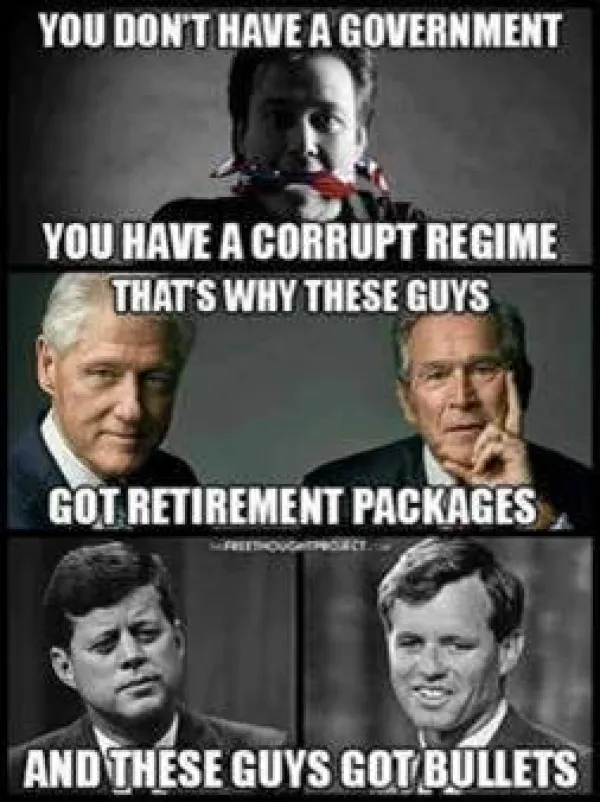
The CIA owns everyone of any significance in the major media…We’ll know our disinformation program is complete when everything the American people believe is false.” – William Colby, Ronald Reagan’s Director of the CIA (1981)
“You can fool all the people some of the time, and some of the people all the time, but you cannot fool all the people all the time.” -- Abraham Lincoln
"Behind the ostensible government sits enthroned an invisible government owing no allegiance and acknowledging no responsibility to the people. To destroy this invisible government, to befoul the unholy alliance between corrupt business and corrupt politics is the first task of the statesmanship of the day." -- Theodore Roosevelt, (1906)