
Global

BANGKOK, Thailand -- When U.S. Ambassador to Thailand Glyn T. Davies
recently asked Bangkok's coup-installed military government to support
international sanctions against North Korea, he reflected concerns by
analysts that Pyongyang could build nuclear and other weapons with
dual-use imports and profits from exports.
"As a leader of ASEAN (the Association of Southeast Asian Nations),
Thailand has an important role to play in the broad effort to signal
to North Korea it will be isolated if it does not suspend its weapons
programs and return to talks on the basis of a verifiable commitment
to denuclearize," Mr. Davies said.
"Cutting off the financial lifelines that enable North Korea's
proscribed programs," is vital, the ambassador said.
When asked what, if any, businesses in Thailand enable Pyongyang's
prohibited programs, U.S. Embassy Spokeswoman Melissa Sweeney replied:
"The ambassador's op-ed speaks for itself."
The envoy's 827-word statement was published on the Bangkok Post's

The Nebraska Democratic Party removed a party official from his post Thursday after he was recorded saying he was glad U.S. Rep. Steve Scalise got shot and that he wished the Louisiana Republican had died. – Associated Press report, N.Y. Times, June 22, 2017

Any truthful way to say it will sound worse than ghastly: We live in a world where one person could decide to begin a nuclear war -- quickly killing several hundred million people and condemning vast numbers of others to slower painful deaths.
Given the macabre insanity of this ongoing situation, most people don’t like to talk about it or even think about it. In that zone of denial, U.S. news media keep detouring around a crucial reality: No matter what you think of Donald Trump or Vladimir Putin, they hold the whole world in their hands with a nuclear button.
If the presidents of the United States and Russia spiral into escalating conflicts between the two countries, the world is much more likely to blow up. Yet many American critics of Trump have gotten into baiting him as Putin’s flunky while goading him to prove otherwise. A new barrage of that baiting and goading is now about to begin -- taking aim at any wisps of possible détente -- in connection with the announced meeting between Trump and Putin at the G-20 summit in Germany at the end of this week.

This year, sit back with your favorite beverage or herb, prop up your feet and open your head to consider Independence Day in a whole new way.
A historically critical article about the American Revolution would typically discuss how the democratic promises of the Declaration were left hanging at war’s end, followed by a decidedly undemocratic constitution six years later.
Examples of that would include abandoning ideals stated in the Declaration like: “all men (sic) are created equal” and have unassailable rights to “life, liberty and the pursuit of happiness.” It could cite that:
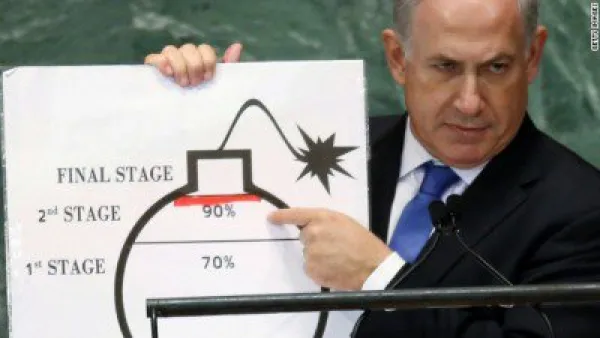
Those of us who are highly critical of Israel’s ability to manipulate U.S. foreign policy frequently note how sites that permit comments on our articles are almost immediately inundated with hostile postings that are remarkably similar in both tone and substance. Given that it is unlikely that large numbers of visitors to the sites read the offending piece more-or-less simultaneously, react similarly to its content, and then go on to express their disgust in very similar language, many of us have come to the conclusion that the Israeli government or some of the groups dedicated to advancing Israeli interests turn loose supporters who are dedicated to combating and refuting anything and everything that casts Israel in a negative light.

Wisconsin Coalition to Ground the Drones and End the Wars has held monthly vigils against drones at the gates of Volk Field for over five years. This Wisconsin Air National Guard Base is a critical component of the whole drone warfare program being conducted by the US government in a number of countries in the Middle East and Africa. At Volk Field personnel are trained to operate the RQ-7 Shadow Drone, which has been used for reconnaissance, surveillance, and target acquisition. However, now there is the likelihood that the RQ-7 is also weaponized.

How devastating would the Republican health care legislation be if enacted?
Leighton Ku, a leading health care expert and director of director of the Center for Health Policy Research at the Milken Institute School of Public Health at George Washington University, told NBC that, based on the Republican House bill, cuts in funding for Medicaid and health subsidies would trigger “sharp job losses and a broad disruption of state economies.”
“Within a decade, almost a million fewer people would have jobs,” he added. “The downturn would hit the states that expanded Medicaid the hardest.” That includes West Virginia, Ohio and Pennsylvania.
This job loss wouldn’t be offset by the effects of top-end tax cuts. If the wealthy do create any jobs — which is far from likely — they won’t be located in the states and communities ravaged by the cutbacks in hospitals, clinics and nursing homes.

The Persian Gulf nation of Qatar has been held in a weird kind of hostage situation since June 5. That’s when Saudi Arabia, the United Arab Emirates (UAE), and a few other countries decided to try to isolate and manipulate Qatar by cutting diplomatic relations and imposing an embargo and something of a blockade. A blockade is, by definition, an act of war, but the blockaders didn’t actually declare war, or send troops, or even make a clear statement of casus belli at the time. Qatar has long been a scapegoat for hardliners devoted to regional stability on their own terms only.
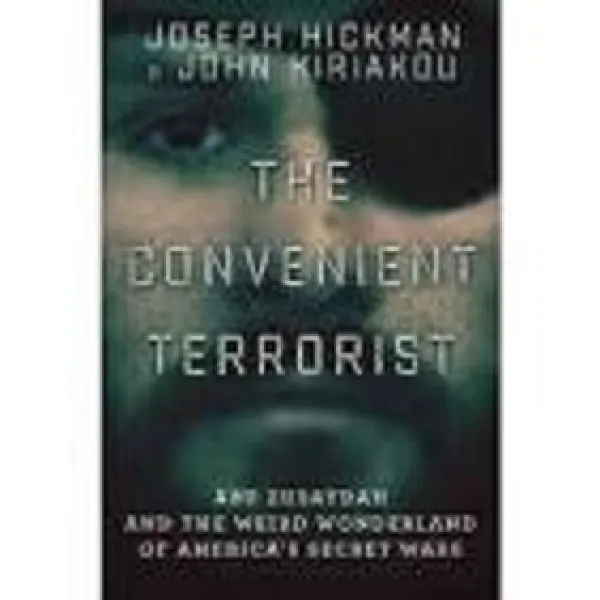
John Kiriakou led the CIA operation that arrested, or rather, kidnapped without charge, Abu Zubaydah. Joseph Hickman helped imprison Abu Zubaydah as a guard at Guantanamo and was later the lead researcher for Zubaydah’s habeas defense team.
Here are some highlights of a tale of crackpot criminality recounted by Hickman and Kiriakou in their jointly authored new book, The Convenient Terrorist:
Maher Abu Zubayda and Zain Abidin Mohammed Husain aka Abu Zubaydah are two completely different people. They and many other people use the name Abu Zubayda, with various spellings in English transliterations from Arabic. The Zubaydah family was evicted from a Palestinian village during the Nakba. The CIA, employing more torturers than Arab speakers, confused the two Zubaydahs. When the basic facts that the CIA had about the life of the man it imprisoned and tortured turned out to all be wrong, the CIA paid no attention.