
Global

Eric Blau and Mort Shuman’s 1968 Off-Broadway hit Jacques Brel is Alive and Well and Living in Paris is now alive and kicking in L.A. at the Odyssey Theatre. The current show consists of four gifted singers/ dancers/actors -Miyuki Miyagi, Susan Kohler, Marc Francoeur and Michael Yapujian - performing on a bare set about two dozen numbers originally created by Belgian singer/songwriter par excellence, Jacques Brel. The quartet is backed by musicians playing bass, percussion, keyboard and guitar.
Brel composed the music and wrote the lyrics for his chansons, most of which he also performed live in cafes, cabarets, concert halls, on albums, films and TV, although other top talents also covered his oeuvre - Ray Charles, Judy Collins, John Denver, Nina Simone, David Bowie, Andy Williams, Johnny Mathis, Leonard Cohen and Ol’ Blue Eyes himself, Frank Sinatra. Chanson is a lyric driven type of French song that has its origins in the Middle Ages, although the 1929 Brussels-born Brel gave this musical genre his own unique twist.
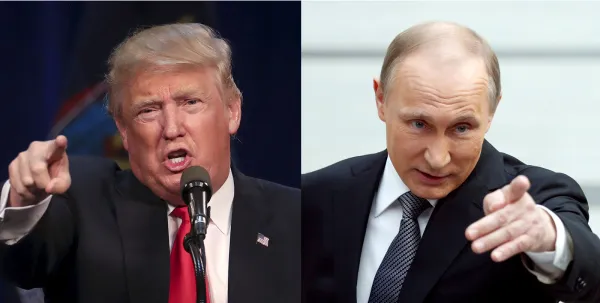
Some leading Democrats in Congress are eager to turn the summit meeting between Donald Trump and Vladimir Putin away from avenues for improvements in U.S.-Russian relations, even if that means deflecting it toward World War III.
On Wednesday, the New York Times reported that “the White House announced that the meeting with Mr. Putin would be a formal bilateral discussion, rather than a quick pull-aside at the economic summit meeting that some had expected.” Meanwhile, Senate Democratic leader Chuck Schumer criticized the lack of a “specific agenda” for the Trump-Putin discussion and tweeted “the first few things that come to my mind” -- with 10 items denouncing Russia and not a single step to help avert a nuclear war between that country and the United States.

Last Thursday the U.S. House Appropriations Committee unanimously passed an amendment that would — if passed by the full Congress — repeal, after an 8-month delay, the Authorization for the Use of Military Force (AUMF) passed by Congress just after September 11, 2001, and used as a justification for wars ever since.
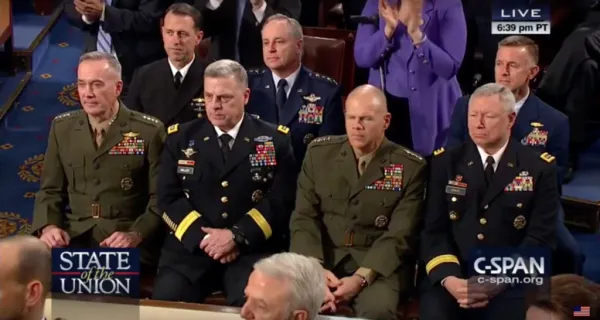
Something peculiar happens to American presidents after they take office on January 20.
Campaign promises to right the easily perceived misdirections in foreign policy are abandoned, and the new program for dealing with the rest of the world winds up looking very much like the old one. Bill Clinton was an anti-Vietnam War draft dodger who preached the moral high ground for going to war before he turned around and got involved in the Balkans while also bombing Sudan and Afghanistan. George W. Bush promised non-interference and no nation-building overseas, but 9/11 converted him into an exemplar of how to do everything wrong as he sank into the quagmires of Iraq and Afghanistan.
In 1932, Sigmund Freud and Albert Einstein conducted a correspondence
subsequently published under the title ‘Why War?’ See ‘Why War: Einstein
and Freud’s Little-Known Correspondence on Violence, Peace, and Human
Nature’.
https://www.transcend.org/tms/2015/04/why-war-einstein-and-freuds-little-known-correspondence-on-violence-peace-and-human-nature/

So, fair disclosure: Transformers is my primary fandom, and it has been since before Michael Bay got involved. That means I have Opinions. Yes, capital-O ones.
Two years ago, I wrote that the fourth movie in the series, Age of Extinction, was as soulless as its (literally soulless) villain Galvatron. It had all the flaws of the movies before it – a meandering, nonsensical plot, female characters who served as little more than eye candy and plot devices, and action setpieces that drew on to the point of making bombastic battles between factions of giant alien robots genuinely boring – then added on some heavy-handed pandering to the growing Chinese box office up to and including Chinese products placed where Chinese products ought not be (like the Texan main character’s Chinese ATM card).
It felt bland and cynical and exhausting.
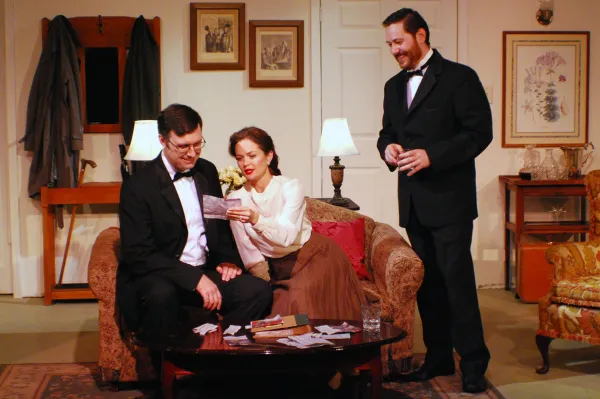
Group Rep’s production of Frederick Knott’s Dial ‘M’ for Murder is an old-fashioned, veddy British mystery. Many theatergoers will consider this murder most foul play to be deliciously enjoyable. But in a day and age of androids and iPhones, et al, which are not dialed, other viewers may find this two hour-long three act play with two intermissions to be outdated and that the actors trod very creaky boards indeed at North Hollywood’s Lonny Chapman Theatre.
[PLOT SPOILER ALERTS!] The complex story unspools in the living room of the London apartment of retired tennis pro Tony Wendice (British actor Adam Jonas Segaller who is appropriately snide and snarky) and his adulterous wife Margot (Australian actress Carrie Schroeder). They are visited by American crime writer Max Halliday (Justin Waggle), with whom posh Margot had an affair. Unbeknownst to the secretive lovers, Tony has found out all about their sordid sextracurricular activities, and he hires a sketchy former classmate, Captain Lesgate (Michael Robb), to liquidate unsuspecting Margot.
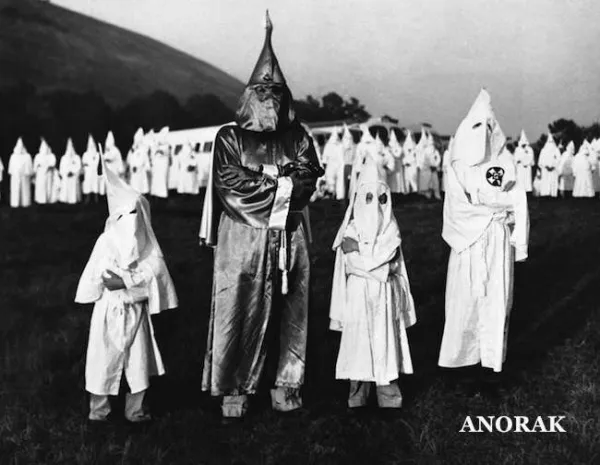
When a small number of heavily armed Ku Klux Klanners from North Carolina are given vast amounts of media attention for holding a rally here in Charlottesville, Va., on July 8th, I believe people opposed to violence and racism should go nowhere near them but in no way ignore them.

http://warisacrime.org/2017/06/28/global-warming-in-a-nutshell/
Last week the 29th anniversary of James Hansen’s historic appearance before the U.S. Senate’s Committee on Health & Natural Resources passed by virtually unnoticed. Hansen, a climate scientist with NASA’s Goddard Institute of Space Studies, testified back on June 23, 1988, that “Global warming has reached a level such that we can ascribe with a high degree of confidence a cause and effect relationship between the greenhouse effect and observed warming.”
Hansen added, ”It is already happening now.’’