Global
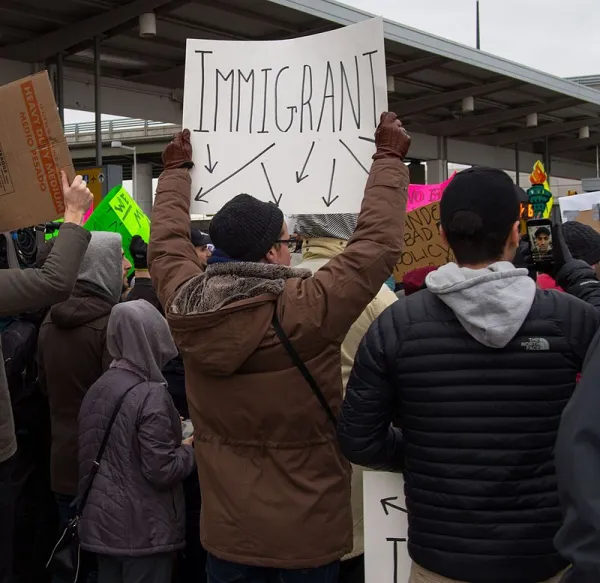
The protest comes in response to President Donald Trump and his 1-month-old administration. The Republican president has pledged to increase deportation of immigrants living in the country illegally, build a wall along the Mexican border, and ban people from certain majority-Muslim countries from coming into the U.S. He also has blamed high unemployment on immigration.
A day without immigrants across the US
List of cities and businesses participating
Restaurants Will Test If The U.S. Can Stomach ‘A Day Without Immigrants’They’re closing their doors in solidarity with many of their employees.
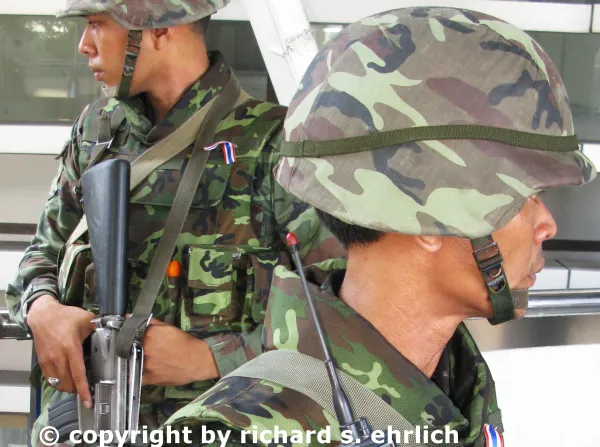
BANGKOK, Thailand -- President Donald Trump may strengthen
Washington's support for Bangkok's military government after sending
the head of the U.S. Pacific Command to open a 10-day Cobra Gold
military exercise on Valentine's Day, the highest-level officer to
arrive since Thailand's 2014 coup.
But Mr. Trump's silence on U.S.-Thailand relations has analysts
wondering if he will follow through, or risk allowing Bangkok to drift
closer to Beijing.
The Trump administration's focus in the Asia-Pacific region
includes Beijing's territorial claims in the South China Sea, Taiwan's
separate status from China, North Korea's nuclear ambitions, and the
spread of Islamic terrorism.
"A Trump administration, less concerned with issues of human
rights, could see a return to full American engagement, but at this
point, Trump's approach to Asia is unclear and contradictory at best,"
former Canadian ambassador to Thailand Phil Calvert said on February 7
in "A Diplomat's Assessment" published by the Canadian International
Council.

 s the nightmare reality of Donald Trump sinks in, we need to put our resistance in a larger perspective.
There’s no need here to list what he is doing and is prepared to do to what remains of our rights, freedoms, economy, ecology, human dignity, sense of justice, the future of our children and much, much more. Donald Trump appears at this point to be our worst national nightmare.
For many of us, it will be the challenge of a lifetime to solve this problem. Millions of words will be written about it in the months to come.
But we might start by comparing him to the kinds of leaders our nation has forced on other countries, and by making some kind of amends. Trump is, in fact, our own imperial vulture come home to roost.
Indeed, he’s actually (so far) a moderate compared to scores of murderous dictators the US has installed in other countries throughout the world. Especially since World War II, our imperial apparatus has constantly subverted legitimate attempts by good people to elect decent leaders.
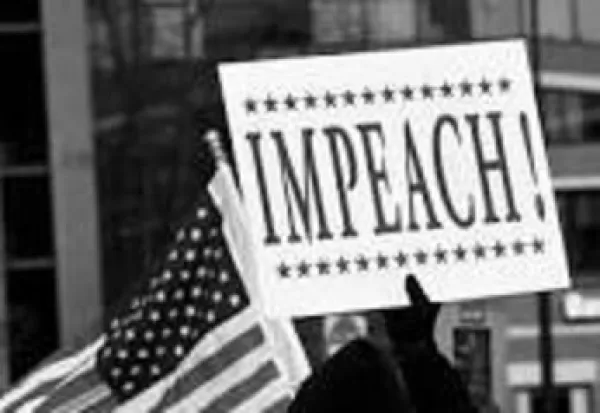
The momentum to impeach President Trump is accelerating.
On Thursday, Congressman Jerrold Nadler (D-NY) filed a “resolution of inquiry” that amounts to the first legislative step toward impeachment.
A new poll shows that registered voters are evenly split, at 46-to-46 percent, on whether they “support” or “oppose” impeaching Trump. Just two weeks ago, the pro-impeachment figure was 35 percent.
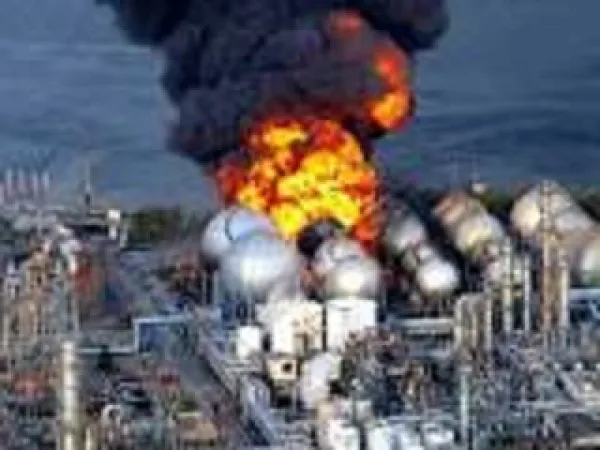
fter a week of limited coverage of “unimaginable levels” of radiation inside the remains of collapsed Unit 2 at Fukushima (see below), Nuclear-News.net reported February 11 that radiation levels are actually significantly higher than “unimaginable.”
Continuous, intense radiation, at 530 sieverts an hour (4 sieverts is a lethal level), was widely reported in early February 2017 – as if this were a new phenomenon. It’s not. Three reactors at Fukushima melted down during the earthquake-tsunami disaster on March 3, 2011, and the meltdowns never stopped. Radiation levels have been out of control ever since. As Fairewinds Energy Education noted in an email February 10:


The solution to the presidency of Donald J. Trump is simple, if those of us who are decent, caring and responsible human beings will stand together and act as one. In opposition to every Trump legislative proposal passed into law by his Republican lapdogs in Congress, we will not offer lengthy and detailed complaints. Talk is not only cheap but it is often worthless, and it is always impotent when exchanged with someone not prepared to even listen to the thoughts of others. As reply to all probably illegal and certainly immoral executive orders signed by this septuagenarian toddler, we will never explain our opposition. Those who understand the deadly and worldwide threats presented by this man don’t need explanations, and for those who do not or will not understand, no explanation would suffice to change a single mind. All Americans who value not only their only lives but the very existence of America as a compassionate democracy and not a totalitarian state must respond with just one word, which we will repeat a thousand times if necessary. And we must be prepared to back up that single syllable utterance with the totality and unity of our actions.