
Global

On November 21st, California secessionists calling themselves “Yes California” filed papers with the California Secretary of State proposing a November 2018 ballot measure that would ask registered voters whether California should secede from the US and become its own nation. If passed, the measure would strike language from California’s constitution that says the state is “an inseparable part of the United States of America, and the United States Constitution is the supreme law of the land.” It would also require a special election in March 2019 for the sole purpose of asking voters whether they’re really sure they want to secede. The measure has been dubbed Calexit after Brexit, which is shorthand for Britain’s vote to withdraw from the European Union.
 rump’s screaming tweet, complete with all caps in the original, captures the essence of this president’s bald move to take total power over the United States. When he says “the security of our nation is at stake,” he refers demagogically to the imaginary threat of terrorists from seven countries. He is right to say “the security of our nation is at stake,” but not at all in the way he means – the security of our nation is profoundly at stake in this case because, if he wins, then presidential orders will become dictatorial decrees beyond the reach of the courts. Our constitutional crisis continues.
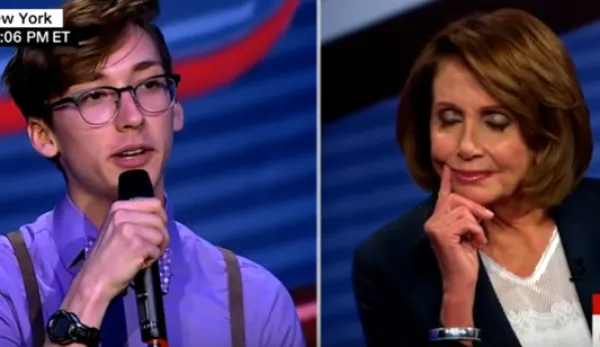
First of all, this article is not an attack on the young progressives who have made it their mission to take over the Democratic Party and move it to the left. They have created a cause for themselves, a cause they are working for with passion and determination. For that they deserve to be commended. This is written to show why they have such a monumental challenge ahead.
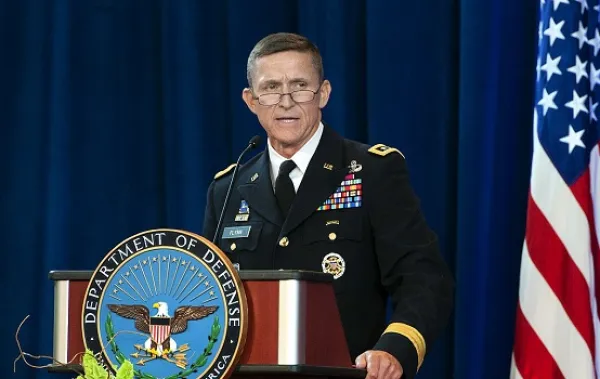
The United States is adding new sanctions on Iran over that country’s alleged misdeeds, and nearly all of those allegations are either out-and-out lies or half-truths. It has a familiar ring to it, as demonizing Tehran has been rather more the norm than not since 1979, a phenomenon that has included fabricated claims that the Iranians killed American soldiers after the U.S.’s armed interventions in Afghanistan and Iraq. This time around, the administration focused on the perfectly legal Iranian test of a non-nuclear-capable, medium-range ballistic missile and the reported attack on what was initially claimed to be a U.S. warship by allegedly Iranian-backed Yemeni Houthi fighters. The ship was later revealed to be a Saudi frigate.

“Lot of killers. We’ve got a lot of killers. Boy, you think our country’s so innocent? You think our country’s so innocent?”
We have carnage and we have irony.
The speaker is the president, of course. It’s Super Bowl Sunday and here he is, generating another eyeball-popping headline as he dares to compare American collateral damage over the years with (as a chorus of shocked critics exclaimed) Vladimir Putin’s remorseless homicides. This happened during a pre-Super Bowl interview with Bill O’Reilly last Sunday, after O’Reilly had challenged Trump’s coziness with Russia and called Putin a killer.
he levels of duplicity in the opening paragraph of this White House statement are impressive. Acting Attorney General Sally Yates was appointed to that position at the request of the Trump administration, for the express purpose of serving only until the confirmation of the Trump appointee for Attorney General.
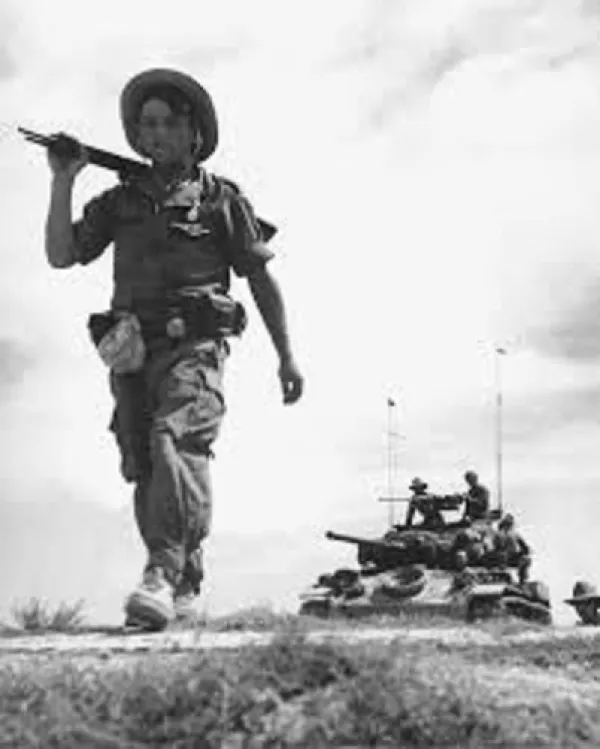
When it comes to understanding wars, for some people, a picture of the dead or of the injured or of the traumatized or of those made refugees can be worth ten million words. And, for at least some of us, a picture of where war is in the world can be worth at least a thousand.
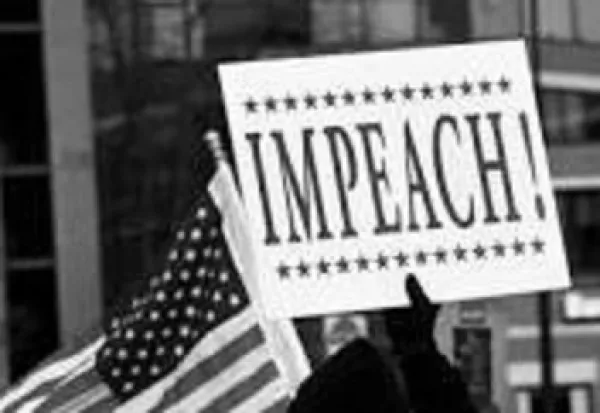
The last time Nancy Pelosi took impeachment off the proverbial table was 10 years ago. At that time, I reported on an unusual incident:
Stage set: a dining room at left, an office at right
A woman enters the office where the phone is ringing. She answers it.
NP: Hello? Why do you ask? Yes, I'm sure. I've said it before and I'll say it again. Impeachment is off the table. Now let me tell you about some new legislative proposals that I think you're really going to like. I'll give you what we're going to pass in the first hundred seconds and in the first hundred months. Which one do you want first? Let's start with…
The woman's voice lowers but continues as lights go up in the dining room, where we see a cat jump off the table and wander into the office where the woman is hanging up the phone.
NP: Where were you sweetie? Was I ignoring you? Come here kitty kitty. I didn't mean to ignore you.
The phone rings. The cat leaves.
NP: Hello? Yes, this is Nancy Pelosi. Yes, I know, but an investigation investigates. It doesn't impeach. I've said it before and I'll say it again – Will you excuse me a second?
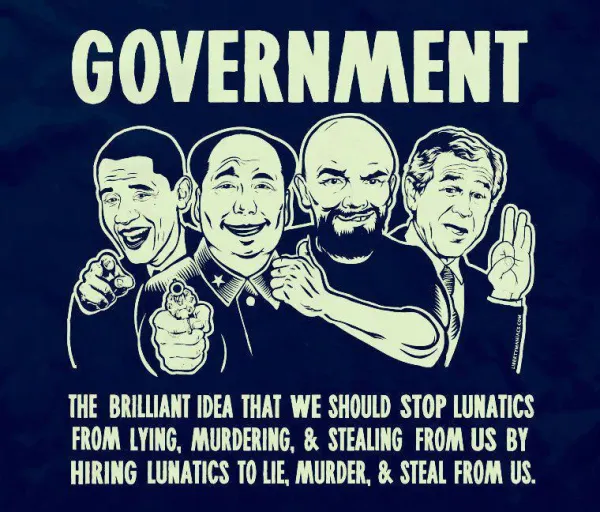
It was bound to be the case that if a U.S. president ever admitted that the United States murdered people and did so on a scale at least as significant as other countries, he would be defending the practice, not denouncing it.
It is not a secret in much of the world that the United States is (as that Putin stooge Martin Luther King Jr. put it) the greatest purveyor of violence on earth. The United States is the top weapons dealer, the top weapons buyer, the biggest military spender, the most widespread imperial presence, the most frequent war maker, the most prolific overthrower of governments, and from 1945 to 2017 the killer of the most people through war.
During this past U.S. election, a debate moderator asked if a candidate would be willing to kill thousands of innocent children as part of basic presidential duties. One can find many faults in Russia and other countries, but in none could one find such an occurrence.
I ask people at public events where I speak to name eight countries bombed under president Barack Obama, and most cannot come close. Nowhere else on earth can people not keep track of their wars.
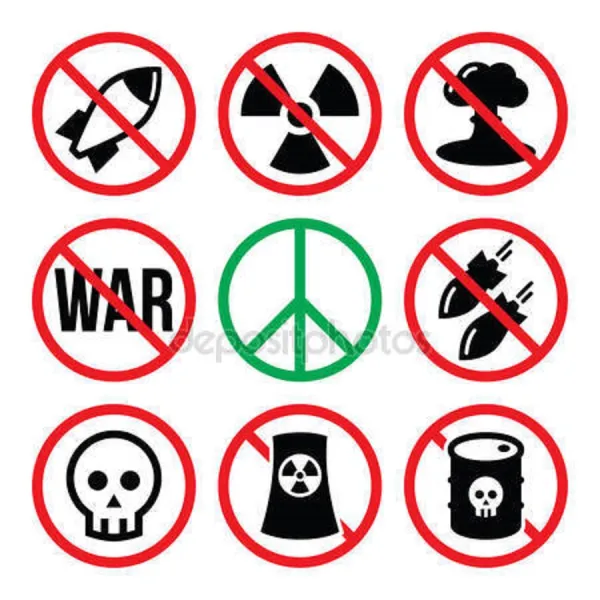
A Georgetown Law professor named David Koplow has drafted what he calls a Nuclear Kellogg-Briand Pact.