
Global


Mikhail Gorbachev and Barack Obama have radically different views on what is involved in doing away with nuclear weapons.
Reading Gorbachev's new book, The New Russia, is a bit disappointing, but it contains some key insights. It may also be a cure for insomnia; it's no page turner. It's part decades-long diary and travelogue, part petty self-aggrandizement (by someone in no need), and part ill-informed conservatism.
Gorby claims that Obama "honoured his promise to withdraw from the conflicts in Iraq and Afghanistan." In fact, both are still raging, the never completed withdrawal from Iraq fell wildly short of the campaign-promise schedule, and Obama actually promised to escalate in Afghanistan, which he did, tripling the U.S. presence and making that war primarily his own in terms of deaths, days, and dollars. The fact that smart well-informed people abroad, like Gorbachev, fall for common U.S. myths is an indication of how very difficult foreign relations can be.
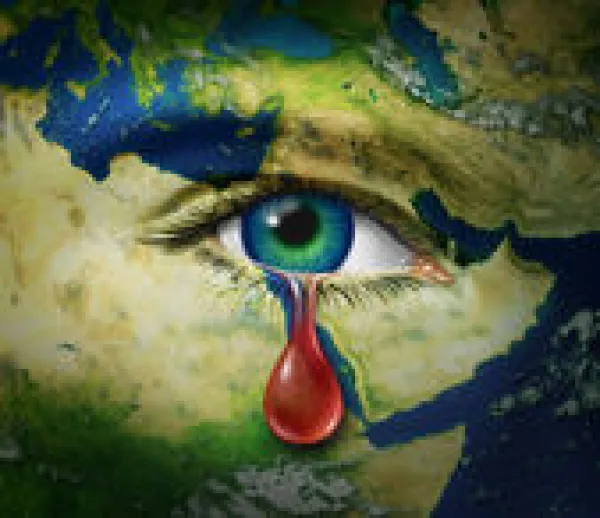
In what's being called the worst mass killing by the United States in the past six months, numerous mentally disturbed individuals, with the extensive backing of a well-financed terrorist organization, and support from a growing circle of allied gang members, have gruesomely slaughtered 1,110 to 1,558 innocent men, women, and children.
This incident, which has left shocked and speechless a handful of people who've heard and thought about it, took place between December 1, 2015, and May 31, 2016, during which interval the killers got off 4,087 airstrikes, including 3,010 over Iraq and 1,077 over Syria.
Aiding and abetting the slaughter, and now also being sought by law enforcement, are France, the United Kingdom, Belgium, Netherlands, Australia, Denmark, and Canada. In what is widely understood as an appeal for judicial mercy, Canada has expressed remorse. None of the other alleged perpetrators has done so. Several have openly acknowledged their participation, including by displaying the gang symbol of a U.S. flag tattooed on their glutei maximi.


In what's being called the worst mass killing by the United States in the past six months, numerous mentally disturbed individuals, with the extensive backing of a well-financed terrorist organization, and support from a growing circle of allied gang members, have gruesomely slaughtered 1,110 to 1,558 innocent men, women, and children.
This incident, which has left shocked and speechless a handful of people who've heard and thought about it, took place between December 1, 2015, and May 31, 2016, during which interval the killers got off 4,087 airstrikes, including 3,010 over Iraq and 1,077 over Syria.
Aiding and abetting the slaughter, and now also being sought by law enforcement, are France, the United Kingdom, Belgium, Netherlands, Australia, Denmark, and Canada. In what is widely understood as an appeal for judicial mercy, Canada has expressed remorse. None of the other alleged perpetrators has done so. Several have openly acknowledged their participation, including by displaying the gang symbol of a U.S. flag tattooed on their glutei maximi.

As with becoming a whistleblower or an activist or an artist there must be numerous reasons why any individual becomes a terrorist -- whether military, contract, or independent. Various irrational hatreds and fears (and promises of paradise after death) and the ready availability of weaponry certainly play roles.
But did you know that every single foreign terrorist in the United States in recent decades, plus domestic terrorists claiming foreign motivations, plus numerous poor suckers set up and stung by the FBI, plus every foreign terrorist organization that has claimed or been blamed for attempted or successful anti-U.S. terrorism have all claimed the same motivation? I'm not aware of a single exception.
If one of them claimed to be motivated by the needs of Martians, we might set that aside as crazy. If every single one of them claimed to be acting on behalf of Martians, we would at least get curious about why they said that, even if we doubted Martians' existence. But every single one of them says something much more believable. And yet what they say seems to be a secret despite being readily available information.
One of the film capital’s top movie-paloozas, LA Film Festival, has taken place near Culver Studios, where Gone With the Wind’s Atlanta set was burned down and giants like Alfred Hitchcock and Orson Welles made movie history. From June 1-9 LAFF screened scores of Hollywood features, foreign films, indies, shorts and documentaries. For the first time the U.S. State Department co-presented a roundtable discussion of Global Media Makers, featuring filmmakers from Egypt, Jordan, Lebanon Morocco and Turkey.
The filmfest’s more commercial popcorn-munching fare included The Conjuring 2, a horror flick starring Patrick Wilson and Vera Farmiga projected at what had been Grauman’s Chinese Theatre - where stars’ footprints are enshrined in concrete - on Hollywood Boulevard. As their reboots prepared to launch, the original Ghostbusters and Independence Day were shown in Downtown L.A., while 2001’s Shrek was screened at Culver City’s ArcLight Cinemas in Los Angeles, where most Festival movies were presented.
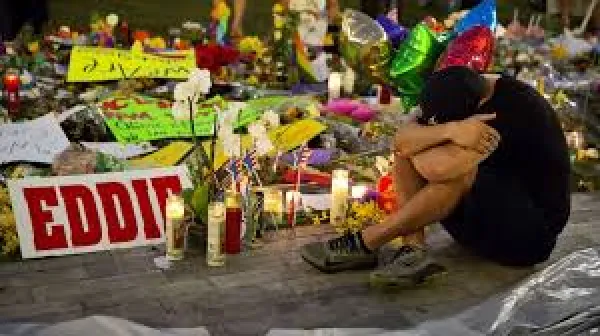
This won’t be the last.
Half a week into the Orlando tragedy, this reality remains pretty much unacknowledged, as cause-seekers focus on security and ISIS and the specific mental instability of Omar Mateen, who, as the world knows, took 49 precious lives and injured 53 others at the nightclub Pulse in the early hours of June 12.
Was it terrorism? Was it a hate crime? Apparently there’s a media obsession with categorizing murder. No, this was faux-war, as all our mass killings are, waged by an army of one or two or a few. And it won’t be the last. Mass killings are part of the social fabric – still shocking, still horrifying, but becoming more and more . . . “normal.”
Tighter security won’t stop them. Destroying ISIS won’t stop them. Banning immigrants won’t stop them. Maybe nothing will – though I don’t believe that. I do believe in karma, which is to say, the idea that what goes around comes around. If we act with violence, violence will come back to haunt us.

"I would warn Orlando that you're right in the way of some serious hurricanes, and I don't think I'd be waving those (rainbow)flags in God's face if I were you. …this will bring about the destruction of your nation. It'll bring about terrorist bombs; it'll bring earthquakes, tornadoes and possibly a meteor." --- Rev Pat Robertson, Christian Fundamentalist tele-evangelist, predicting - and perhaps inciting - violence against the LGBT community in Orlando, Florida. The homophobic Robertson was critical of LGBT organizers who were putting up rainbow flags around the city in celebration of the city’s stance on diversity issues. (Quote from The Washington Post, 06-10-98)