
Global
Major corporate media outlets in the United States are reporting on a new viability for Bernie Sanders' presidential campaign, based on his rise in the polls nationally and in Iowa and New Hampshire -- and possibly, though this goes largely unmentioned, based on his big new advertising purchases from major corporate media outlets.

Every year that I am able I pay a visit to Big Sur, California, one
of my favorite places since I was very small. I love the scenic drive
up the rugged coast on the winding WPA-era highway One through the
land where the mountains meet the sea. You've seen it in car
commercials, and the famous chase scene from North by Northwest, and
the picture in your mind, no doubt, is of the azure Pacific waters
glistening in the sun as waves lap the rocky coast line below sloping
Emerald meadows. As a kid I took all of this for granted, but I
gradually came to realize that the ribbon of highway isn't the only
feature there that is foreign to the natural landscape. The fact is
that those brilliant swaths of Green shouldn't be there – and they
wouldn't be were it not for the small herds of cows that regularly
scour the fenced-in private ranches, allowing grasses to flourish
where once there were coastal prairies and thickets of woods. The
fact is that the Big Sur we have all seen in pictures and post cards
for as long as we can remember is, in reality, a severely altered
As the 2016 election approaches, we must remember that our electronic voting system as it currently stands is thoroughly rigged. The entire outcome can be flipped with a few late night keystrokes, as was done in Ohio 2004. This year least 80% of the nation’s votes will be cast on electronic machines whose outcome can be altered by a governor and secretary of state with just a few keystrokes, and without detection. There is a way—-we call it the “Ohio Plan”—-by which we can attain a fair and reliable vote count. The Ohio Plan is this: Voter registration must be universal and automatic for all citizens as they turn 18; Electronic poll books are banned, with all voter registration records maintained manually; All elections happen over a 4-day weekend—-Saturday, Sunday, Monday, Tuesday—-which together comprise a national holiday, preferably around Veterans Day in November.
How many people have been killed in the wars in Afghanistan, Iraq, Syria, Yemen or Somalia? On November 18th, a UN press briefing on the war in Yemen declared authoritatively that it had so far killed 5,700 people, including 830 women and children.
– President Obama, State of the Union, January 12, 2016 “Even worse, we are facing the most dangerous terrorist threat our nation has seen since September 11th, and this president appears either unwilling or unable to deal with it.”
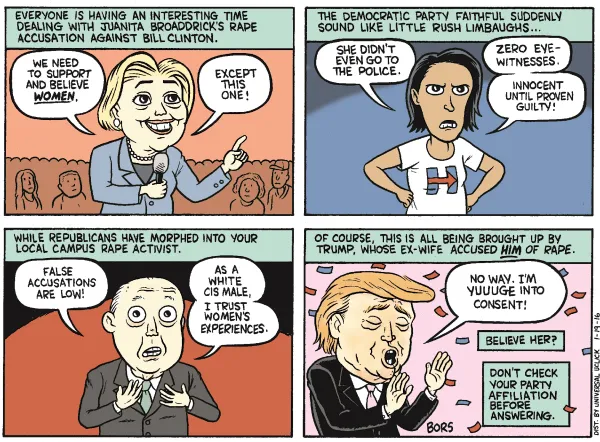
 In a video from February 2008, presidential candidate Hillary Clinton passionately denounces candidate Barack Obama for criticizing her healthcare plan and daring to "discredit universal healthcare."
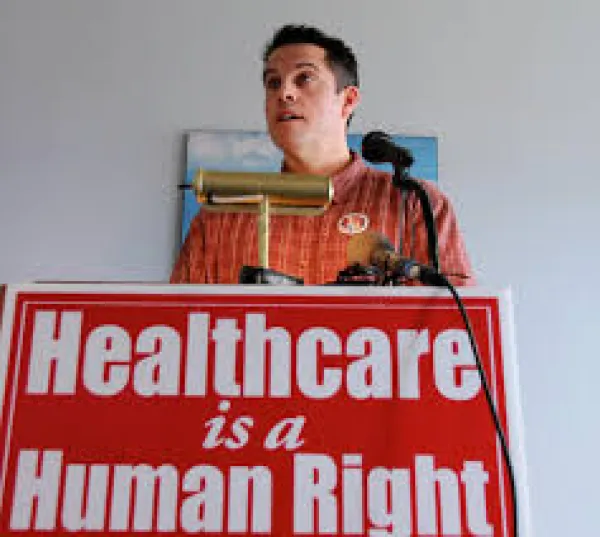
As 2016 begins, here is my take on things. People, who espouse aging liberal political economic analysis, lack substance to challenge the Capitalist attacks on workers shriveled by underfunded compensation packages, inadequate Health Care, nationalist worker organizations and evaporating retirement/pension systems.
First, the Capitalist worldview is to juice the workers for all the value that is produced. Second, what is worse, working families are without a clear vision of a future demanding what families need.
Capitalism is an economic system that directs political affiliations and aspirations, decapitate thought from action, desiccate Mother Earth resources for myopic profitability, and shrivel the life of working families. The system eviscerates all imagination.

The loudest response to President Obama’s executive action on gun control has unsurprisingly come from Second Amendment advocates on the right, seeing their worst fears realized in the form of required background checks for online and gun show customers. Republican presidential candidates decried it; Governor John Kaisch said the mandate was “poisoning the well” of relations between lawmakers, and Ben Carson tweeted that the law would only target the freedom of law-abiding citizens. This was to be expected. There was also a fair amount of hand-wringing from centrists concerned about executive overreach by the president, who side-stepped Congress to push through the most meaningful gun control legislation of the century.
“An abuse of power!” cried many. But was Obama not acting on behalf of the people, something Congress has been unable and unwilling to do?