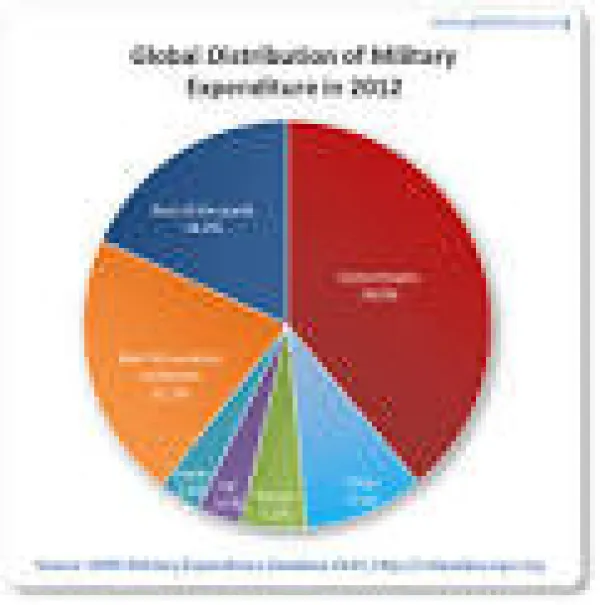
Global

Imagine the Syrian war from the point of view of ordinary Syrians from a variety of backgrounds. They are most likely to offer a different perspective and to hold entirely different expectations than most other parties involved.
A resident of Idlib, a villager from Deraa, a housewife, a teacher, a nurse or an unemployed ex-prisoner from anywhere else in Syria would distinguish their relationship to the war in terminology and overall understanding that is partially, or entirely, opposed to the narrative communicated by CNN, Al-Jazeera, Russia Today, the BBC, Press TV, and every available media platform that is concerned with the outcomes of the war.
These media tailor their coverage and, when necessary - as is often the case - slant their focus in ways that would communicate their designated editorial agendas, which, unsurprisingly, is often linked to the larger political agenda of their respective governments. They may purport to speak in accordance with some imaginary moral line, but, frankly, none of them do.
“We tried to take a look into one of the burning buildings. I cannot describe what was inside. There are no words for how terrible it was. In the Intensive Care Unit six patients were burning in their beds.”
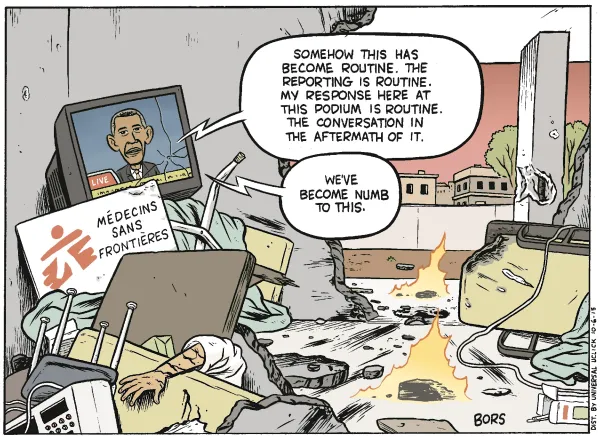
So said Lajos Zoltan Jecs, a nurse at the hospital the U.S. bombed in Kunduz, Afghanistan, killing 22 people: doctors, staff, patients (including three children). This image is now spiraling through the Internet and across the global consciousness.
The hospital was not “collateral damage”; it was deliberately targeted, deliberately destroyed, in multiple bombing runs that lasted at least half an hour. Médecins Sans Frontières (Doctors Without Borders), which operated the hospital, contacted its sources in the U.S. government immediately, pleading for the attack to stop — to no avail. The bombing continued until the hospital, with more than 180 occupants, was destroyed.
http://davidswanson.org/node/4933
Life is a very jumbled mixture. The pain of it, if you're awake and thinking, brings into your mind the happiest moments you can remember and transforms them into agony unless you resist bitterness with every drop of strength you have left, if not more. Physical pain makes clear-thinking and generous thinking more difficult, until death appears in front of you, and then the physical pain is as nothing.
I know that I'm not supposed to be bitter, and yet that somehow makes it harder not to be. When my father and sister and two cousins were blown into little pieces last year, it was the action of some distant office worker pushing a switch on a remote-controlled airplane. And I'm supposed to believe that they meant well. And this is supposed to make it better. But somehow it makes it worse.
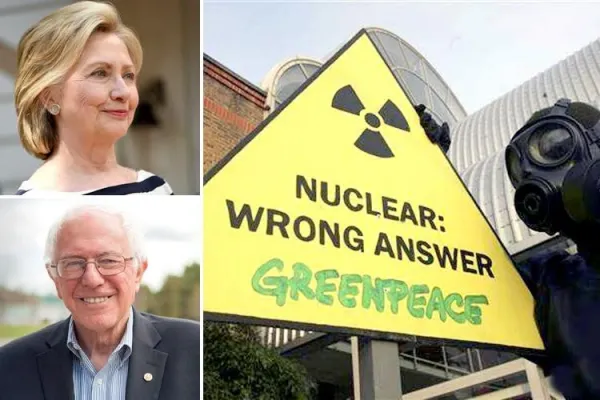
As the first Democrat presidential debate finally approaches (on Oct. 13), America’s nuke power industry is in accelerated collapse.
The few remaining construction projects in the U.S. and Europe are engineering and economic disasters.
Presidential candidates Hillary Clinton and Bernie Sanders may address this in broad terms.

The Pentagon is promising an investigation today after it was revealed that an AC-130 warplane carried out sustained fire against a Doctors Without Borders-run hospital on the outskirts of the Taliban-held city of Kunduz, killing 19 including 12 staffers and three children.
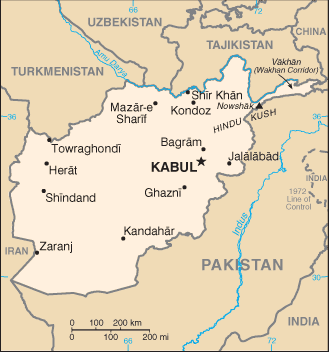 The hospital was already overwhelmed by the huge number of casualties from the past week of fighting over Kunduz, which the Taliban seized Monday. Doctors Without Borders is demanding clarification on what happened, noting they contacted the US after the first strike near their hospital to warn them it was so close, and sustained attacks against the hospital continued for over 30 minutes after that.
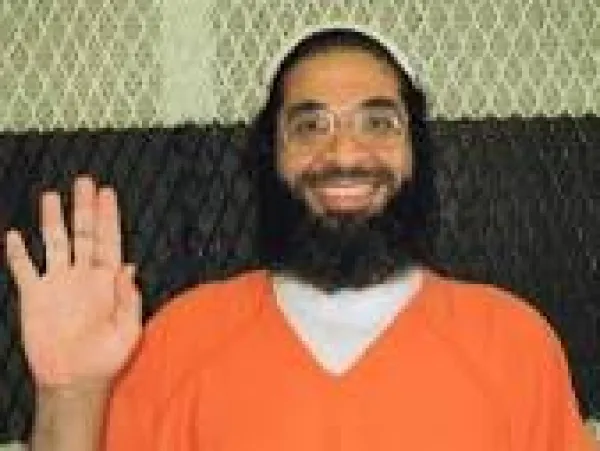
In the week since it was announced that Shaker Aamer, the last British resident in Guantánamo, is to be released, to be returned to his family in the UK, there has been a huge sigh of relief from the many, many people who campaigned for his release — supporters of the long-standing Save Shaker Aamer Campaign, which I have been involved with for many years, attending protests and speaking at events, of We Stand With Shaker, the campaign I established with Joanne MacInnes last November, which drew huge support for photos of celebrities and MPs standing with a giant inflatable figure of Shaker, and supporters of the Shaker Aamer Parliamentary Group, established last November by John McDonnell MP, who, at the time, was a persistent supporter of worthy causes and fighter against injustice, and, with Caroline Lucas (our sole Green MP), Jeremy Corbyn and Shaker’s constituency MP, Jane Ellison, the most consistent MP suppor
Americans may find Syria a bit confusing. David Petraeus, sainted hero, has proposed arming al Qaeda, organized devil. Vladimir Putin, reincarnated Hitler, is bombing either ISIS or al Qaeda or their friendly democratic allies, but he shouldn't be because he's against overthrowing the Syrian government, also run by Hitler living under the name Assad. Hillary Clinton, liberal socialist, wants to create a no-fly zone, but wouldn't that make it hard to bomb all the scary Muslims? Wait, are we against Assad or the scary Muslims or both? Aaaaaarrrrgghh! How does this make any sense?
Let's start over, shall we?
Some basic facts?
We'll start with the most uncomfortable fact, but one that helps begin to make sense of everything, OK?