
Global

The central assumption of democracy — beyond the assumption of fair elections, which is disturbingly questionable — is that voters are the possessors of their own “interests,” and vote for the candidate most sympathetic to them.
But of course those interests are fair game for advertising, bombast and propaganda — and the psychology of fear.
Thus, not only are candidates capable of misrepresenting their support of people’s interests, even more insidiously, they engage baldly in manipulating them. This is a game that turns the endless presidential campaign season, especially as it is conveyed to us in the mainstream media, into little more than a mish-mash of clashing sound bites: full of sound and fury, you might say, but signifying nothing, or at least nothing much.
The two-party system, which comes to us courtesy of Big Money and is taken so seriously by the media — as seriously as any advertising campaign takes itself — is, essentially, a race to seize control over the nation’s collective reptile brain.
Let’s make America great again!

Three cheers for Reuters pointing out that the Pentagon can't explain what it did with $8.5 trillion that taxpayers gave it between 1996 and 2013.
Three trillion cheers for a blogger who is pointing out that this fact renders many other concerns ludicrous, and recommending that people bring it up at every opportunity:

If someone has had the good fortune not to encounter the world of U.S. police and prisons, and the misfortune to learn about the world from U.S. schools, entertainment, and "news" media, a great place to start understanding one of the worst self-inflicted tragedies of our era would be with James Kilgore's short new book, Understanding Mass Incarceration: A People's Guide to the Key Civil Rights Struggle of Our Time, followed up by Radley Balko's longer Rise of the Warrior Cop: The Militarization of America's Police Forces.

BANGKOK, Thailand -- Police hoping to boost tourists' confidence
visited one of Bangkok's raunchiest red-light enclaves and described
the security situation to foreign men drinking beer with Thai bar
girls, five nights after a pipe-bomb killed 20 people at a shrine.
Grinning foreigners, clutching chilled bottles of beer while sitting
next to dolled-up Thai women at bars in the Nana Entertainment Zone,
listened with surprise to National Police Chief Somyot Poompunmuang
and his uniformed officers.
The garish, multistory Nana cul-de-sac is popular for its sensational
striptease bars, uninhibited nude lesbian cabaret, campy transsexual
clubs and illicit prostitution.
The August 22 nighttime meet-and-greet was one of several examples of
damage control, including earlier assurances by Thailand's military
regime to international diplomats that their embassies, staff,
commercial interests and citizens would be protected.
Detectives meanwhile appeared on August 22 at apartment buildings in
various neighborhoods, handing out a wanted poster showing their only

Understanding human conflict requires us to understand human psychology. And it is only when we understand the psychology that drives conflict that we can take intelligent steps to address it.
Unfortunately, understanding the psychology of conflict is not easy and I would like to illustrate one significant problem in this regard and explain what we can do about it. That problem is what is often called 'projection' or 'transference' and it illustrates the importance of emotional, as distinct from intellectual, content in any conflict.
Let me start by quoting a few carefully selected words from a lengthy dialogue recently published. http://peacefromharmony.org/?cat=en_c&key=628 The dialogue took place between two Israelis, two Palestinians and several individuals from other countries and was focused on the Israeli occupation of Palestine. It was concluded by the moderator's observation that 'our discussion has reached an impasse'.
BANGKOK, Thailand -- Jittery and suspicious residents and tourists are
trying to enjoy the tropical pleasures of this sprawling river port,
but with no evidence about who is bombing Bangkok or why, many people
fear more danger ahead.
The coup-installed military regime which seized power in May 2014 is
suddenly unable to continue its stilted propaganda boasts that the
junta is "bringing happiness to the people" by making the country safe
and secure.
"A girl who works in my bank was killed in the bombing," a
white-collar executive said softly.
The worried executive displayed a photo on her iPhone of a smiling
young woman who now had a red heart drawn around her as a funeral
memorial.
"At work, my friends just talk about who they think did it, and they
spend their time looking on Internet for updates," she said.
"I'm afrain, river ferry passengers ran screaming for their lives after
someone tossed a hand grenade toward a pier along Bangkok's majestic
Chao Phraya river.
The grenade just missed a busy passenger footbridge and splashed into the water.

No, I’m not referring to the U.S. election. I’m referring to “Bycatch.” The name refers not to fish accidentally caught and killed while trying to catch and kill other fish, but to humans murdered in a game in which the player hopes to murder certain other humans but knows that he or she stands a good chance of murdering some bycatch.
The Nazis never reached this height of banality in the general German public, but had they done so it would be a sinister feature of tens of thousands of Hollywood movies. If Russians sat around playing a board game that involved blowing up Ukrainian children, the Washington Post would have already published several front-page articles.
This is a game that puts you in the shoes of one particular human being, thus far, but imagines several engaging in the same activity in competition. In Bycatch you become Barack Obama going through his Tuesday murder list. But Bycatch imagines as many nations as people playing the game, each engaging in a drone murder spree against the others. Here’s an excerpt from the rules:
“How to strike

The central assumption of democracy — beyond the assumption of fair elections, which is disturbingly questionable — is that voters are the possessors of their own “interests,” and vote for the candidate most sympathetic to them.
But of course those interests are fair game for advertising, bombast and propaganda — and the psychology of fear.
Thus, not only are candidates capable of misrepresenting their support of people’s interests, even more insidiously, they engage baldly in manipulating them. This is a game that turns the endless presidential campaign season, especially as it is conveyed to us in the mainstream media, into little more than a mish-mash of clashing sound bites: full of sound and fury, you might say, but signifying nothing, or at least nothing much.
The two-party system, which comes to us courtesy of Big Money and is taken so seriously by the media — as seriously as any advertising campaign takes itself — is, essentially, a race to seize control over the nation’s collective reptile brain.
Let’s make America great again!

BANGKOK, Thailand -- Security officials sifted through the grizzly
remains of victims and wreckage in the streets on August 18, but said
they did not know who detonated a powerful pipe bomb in the heart of
Bangkok crowded with shoppers, tourists and rush-hour commuters.
The blast killed at least 19 people -- including foreigners -- and
injured 123 others but no one immediately claimed responsibility.
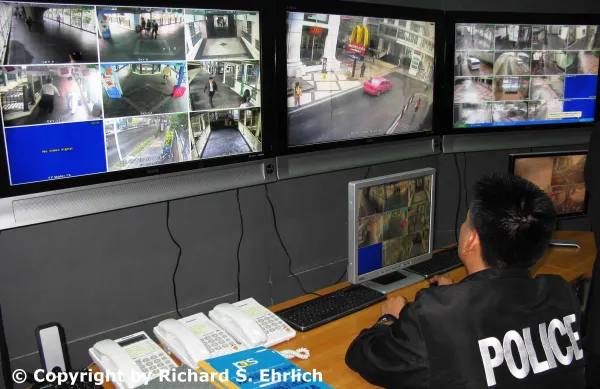
Officials began inspecting CCTV evidence of the explosion which set
off a billowing fire when nearby motorcycles ignited.
They will also be scrutinizing personal videos recorded by screaming
pedestrians who fled in all directions and later posted their escapes
online.
Rescuers removed the corpses they had covered with white sheets where
they lay in the intersection, though some said they could retrieve
only body parts around the Hindu shrine and sidewalk.
The military's powerful Internal Security Operation Command (ISOC) was
reportedly pursuing three possible motives, including opponents
against the coup-installed military regime, infighting among the

Three years after Ecuador’s government granted political asylum to Julian Assange in its small ground-floor London embassy, the founder of WikiLeaks is still there -- beyond the reach of the government whose vice president, Joe Biden, has labeled him “a digital terrorist." The Obama administration wants Assange in a U.S. prison, so that the only mouse he might ever see would be scurrying across the floor of a solitary-confinement cell.
Above and beyond Assange’s personal freedom, what’s at stake includes the impunity of the United States and its allies to relegate transparency to a mythical concept, with democracy more rhetoric than reality. From the Vietnam War era to today -- from aerial bombing and torture to ecological disasters and financial scams moving billions of dollars into private pockets -- the high-up secrecy hiding key realities from the public has done vast damage. No wonder economic and political elites despise WikiLeaks for its disclosures.