
Global
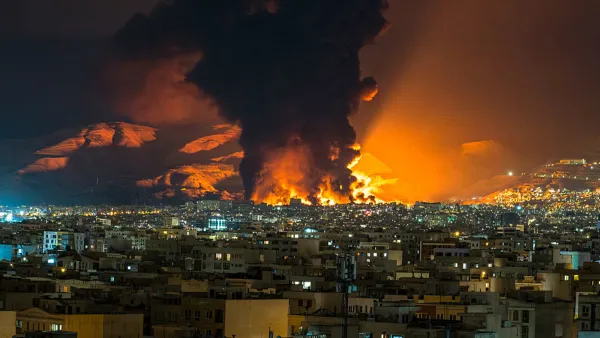
Pedophile Trump said he gave the greenlight for the attack on Iran when his slum lord son-in-law Jared Kushner (a Jewish Zionist) told him that Iran was about to attack the US! Trump was also "persuaded" after meeting several times in the last few months with his "great friend" Miliekowsky (changed name to Netanyahu to appear local). The latter has an international warrant for his arrest by the ICC for crimes against humanity and war crimes (for the still ongoing genocide and ethnic cleansing in Palestine). The Epstein Regime (Israel/USA governments joined at the hip) started this disastrous war 12 days ago and were totally unprepared for it. Trump copied the usual Israeli lies when they were killing civilians (Iran bombed its own elementary school etc.). This has to be the most stupid war ever launched since the War of Jenkins' Ear (1739-1748) between Spain and Britain. But this is far more dangerous and the US/Israel, Iran and of course our planet pay the price.
Haga clic aquí para español - Click here for Spanish
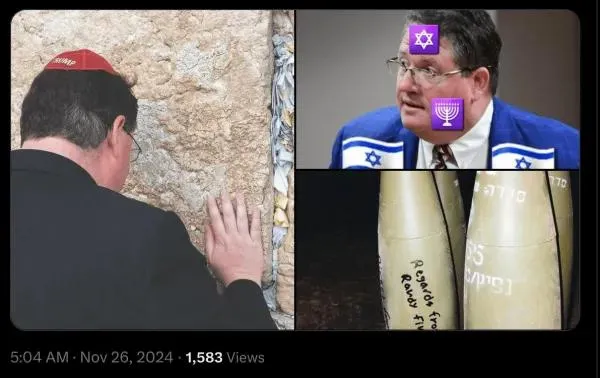
Two GOP Reps. are in legal trouble. They are Representative Randy Fine (FL) and Max Miller (OH) who are being both sued by separate entities.
Looks like both men have nothing better to do than making outrageous statements on social media that intended to defame Muslims, spreading lies about Muslim institutions, and trying to silence opposition to the Israeli brutality to attract media attention similar to Donald Trump's style.
Case number one: Against US Rep. Randy Fine
https://freepress.org/article/us-rep-randy-fine-muslim-enemy-1
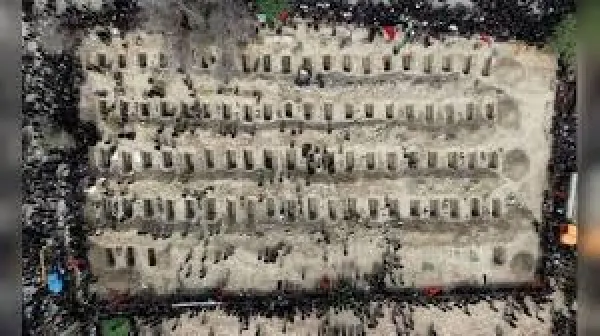
A real estate developer turned showman becomes president. His name has long been associated with the orbit of a convicted child sex offender. A former television host ends up running the Department of Defense—an institution that under his swaggering vision of power renamed the Department of War.
The president orders an attack and the kidnapping of a foreign leader, ignites a war against another nation—killing its leader and innocent schoolgirls—and sends paramilitary forces—ICE—into the streets of his own country. Under his reign, the Middle East burns. Oil surges, markets tremble, and the price of energy—and everything chained to it—climbs at home and across the globe.
The spectacle might seem laughable if its consequences were not so grave. But the laughter dies quickly. What unfolds feels less like governance than a fever dream of power—something torn from the reels of an old dystopian film—where the grotesque becomes ordinary and men intoxicated with bluster, spectacle, and machismo mistake domination for leadership.
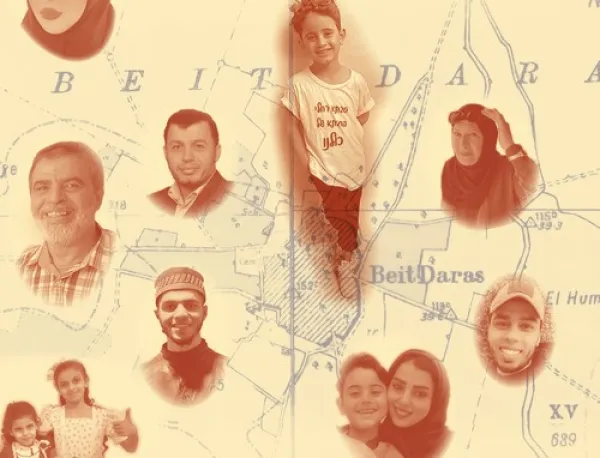
Ramzy Baroud, editor of the Palestine Chronicle, which has been the most reliable English language news source regarding the conflict in Palestine since before October 2, 2023 and even more so since that date, writes history from the heart. His stories of families (including his own) and their lives as refugees, freedom fighters, doctors and more remind the reader that the political history of a people is ultimately the history of people. In the case of a people under fire, under occupation and under constant pressure to deny their culture and therefore their lives by colonial powers convinced that their oppression and repression will defeat those they oppress, Baroud’s words are in themselves weapons of the struggle. His most recent book, titled Before the Flood: A Gaza Family Memoir Across Three Generations of Colonial Invasion, Occupation, and War in Palestine, continues this tradition.
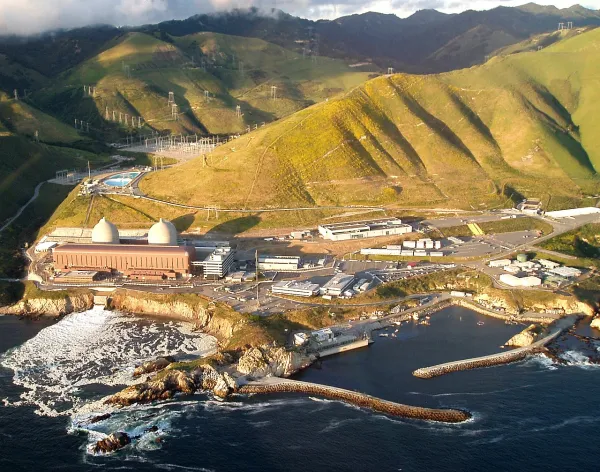
Fifteen years ago this week, millions of Tokyo residents shuddered in terror from four “impossible” March 11 explosions at the Fukushima atomic power plant, about four hours north of the city.
Today, in the wake of the Iran War, millions of Angelenos must share a similar terror.
The potential death toll from a radioactive cloud pouring into our city could begin any moment the Iran war rages.
The potential source is the two decrepit, uninsured reactors at Diablo Canyon, surrounded by earthquake faults on the Pacific Coast at Avila Beach, nine miles west of San Luis Obispo.
The FBI warning lit up the LATimes on the anniversary of the 2011 Fukushima explosions. The terrifying message was that Iranian drone strikes could soon hit California.
Those two Diablo reactors cannot be defended. A single drone, costing a few hundred dollars, could turn them to radioactive rubble. The mega-lethal fallout would reach LA within five hours.
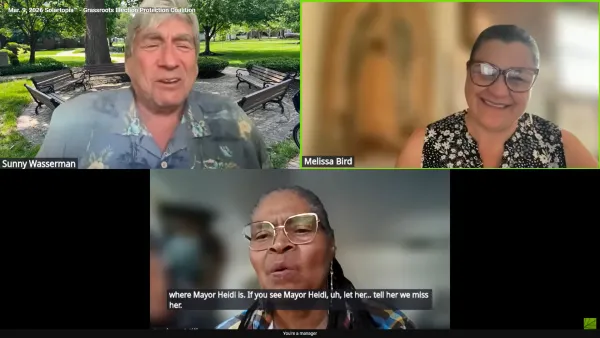
We start GREEP Zoom #259 with HEDY TRIPP & JONATHAN KENT from the belly of the ICE beast in Minneapolis.
From former Assistant Secretary of State JOEL RUBIN we get a serious report on the Middle East nightmare.
Our co-host MYLA RESON confirms that the US tomahawk did, indeed, kill those schoolgirls in Teheran.
From engineer STEVE CARUSO we get heated questions about the craziness infecting our Trumpist world.
We move to DR. MELISSA BIRD reporting from Oregon and the insider story of Gulf War victims & those to come from Iran.
With the great ANDREA MILLER we dive deep into disenfranchisement of women, poor rural whites, and so many others, while exposing “hypocrisy at its finest” with a gerrymandering dirty trick.
GREEP stalwart DR. RUTH STRAUSS we hear her usual brilliance, direct from Alabama.
Legendary No Nukes author/activist ANNA GYORGY explains from WMass how the movement against nuke power blow up on March 28, 1979, leaving to No Kings/No Nukes all these years later in 2026.
Nobody wants to believe they’re the villain in the story. Nobody wants to believe their government is run by psychopaths who are inflicting unfathomable evils upon populations around the globe in order to rule the world.
It’s much nicer to believe you’re the Good Guys. Much easier to sit with the idea that your government might make an innocent mistake here and there, but overall is a driving force for the good of humankind, and is certainly superior to the villains it makes war with.
That’s a fiction, though. It’s a comfortable lie. A fairy tale that westerners tell themselves to avoid a profoundly uncomfortable truth.
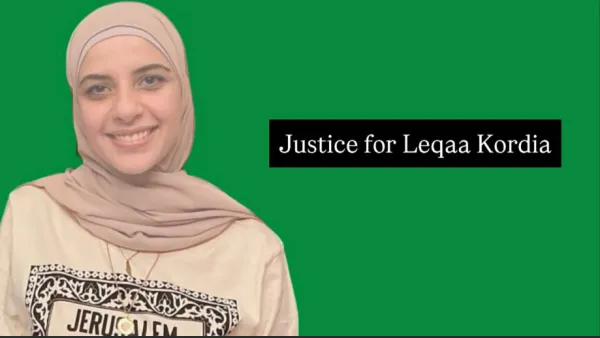
Leqaa Kordia, 33, has been locked up in ICE detention center in Prairieland, Texas for one year this Friday for exercising her constitutionally protected rights. She spoke out against Israel’s genocide in Gaza. Leqaa is a Palestinian legal resident of Petterson, New Jersey and the only Columbian protester who is still in custody without charges or trial. This is illegal and un-American!
Last week, New York City Mayor Zohran Mamdani presented her case directly to President Donald Trump and White House Chief of Staff Susie Wiles last week and directly asked them to drop the immigration case against Leqaa.
Her attorneys say she is facing targeted retaliation for participating in pro-Palestinian protests. Our elected officials have the power to bring national attention to Leqaa’s case.
You can make a difference by:
* Call and email your Members of Congress and demand they publicly pressure DHS to release Leqaa
* Amplify Leqaa’s experience on social media; do not let her story be buried.