Global

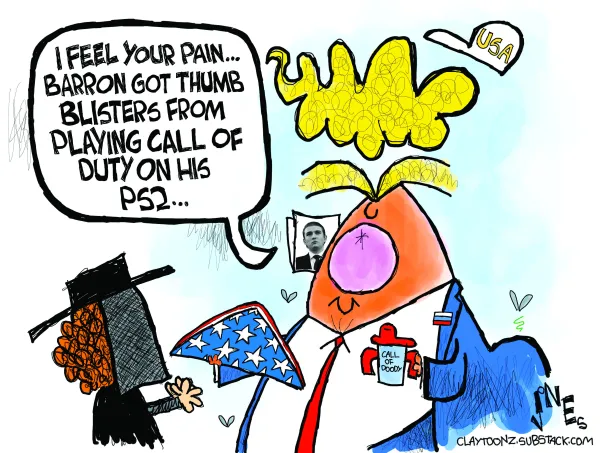
Boys will be boys. Just ask the president.
At a gathering of Republicans a few days ago, Donald Trump talked nonchalantly about the recent sinking of an apparently unarmed Iranian frigate by the U.S. Navy – in the Indian Ocean, more than 2,000 miles from the Persian Gulf. A total of 104 crew members were killed and 32 more were injured.
The president proceeded to make this more than merely another brutal, pointless act of war. He turned it into a glaring – shocking – revelation of truth . . . about the American-Israeli war on Iran and, quite possibly about all wars: about war itself. He was upset at first, he told the crowd, that the Navy sank the frigate rather than capturing it. But when he expressed this to the military officials, one of them responded: “It’s more fun to sink them.”


Protest and protesting is deeply embedded in America history, whether popular or not. Professor Gloria Browne-Marshall, a constitutional law and Africana studies professor at John Jay College, part of the City University of New York, channeled her personal history and took on the mammoth task to write A Protest History of the United States. The job was probably impossibly hard to begin with, but on Wade’s World she described how she broadened the definition of protest even more expansively, to write almost a history of America from indigenous struggles to our times.

Donald Trump’s war of choice in the Middle East is but the latest indication that the system of international law―which provides guidelines for the behavior of nations in world affairs―is crumbling.
In the late nineteenth and twentieth centuries, after thousands of years of violent international conflict, efforts to establish global norms for nations in connection with war, diplomacy, economic relations, and human rights accelerated. These efforts resulted in the founding of the United Nations (which develops, codifies, and enforces international law), the International Court of Justice (which settles legal disputes among nations and provides advisory opinions on legal questions), and the International Criminal Court (which investigates and tries individuals charged with the gravest crimes of concern to the international community).
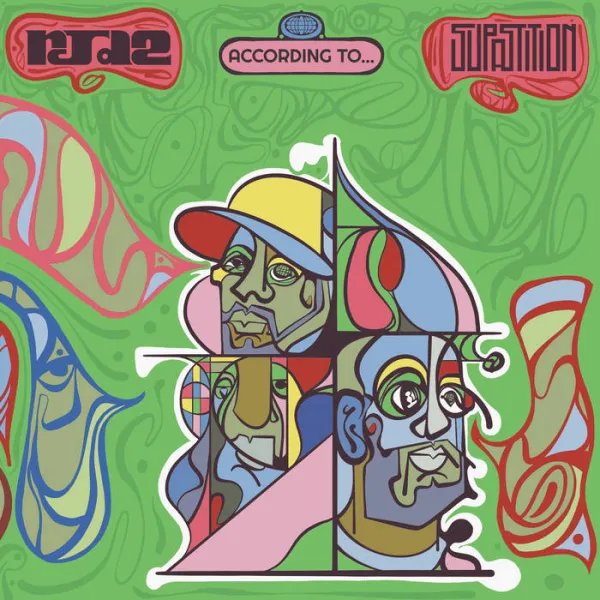
I wasn’t surprised Columbus, Ohio’s RJD2’s new album is with North Carolina’s SUPASTITION.
Supastition rapped from RJD2’s 2022 album with Philadelphia’s STS. We know there are various perspectives at understanding 2000’s underground rap.
RJD2 is from Columbus. New York’s El-P and Minneapolis’ Slug owned Columbus’ biggest platforms from a national perspective. RJD2 lived in Philly for awhile. RJD2 is a one of Columbus, Ohio most revered creatives. New York and Philly are sorta equally the same driving distance from North Carolina and Columbus.
Supastition is someone I associate with Phonte, 9th Wonder, Foreign Legion and adult North Carolina rap. RJD2’s and Superstition “According To..” raps about middle class life, aspirations, vocations and family. RJD2’s “According To’” production sounds like RJD2 studied his own instrumental albums. RJD2 picked up a guitar, drum, bass and Moog. RJD2 played and then chopped extensions of his body of work. “According To” isn’t RJD2 playing Dead Ringer and sampling himself
Following the Twelve-Day War in June 2025, the United States and Israel launched a new war against Iran on February 28, 2026—an illegal war neither authorized by Congress nor supported by the American public. The Trump administration has scrambled to manufacture justifications for this war, attempting to sell it to a skeptical public as a preemptive mission to eliminate a dangerous regime in Tehran. Yet the brutality and authoritarianism of the Iranian state cannot serve as a blank check for foreign aggression. The repression of the Iranian regime is real, but it does not legitimize an unprovoked war carried out in the name of “liberation.”
The struggle against the regime belongs to the Iranian people alone. It is not a cause to be hijacked by Donald Trump or Benjamin Netanyahu, nor a pretext for yet another catastrophic war imposed from outside. Iranians have resisted their rulers for decades—through protests, strikes, and immense personal sacrifice. Their struggle does not need bombs, opportunistic saviors, or cynical geopolitical theater masquerading as humanitarian concern.

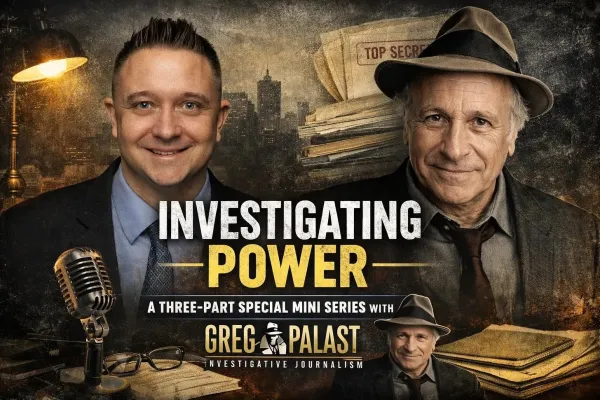
From Epstein and MI6 to voter suppression, coups, and the insiders who risk everything to expose them — Kevin Patrick interviews Greg Palast in this three-part special miniseries.
Over the course of more than an hour, investigative journalist Greg Palast spoke candidly about the world’s most powerful people we never get to see — a world of insiders, whistleblowers, secret networks, and the fragile systems that quietly determine the fate of governments, elections, and nations.
The conversation covers allegations involving high-level political figures, intelligence agencies, and the individuals who risk everything to expose what powerful institutions work hard to keep hidden. Palast shares firsthand accounts of undercover investigations, being arrested while reporting on a coup attempt in Kazakhstan, and what happens when journalism crosses paths with real power.
We talked about voter suppression, the systematic removal of tens of thousands of voters, and how entire populations can be quietly blocked from participating in democracy — not just in the past, but today.