
Global
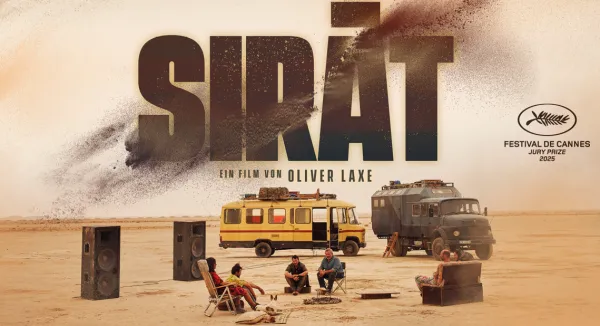
Of the five films up for an international Oscar, Sirat is by far the most unsettling.
I say that without fear of contradiction, even though I have yet to see most of its competitors. Watching Spain’s nominee is simply the kind of nerve-wracking experience that few films can match.
French-born director/co-writer Oliver Laxe begins his tale as a massive rave is getting underway in the middle of the Moroccan desert. After arriving in trucks and other weather-beaten vehicles, hardcore enthusiasts begin dancing ecstatically to bass-heavy beats that echo against rocky canyon walls.
It’s into this scene that a middle-aged Spaniard named Luis (Sergi Lopez) arrives with his young son, Esteban (Bruno Nunez Arjona). Passing out fliers with pictures of his grown daughter, Luis explains that she’s disappeared to join the raver lifestyle, and he thinks she might be here.
As it turns out, no one has seen her, but Luis learns she could be at an upcoming rave happening far to the south in Mauritania. Then comes an unexpected complication followed by a fateful decision.

Dr. Bob Fitrakis and Dan-o Dougan bring us some incredible covers of Leonard Cohen songs.
Listen live at 11pm Fridays, March 6 and 13 streaming at wgrn.org or on the radio at 91.9FM
and
Mondays at 2pm streaming March 9 and 16 at wcrsfm.org or on the radio at 92.7 or 98.3FM
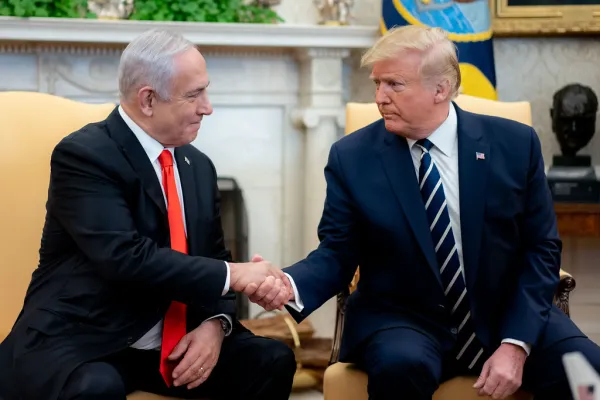
Why did President Trump launch a war against Iran? Two reasons.
First, electoral polls indicated a dramatic victory for anti-Trump Democrats in this fall’s Congressional elections. This would put a welcome end to Trump’s campaign to establish one-man rule in the United States. Losing the Senate and/or House would open Trump up to a host of criminal accusations.
The huge attack on Iran was designed to distract attention from the still festering Jeffrey Epstein scandal that might bring Trump down. The attack on Venezuela was a dress rehearsal.
Second reason: Trump and his Maga Republicans are joined at the hip to Israel
and its powerful American financial supporters. They helped buy the quiescence of Congress, including $100 billion from the Adelson family of Israel. Israel’s far right has long been pushing Trump and his Republicans to launch a war against Iran, the bête noire of Israel.

GREEP Zoom #258 opens with a report from HEDY TRIPP on the ICE attacks in MN.
She’s followed by JONATHAN KENT’s report on Sunday’s demonstration for freedom at the Whipple Center in Minneapolis.
We hear MYLA RESON’s report on the tragic de facto murder of the Rohinga refugee Neuril Amin Hashem Raham in Buffalo.
From the great HEATHER BOOTH we hear inspirational calls to organized actions moving from “protest to power” through the Battleground Alliance and “Know Your Neighbor.”
We’re also joined by the legendary writer/activist FRANCIS FOX PIVEN.
And by LA-based SUSIE SHANNON, hero of the homeless throughout America.
And MAYOR HEIDI of Waldport, Oregon, reinstate & now facing recall from the MAGA right.
From MIKE HERSH we hear kudos for our great guests and his powerhouse role at PDA.
From DR. RUTH STRAUSS we’re warned about Trump using troops to crush the 2026 election.
Congressional candidate HARTZELL GRAY gets us energized to protect our democracy.
Election Protection expert RAY LUTZ warns about Trump confiscating ballots & much more, urging incremental backups for all ballots.
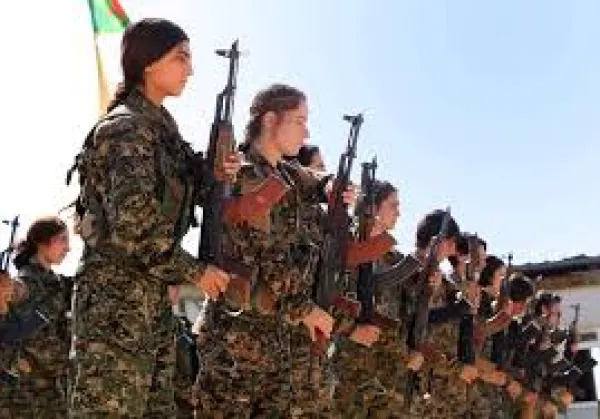
If reports are true that the Central Intelligence Agency (CIA) is arming Kurdish forces in Iraq as part of efforts to destabilize Iran, history is about to repeat itself—yet again. For over a century, the Kurds, the largest stateless people on earth, have been manipulated as instruments of foreign powers, promised support when useful, abandoned when convenient. The pattern is brutal, predictable, and morally indefensible: Kurdish lives and ambitions sacrificed at the altar of imperial strategy.
The story is old. After World War I, the Treaty of Sèvres envisioned a Kurdish state in eastern Anatolia. Within a few short years, that promise was shredded. Mustafa Kemal Atatürk rose, the Treaty of Lausanne erased Kurdish independence from the map, and the Kurds were scattered among Turkey, Iraq, Syria, and Iran. Western powers, concerned with “regional stability,” placed diplomatic convenience above Kurdish self-determination—and the pattern was set.

The Farm, Food, and National Security Act of 2026 contains statutory language that restructures federal authority. It expands federal preemption, narrows state and local governance, limits judicial oversight, and concentrates decision making inside federal agencies, which increases the risk of regulatory agency capture and weakens the distributed safeguards that protect farmers, public health, and national resilience.
From pesticide liability shields that restrict state tort authority, to clauses that prohibit counties from regulating pesticide use, to interstate livestock provisions that override state production standards, this bill centralizes authority in Washington in ways that favor large industrial actors while increasing farm level risk, weakening health protections, and externalizing long term environmental and medical costs onto taxpayers, driving higher public expenditures and deeper structural debt.
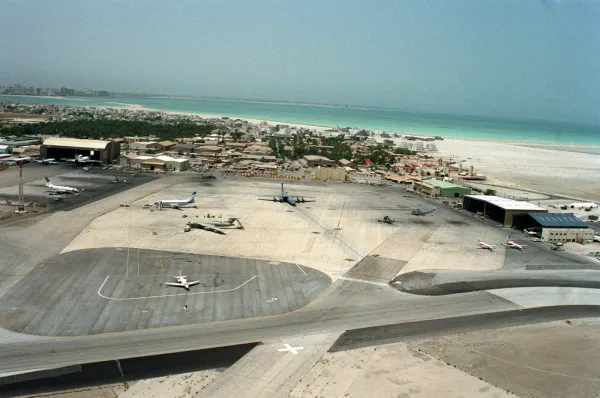
For decades, Washington armed the Persian Gulf Arab states extensively. Expansive military bases, aircraft carrier deployments, integrated air defense systems, and bilateral security agreements were presented as ironclad shields against largely manufactured existential threats—particularly from the Islamic Revolutionary Guard Corps and the Iranian state. The United States positioned itself as the ultimate guarantor of Gulf security, promising deterrence through overwhelming force and rapid response capabilities.
This architecture included permanent deployments in Bahrain, Qatar, and the United Arab Emirates, alongside continuous naval patrols through the Strait of Hormuz—a chokepoint through which more than 10 percent of global oil supply passes. Gulf governments invested vast sums in American weapons systems on the assumption that U.S. backing would deter aggression and, if necessary, ensure protection. Strategic alignment with Washington and Tel Aviv was framed as the pathway not only to security, but as the gateway to economic growth, technological modernization, and geopolitical relevance.
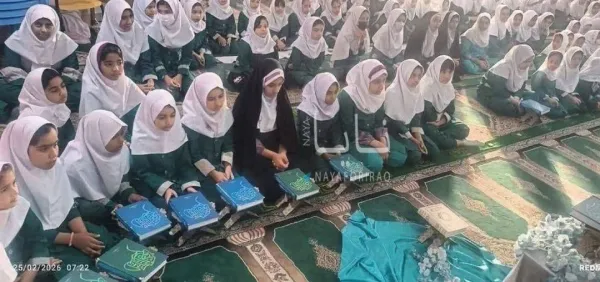
“The missile hit during the school’s morning session. In Iran, the school week runs from Saturday to Thursday, so when U.S. and Israeli bombs began falling at around 10 a.m. on Saturday, classes were under way. At a point between 10 a.m. and 10.45 a.m., a missile directly hit Shajareh Tayyebeh school, in Minab, southern Iran, demolishing its concrete building and killing dozens of seven to 12-year-old girls.” — The Guardian
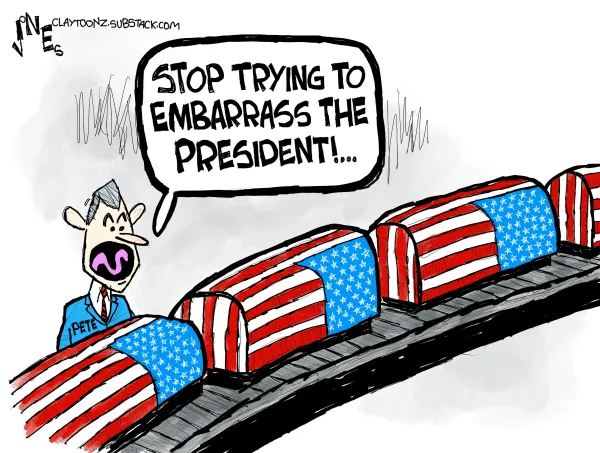
War is not an abstraction. It’s living hell . . . or dying hell. When the United States and Israel (Trump and Netanyahu) started bombing Iran, I felt the collective human soul begin to vibrate once again, and I began screaming to myself: This is not who we are!
Even though it is.
If you are not paying attention to the dramatic developments between China and the United States, you must understand that something consequential has just taken place.
The US government is backtracking—if not altogether retreating—from the trade war and broader escalation it launched against China. Unlike the hyped language and repeated threats by President Donald Trump to impose massive “reciprocal tariffs,” to “decouple” the US economy from China, and to correct “the greatest theft of wealth in the history of the world,” the retreat is happening in hushed tones and coded diplomatic language.
“I think both countries concluded that having an all-out global trade war between the United States and China would be deeply damaging to both sides and to the world,” US Secretary of State Marco Rubio said on February 25.
He called this new phase one of “strategic stability.”