
Global

One might well ask how a group composed of little more than 3% of the US population has managed to gain control of the nation’s foreign policy, its legislature and executive branches, its media, its entertainment industry, its financial institutions, and its elite universities while also making the United States subservient to the wishes of a monstrous small state located seven thousand miles away and composed of its coreligionists? Well, it helps to have a great deal of money liberally applied to corrupt the existing political and economic systems, but that is not necessarily a good place to start as one might reflexively be accused of wielding a trope much favored by antisemites when discussing Zionist Jews, the group of which we are speaking. Alternatively perhaps, one might take an oblique approach by observing how the highly privileged and protected Zionists in question get rich living in America while having true loyalty to apartheid Israel, something that normally might be considered untenable if not borderline treasonous.

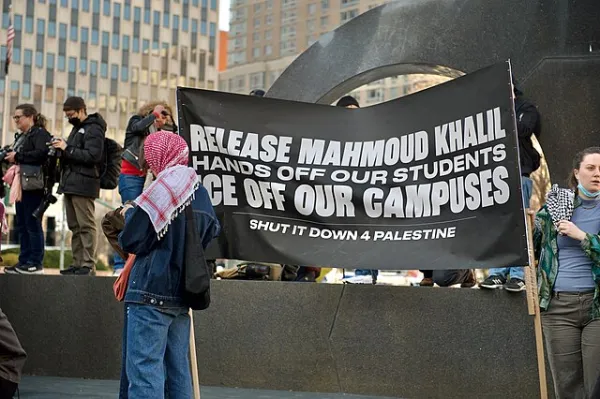
"Rights are granted to those who align with power," Mahmoud Khalil, a Columbia University graduate student, eloquently wrote from his cell. This poignant statement came soon after a judge ruled that the government had met the legal threshold to deport the young activist on the nebulous ground of "foreign policy".

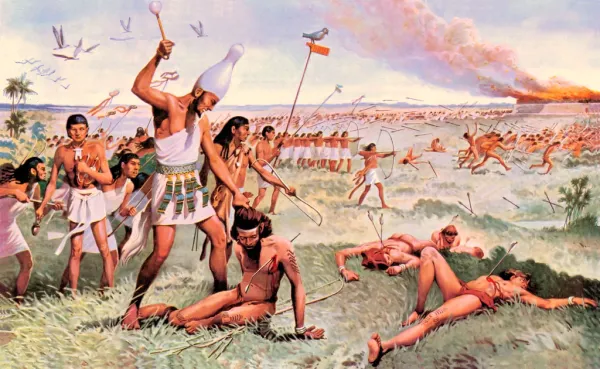
To conquer a place is to fundamentally subdue its population. This must be clearly differentiated from 'occupation', a specific legal term that governs the relationship between a foreign "occupying power" and the occupied nation under international law, particularly the Fourth Geneva Convention.
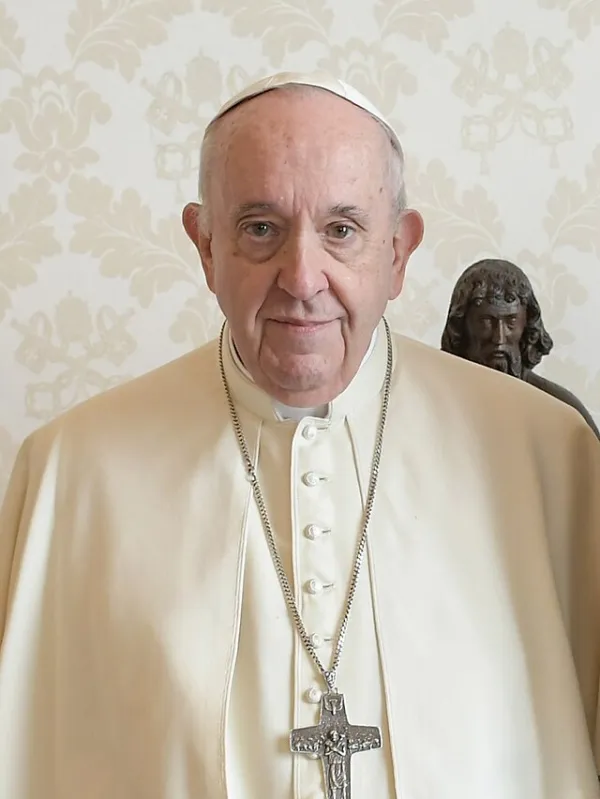
The world mourns Pope Francis, a good, loving man who brought the Holy Mother Church back to the people and made his native Argentina proud.
Francis was a welcome change after the orthodoxy and rigidity of former Pope Benedict XVI who sent an icy chill through Catholicism. Francis did a lot to soften the image of Catholicism despite the many sexual and financial scandals that beset the church.
For me, a non-Catholic, the most important thing about the late pope, born Jose Bergoglio in Argentina, was his choice of papal name: Francisco in the Latin tongues.
He modeled himself after Saint Francis of Assisi, born in 1182, one of the most important and majestic figures in Catholic history. St. Francis was among the first spiritual leaders to call for the protection of the environment and humane treatment of and respect for all animals. The Franciscan Order was created in tribute to his teachings. St. Francis’ famous prayer for peace:
Lord, make me an instrument of your peace:
where there is hatred, let me sow love;
where there is injury, pardon;
where there is doubt, faith;
where there is despair, hope;


The administration of Donald Trump is making an unbridled push to block renewable
energy projects—including last week halting the placement of 54 wind turbines in the ocean
south of Long Island, New York—and is pushing fossil fuels, among them coal. The burning of
fossil fuels is the leading cause of climate change. Trump has repeatedly called climate change a
“hoax.”
Meanwhile, a Long Island resident, Lee Zeldin of Shirley, who Trump named
administrator of the U.S. Environmental Protection Agency, is cancelling on a sweeping basis
environmental regulations, discharging EPA employees and, last week, stopping the collection of
greenhouse gas emission data.
Further, on April 8 th Trump issued an executive order directing the U.S. attorney general
to identify “illegal” state and local climate, energy and environmental justice laws that “impede”
domestic energy production and use and “take all appropriate action to stop” their enforcement.
The order is titled: “Protecting American Energy From State Overreach.” It opens: “My
Administration is committed to unleashing American energy.”
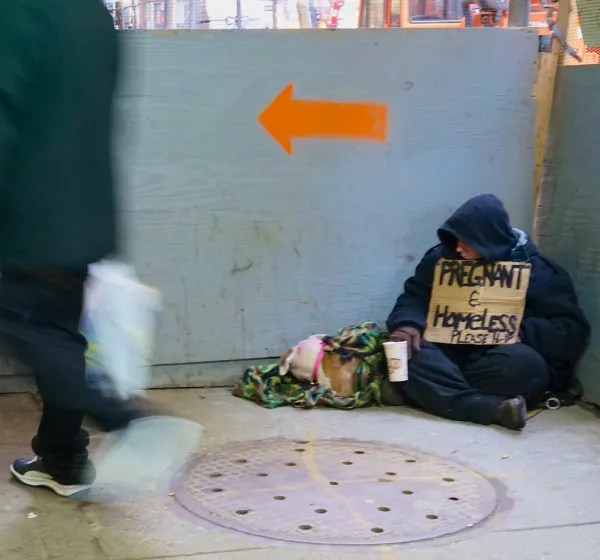
Homelessness and substance use disorder often occur simultaneously — but many people struggling with both are unable to get the help they need. That puts homeless service providers on the front lines of the battle for reversing overdoses while also trying to end homelessness, one life at a time.
As the CEO of a large homelessness service provider, I’ve seen first-hand how helping someone overcome substance use can lead directly to helping them overcome homelessness.
Ending homelessness is a long process. It isn’t all about lifting someone off the streets and finding them a job and a place to call home. There’s a spectrum of steps and successes along the way to help someone build confidence and independence so they can make long-term positive lifestyle changes.
Overcoming substance use is one of those steps. We have a number of strategies to approach substance use that have offered positive results. The first is the overarching principle of harm reduction, which we use because it saves lives.
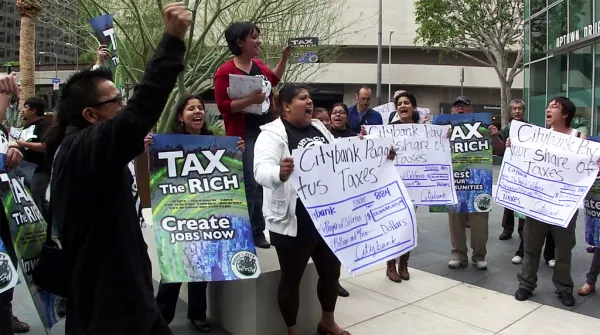
Tax policy experts and lawmakers have long circled 2025 as a year to prepare for. What makes it so significant?
For one thing, Federal COVID money to states is expiring, straining state budgets at the same time the economy is starting to weaken. For another, Republicans in Congress are working to increase and extend President Trump’s tax cuts for the wealthy and corporations — while cutting trillions from health care, housing, and education programs for everyone else. And it all up and you get a fiscal tsunami.
While major tax policy changes are being made and discussed in Congress, this is also happening in the states.