Global

Uh oh, nukes coming in. Should we retaliate?
This strikes me as the stupidest question a human being could ask – and, just possibly, also the last. Our enemy of the moment is loosing hell on us (if warning signals are accurate), so let’s do the same back at them. If we kill more of them than they kill of us, we win! Yes, human life – all life – will likely be destroyed in a nuclear war, but that’s just the way things work. That’s not our concern.
Among the global superpowers, this scenario remains etched into the meaning of self-defense: the ability to retaliate, no matter the consequences of doing so. The marketing slogan, of course, is “deterrence.” As long as the bad guys understand that we have the capability to retaliate, they won’t start a nuclear war. Hence, staying safe as a nation means maintaining our ability to create Armageddon.
It's certainly the human paradox of the era. Are we stuck with it?


Dear President Joe Biden,
It’s been three months since I sent you my suggested list of Executive Actions that you could take in your last weeks in office. A “Bucket List” so-to-speak filled with legal declarations to make the lives of your fellow Americans just a little bit better.
I am happy you took some of my advice. Thank you.


A few days before the end of 2024, the independent magazine +972 reported that “Israeli army forces stormed the Kamal Adwan Hospital compound in Beit Lahiya, culminating a nearly week-long siege of the last functioning hospital in northern Gaza.” While fire spread through the hospital, its staff issued a statement saying that “surgical departments, laboratory, maintenance, and emergency units have been completely burned,” and patients were “at risk of dying at any moment.”

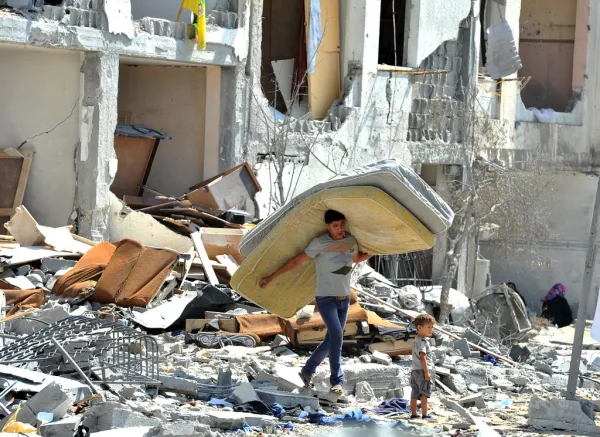
The first official reference to Gaza becoming increasingly uninhabitable was made by the United Nations Conference on Trade and Development (UNCTAD) in 2012, when the population of the Gaza Strip was estimated at 1.8 million inhabitants.
The intention of the report, "The Gaza Strip: The Economic Situation and the Prospects for Development," was not merely to prophesize, but to warn that if the world continued to stand idle in the face of the ongoing blockade on Gaza, a humanitarian catastrophe was imminent.
Yet, little was done, though the UN continued with its countdown, increasing the frequency and urgency of its warnings, especially following major wars.