Global

The election paradox looms. Do I calm myself down, steady my hand, pull the lever for Joe, even though it feels like voting for Netanyahu? Even though it feels like I’m loosing another bomb on Gaza?
I’ve had a number of intense conversations with friends about this recently, the essence of the pro-Biden argument being: We have no choice!
Here’s how Bernie Sanders put it: “But, let’s be clear. Biden is not running against God. He is running against Donald Trump, the most dangerous president in American history whose second term, if he is re-elected, will be worse than his first. And, on his worst day, Biden is a thousand times better than Trump.”
Much more than a mere handsome action hero, Viggo Mortensen, star of The Lord of the Rings movies, is spreading his creative wings again by getting behind the camera for the second time. In addition to playing the male leader, Mortensen has directed, written, produced and composed music for The Dead Don’t Hurt. The politically aware artist (see: https://progressive.org/magazine/viggo-mortensen-do-something-get-kitchen./) has also done something interesting with the tried-and-true Western genre – putting progressive politics about women, slavery, immigrants, middle-aged romance, parenting, etc., into this Civil War-era horse opera set in Nevada around the time the territory became a state.
The Democracy Perception Index (DPI) issued its 2024 report on May 8, revealing important and interesting shifts in global perceptions about democracy, geopolitics and international relations.
The conclusions in the report were based on the views of over 62 thousand respondents from 53 countries – roughly representing 75 percent of the world’s total population.
The survey was conducted between February 20th and April 15th, 2024, when the world was largely consumed by the Israeli war on the Gaza Strip.
It is important to note that the Index, though informative, is itself conceived in a biased context as it is the product of a global survey conducted by western-based companies and organizations.

Introduction
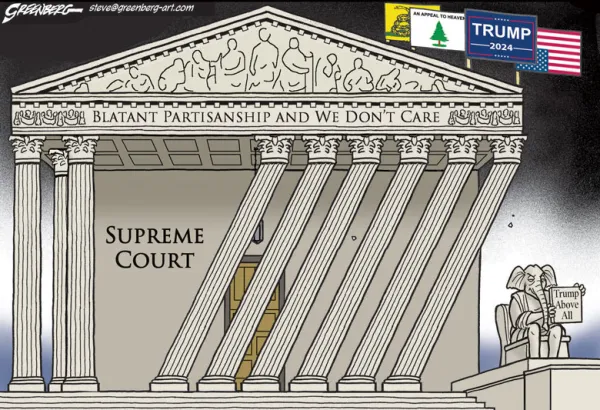
The focus of this post is on the fascist aspects of Trump’s rhetoric and plans. It argues that, if Trump wins the presidency in November, he and his administration are likely to implement his anti-democratic vision.
Is he a fascist?
Federico Finchelstein has written extensively about fascism. In his most recent book, The Wannabe Fascists: A Guide to Understanding the Greatest Threat to Democracy (publ. 2024 by the University of California Press), he identifies “the four pillars of fascism,” including: (1) “violence and the militarization of politics; (2) “lies, myths, and propaganda”; (3) “the politics of xenophobia” and racism; and (4) dictatorship (pp. 16-17). He argues that Trump is not quite a full-blown fascist, but rather a “wannabe fascist because he has not yet become a “dictator.”
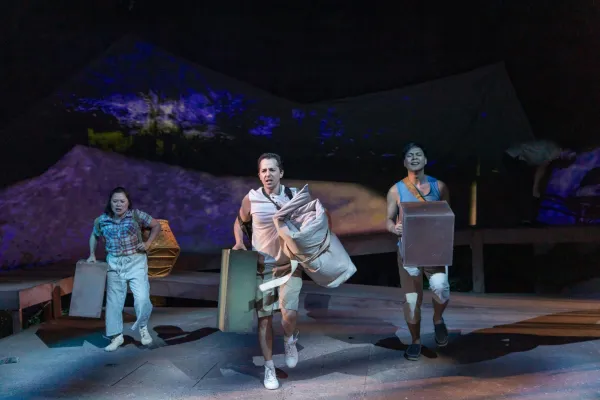
The subject matter of Boni B. Alvarez’s Mix-Mix, The Filipino Adventures of a German Jewish Boy is intriguing: How many people know that while the USA turned away boatloads of Jews fleeing the Nazis, the Philippines was one of the few places on Earth to welcome those seeking to escape persecution – and eventually eradication? This lost chapter of history is especially interesting to me because my own extended blended family includes both Jews (albeit of Ukrainian, not German ancestry) and Filipinos. So, I went to see Mix-Mix with high hopes, but alas, I have to give this two-act drama staged in the cavernous subterranean depths of Downtown’s Los Angeles Theatre Center a mixed review.