
Global


ALBANY, NY (May 5, 2023) - The Museum of Political Corruption proudly announces that Anna Wolfe, Investigative Reporter for Mississippi Today has been named the 2023 winner of Museum’s Nellie Bly Award for Investigative Reporting. Anna Wolfe’s tenacious reporting has resulted in her exposing the biggest case of fraud in Mississippi government history.
The case involved Mississippi state officials’ mishandling of millions in federal funds intended to assist struggling families. Those involved have pleaded guilty and investigations by the FBI and U.S. Attorney’s Office are ongoing.
“I started reporting on Mississippi’s welfare system with a simple but often overlooked question: What is the poorest, yet most federally funded state in the nation doing to solve poverty? Who knew getting the answer would require the very kind of innovative, dogged and brave reporting that Nellie Bly championed. I’m certainly honored to receive this award in her name,” offered Wolfe.
Wolfe is the 7 th annual recipient of the award. Previous “Nellie” winners include Jerry Mitchell, Alex Gibney, Jane Mayer, Megan Twohey, Jodi Kantor, Jim Heaney, and Susanne Craig.

A succession of events starting in Barcelona, Spain, in February, and followed in Liège, Belgium, and Oslo, Norway, in April sent a strong message to Israel: The Palestinian Boycott, Divestment and Sanctions movement (BDS) is alive and well.
In Barcelona, the city's Mayor canceled a twinning agreement with the Israeli city of Tel Aviv. The decision was not an impulsive one, although Ada Colau is well-known for her principled positions on many issues. It was, however, an outcome of a fully democratic process, initiated by a proposal submitted by left-wing parties at the city council.

Hey China, quit threatening us! We’ll kick your ass.
Yeah, bad China, maybe worse than Russia, e.g.:
“The People’s Republic of China, which is increasingly challenging the United States economically, technologically, politically and militarily around the world, remains our unparalleled priority.”
The words are those of Avril Haines, director of national intelligence, addressing a Senate committee recently. As the New York Times noted, she “reinforced the message that President Biden and his top foreign policy aides have been sending on China. . . . that while Russia is a medium-term challenge, China is the greatest long-term rival of the United States and is the only nation with the power and resources to reshape the American-led international order.”

In fact, the US debacle in Iraq and the Middle East, and the humiliating retreat from Afghanistan were only signs of the decline in US power.
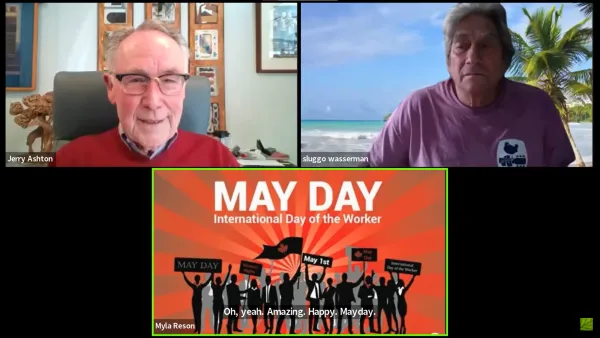
Our premier guest JERRY ASHTON has retired Billions of dollars in medical debt, freeing millions of American citizens from the burden of servitude to global corporate loan sharks.
Ashton’s legendary RIP Medical Debt organization uses contributions to pay off overdue bills run up in hospitals and elsewhere, but bought by predatory collection agencies and then turned against ordinary citizens.
Begun at the Occupy Wall Street actions many years ago, Ashton has used thousands of private donations to liberate many many families from unsustainable financial burdens.
Abolish Medical Debts was famously featured by John Oliver on his “Last Week Tonight” Show, in which Olver donated Big Money to liberate many many families from their overdue payments.
Jerry is a captivating, personable presenter who gives us a full hour of breakthrough brilliance that has made a very real difference in many many lives. Don’t miss his wonderful presentation!
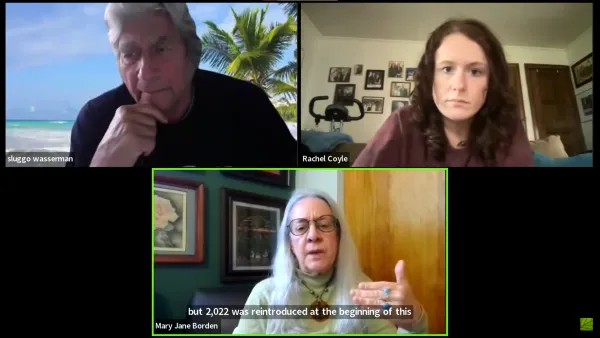
We start our Green Grassroots Emergency Election Protection zoom #134 with RACHEL COYLE’s truly astonishing report from the Ohio Heartland.
She starts with the “Education Destruction Act” poised to decimate learning throughout the state.
She then explains the gerrymandered legislature’s attempt to gut the referendum process while assaulting women’s ability to control their own bodies.
She follows with a horrifying account of the legislature’s defiance of the state Supreme Court in defense of the illegal gerrymandered maps that keep it in power.
MARY JANE BORDEN chimes in with a mind-boggling account of the struggle to legalize marijuana in Ohio, which has made remarkable progress cutting through the fascist fog.
WENDI LEDERMAN then explains the horrible official murder of the 27-year-old activist TORTUGUITA, who was shot dead---while seated, with his hands up—with 57 cop bullets in his body.
The fight over the 85-acre Cop City police center in a public forest in Atlanta continues to spiral down into tragic violence.
The 39th annual Los Angeles Asian Pacific Film Festival is taking place May 4-13 at a variety of mostly Downtown LA venues (see: https://festival.vcmedia.org/2023/venues-parking/). LAAPFF is arguably America’s main gateway for Asian, Asian American and Pacific Islander productions to gain access to the U.S. movie market and in particular, LA, the world’s capital of cinema. The yearly filmfest is presented by Visual Communications, an LA-based media organization whose “mission is to develop and support the voices of Asian American & Pacific Islander filmmakers and media artists who empower communities and challenge perspectives. Founded in 1970 with the understanding that media and the arts are powerful forms of storytelling, Visual Communications creates cross cultural connections between peoples and generations.”