Global
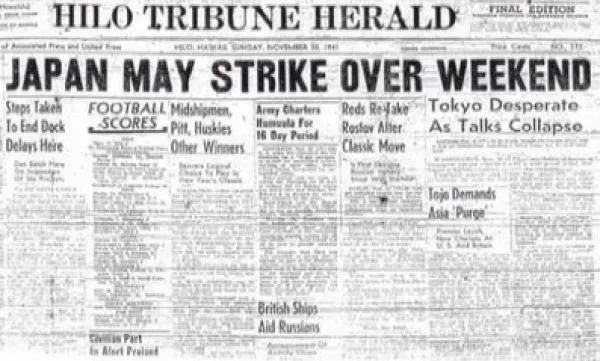
Last week I spoke at a high school. As I often do, I told them I’d perform a magic trick. I only know one, but I know it will almost always work with no skill required. I scribbled on a piece of paper and folded it up. I asked someone to name a war that was justified. They of course said “World War II” and I opened up the paper, which read “World War II.” Magic!
I could do a second part with equal reliability. I ask “Why?” They say “the Holocaust.”
I could do a third part, as well. I ask “What does Evian mean?” They say “No idea” or “bottled water.”
Of the great many times I’ve done this, only once that I recall did someone say something other than “World War II.” And only once did someone know what Evian meant. Otherwise it has never failed. You can try this at home and be a magician without learning any sleight of hand.

It’s that time of the year when conspicuous consumption disguises itself as altruism, and we are encouraged to purchase unnecessary goods for the people we care about. Last year was the year of the smart speaker (Echo, Alexa, etc.) also known as the always-on microphone capable of 24-7 surveillance. While many people have rejected the idea of the newer editions that include surveillance cameras, they are still on the market. Rather than giving gifts that benefit Big Brother, here’s a a cyber-punk gift guide designed to give your friends and family more privacy – or at least devices that respect the privacy that they already have.
Gift Idea #1 – A Virtual Private Network subscription
This is one of those services that many technologists already encourage people to use. Last year, rules were lifted that had prevented your Internet Service Provider (ISP) from spying on your traffic and profiting from knowing so much about you. Many people started promoting Virtual Private Networks VPN) as an alternative.
Glacier National Park is drip drip dripping into a puddle.
People and companies and governments are cutting down trees to burn them to save the planet from global warming, mixing the sacrificial trees with oh-so-clean coal, and in Detroit with tires, and in North Carolina with chicken shit.
Others are hacking down old forests to grow marijuana where it’s least likely to be found: another great benefit of drug prohibition.
Over 95% of California’s wild game was mercilessly slaughtered between 1865 and 1890.
Ted Turner is liberating the remnants of the bison in the American West on the model of the liberation of Baghdad: they end up $18 a plate.
Ranchers are luring wolves with sheep carcasses and tracking wolves’ radio collars like a Saudi hit squad tracking a journalist, before playing American Sniper.
Endangered species are being hunted just as viciously by lobbyists.
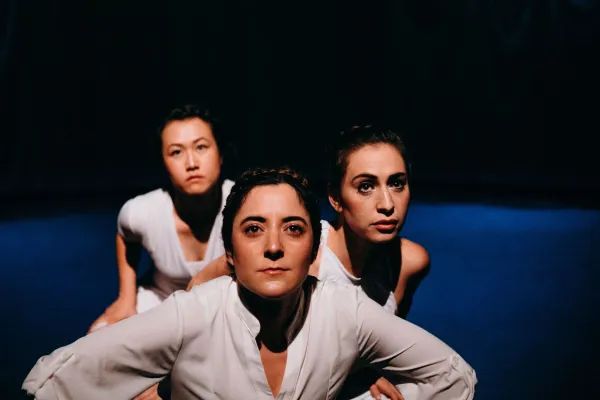
The Actors’ Gang has long been among my favorite theatre companies. Over the years I’ve attended their hard-hitting dramas and trenchant satires, from Tim Robbins’ early anti-Iraq War Embedded to an adaptation of Orwell’s 1984 that commented on the Bush regime’s torture policy to the antiwar classics Bury the Dead by Irwin Shaw and the docu-play The Trial of the Catonsville Nine about the pacifist Berrigan Brothers and so on. To be fair, the intrepid troupe has presented its fair share of comedies, too - more often than not performed by thesps donning commedia dell’arte masks in original works written by Robbins, such as Harlequino - although these productions often contain heavy doses of social commentary along with hearty laughs.
But with The Gang’s Aphrodite’s Holiday Show it is, as Monty Python pithily put it, time “now for something completely different” at the Ivy Substation. In this 90 minute variety show performed without intermission the usually thought-provoking Gang here lets its collective hair down with a diversion designed to maximize merriment during this season of mirth and goodwill to all people.
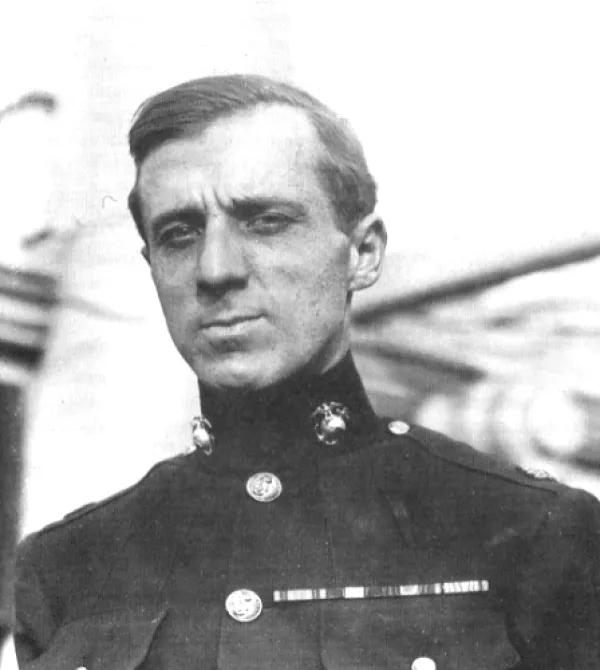
I was involved in pro-peace, anti-war, anti-US Imperialism efforts during the most hideous years of the Reagan/Bush administrations (from 1980 – 1992) that resulted in the deaths and sufferings of millions of innocent people in virtually every South and Central American nation you can think of.
As I remember the many innocent – often “disappeared” - war-refugees who suffered, starved and died at the hands of my war-profiteering national leaders, I am unable to shed any tears for the guilty ones, even if they are now dead or dying, for they were war-mongers that never apologized for their misdeeds. They were members beholden to Wall Street and War Street whose intentions made them responsible for brutal massacres, assassinations, torturing, mass killings, starvation and the impoverishment of millions of innocents that wanted to live in peace in their homeland that had been targeted for exploitation by my once-beloved homeland.
A new film called A Dangerous Idea argues that the concept of the gene will be looked back on (if humanity lives long enough) in the way that we look back on claims of “royal blood” and skull size as justifications for power and social status. The film makes the case that eugenics and (its more recent name) genetics has been driven by the same interests as those past claims.
Our long-awaited “Mueller Time” has filled the punditocracy with tales of collusion and delusion. But most have missed the two-word trap door through which Donald Trump is likeliest to fall.
Yes, the Trumputins did steal 2016.
Collusion, technically, is not a crime. Treason is. So is conspiracy. But they may be hard to prove.
Yes, the Don Jr.-Eric-Ivanka-Kushner-Cohen-Manafort cabal has lied to Congress, the courts, and the people. More will arise as the Trump consiglieri flee the sinking ship.
But as predicted by Steve Bannon, here are the two words most likely to bring Trump down: MONEY LAUNDERING.
To source this for yourself, start with David Cay Johnston’s It’s Even Worse than You Think and Craig Unger’s House of Putin House of Trump.
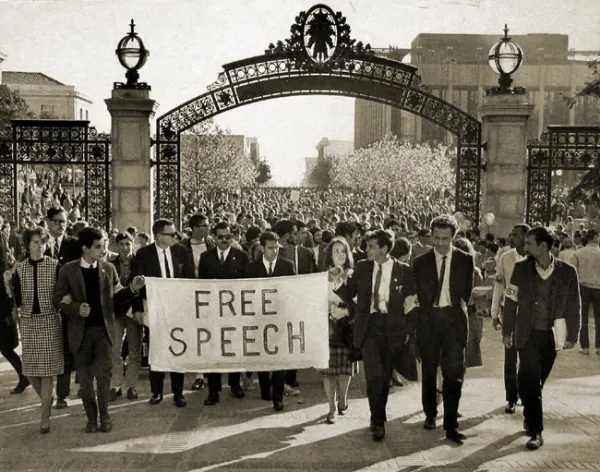
There has been another defenestration of a television-based political commentator for touching the only real electrified third rail remaining in reporting what passes for the news. Marc Lamont Hill, a Temple University professor of Media Studies and Urban Education, who is a regular political commentator on CNN, was fired for what he said in a speech at the International Day of Solidarity with the Palestinian People, which took place last Wednesday at the United Nations. Hill called for a “free Palestine from river to the sea,” which CNN considered grounds for terminating his contract.