Global
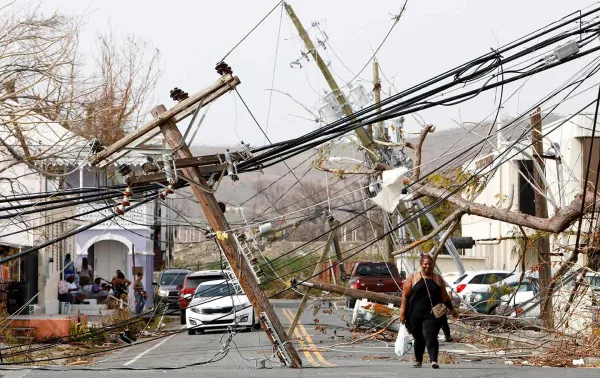
Two months after the Sept. 20 landfall of Hurricane Maria, Puerto Rico—like the nearby Virgin Islands—is still in a state of horrifying devastation. The help being offered by the Trump administration is thin to the point of being cruel and unusual.
At this point one must ask: Is Trump’s astonishing lack of aid part of a larger plan to cleanse the islands of their native populations, drive down real estate values and create a billionaire’s luxury hotel-casino-prostitution playground à la Cuba before the revolution?
In other words: ethnic cleansing for the superrich.
There is just one piece of good news: Rep. Ted Lieu, D-Calif., has joined Rep. Stacey Plaskett of the Virgin Islands in proposing that Puerto Rico’s electric grid be rebuilt with wind, solar and a network of micro-grids. More than half the original electric grid is still not functioning, with frequent blackouts occurring in areas where the grid is operational.

OK, here’s a good one: What’s the position of women in the antiwar movement?
This was circa 1967, when I was a college kid just coming of age, psychologically and politically. I was a hippie. I had stopped cutting my hair. I’d discovered pot. And I was outraged by the Vietnam War. I was also still swaddled in the sexism of the day, and I laughed knowingly at the answer to this little joke:
Prone.
By the early ’70s, women’s rights emerged as a movement and a lot of men began to see that sort of humor in a stunningly different context. I went through a year of shame and shock as I became aware of my own sexism — “you gotta control your woman” — and did my best to embrace feminism and surrender the stupid male birthright that this was my world more than it was hers . . . that I was the boss, that sex was something to be pried loose from her.
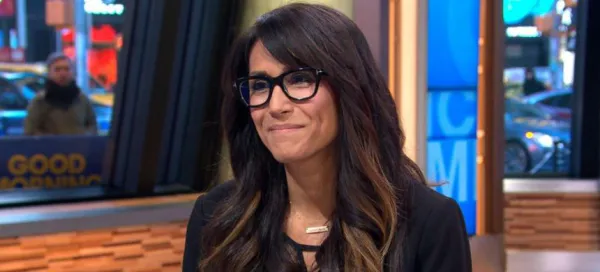
 hose aren’t the only questions raised by the surprise assault accusation by radio performer Leeann Tweeden against comedian-turned-US Senator Al Franken, but they might be enough to offend everyone. And everyone probably should be offended by one or another aspect of this story – a dicey opinion to have so early in a story, but let’s look closely at what we know now (late on November 16).
Start with the accusations: There are two, and they are quite different in important respects. The two alleged incidents occurred during a two-week USO tour to Kuwait, Iraq, and Afghanistan in December 2006. The accusations of 2017 first appeared on a KABC website. She works for KABC, which ran the story under Leeann Tweeden’s byline and with the fundamentally problematical headline:
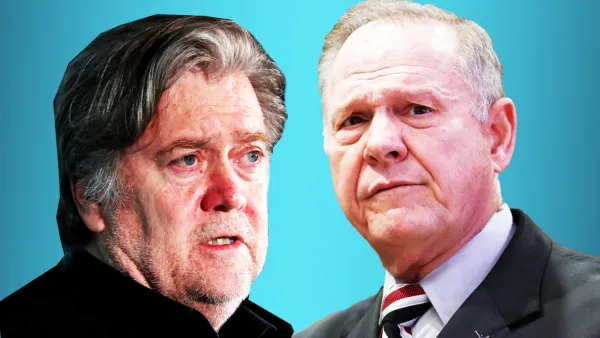
Childish oversimplification seems to be spreading throughout public discourse. Maybe it’s the character limits on tweets. Maybe it’s the second limits between commercials. Maybe it’s two-party politics. Maybe it’s an excess of information. Maybe it’s presidential example. Maybe it is, in fact, thousands of different things, because reality is actually very complicated.
In any case, the phenomenon I’m observing has been growing for some time. I recently found a professor willing to publicly debate me on the question of whether war is ever justified. Now I’m having the hardest time finding a university willing to host the debate or even to recognize the concept of civil nonviolent debate. But where would anyone go to observe such a thing? Not television. Not most text journalism. Not social media.
“There’s no difference between the Democrats and the Republicans.”
“The Democrats and the Republicans have nothing in common.”
These are both ridiculously stupid statements, as are these:
“Women always tell the truth about sexual assault.”
“Women always lie about sexual assault.”
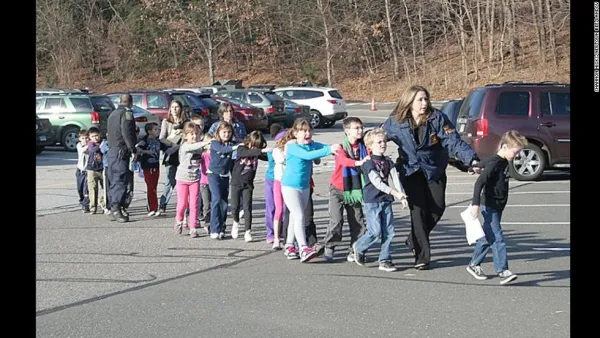
Are veterans of the U.S. military disproportionately likely to be mass killers in the United States? Asking such a question is difficult, first because of concerns of profiling, discrimination, etc., and second, because it’s hard to answer.
It’s important to answer because it’s important for us to know whether military training is contributing to this epidemic, a fact that (one must rush to say) would not somehow eliminate the roles played by gender, guns, mental illness, domestic violence, a violent culture, the mass media, economic inequality, or anything else.
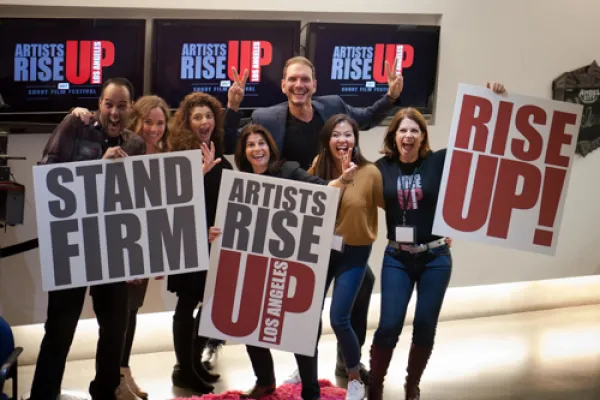
On Wednesday night, Nov. 8, 2017, the exact one year anniversary of Trump's Electoral College theft of the presidency, Artists Rise Up Los Angeles held its third event. ARULA was co-created by director Sue Hamilton the day after Trump’s ascension to the throne in order to rally artists to fight the pig who lost the popular vote by 3 million-plus ballots and his regime.
NATO’s recent provocative decision to build up its military forces across Europe by sending four new multinational battalions to Lithuania, Latvia, Estonia and Poland, comes at a time of great turmoil and intense questioning of global security with new forces for both good and evil straining to make their mark on the course of history. This weekend, at the Vatican, Pope Francis held an international conference to follow up on the recently negotiated treaty to prohibit the possession, use, or threat of use of nuclear weapons leading to their complete elimination which was negotiated in the UN General Assembly this summer by 122 nations, although none of the nine nuclear weapons states participated. Honored at the conference were members of the International Campaign to Abolish Nuclear Weapons (ICAN) which worked with friendly governments to hold nuclear weapons unlawful, and has recently been awarded the 2017 Nobel Peace Prize for its successful efforts.
Things fall apart, the center cannot hold . . .
The “man’s world” I grew up is shattering into fragments of shame, contrition and desperate denial. Allegations of sexual harassment and abuse are catching up with powerful perps, sometimes decades after the fact. On Capitol Hill, we now know about a “creep list.” Women shouldn’t ride alone in an elevator with these guys. This is our democracy.
The only real surprise in all this is that suddenly it matters . . . that women — as well as young males, children of both genders — were harassed, humiliated, raped by powerful male adults: that “me too” resonates in the news. At one time, outright denial of a sexual abuse allegation wasn’t even necessary because, even if it were true, so what? That was then. The idea of “a man’s world” was solid and, well, boys will be boys.