
Global
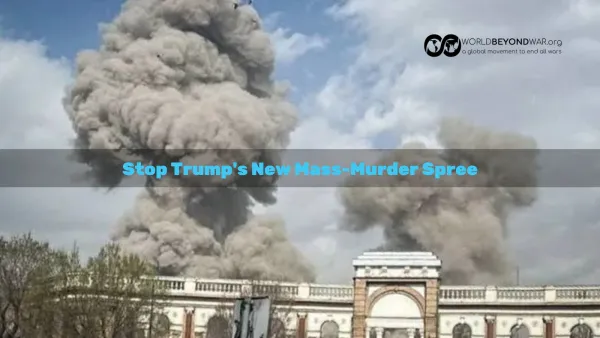
The latest location where Trump has given the orders to murder people is Iran.
Remember a couple of months back when establishment U.S. lawyers and human rights groups were admitting that Trump’s attacks on boats in the Caribbean and Pacific were nothing other than murder?
Murder doesn’t cease being murder because it’s further away or grander or provokes a more dramatic response or targets victims who speak a different language.
By all means hunt in the Epstein files for evidence of Trump raping or murdering, but don’t pretend we don’t already know.
America's Orange King suggested that Americans should support military action against Iran, claiming it was necessary to eliminate threats from the Iranian regime and protect the American people. We must not forget that the King is a pedophile, racist, misogynist, narcissist and a liar. In this case, the lie is that the American people were in any way threatened by Iran.
I am a patriotic American who despairs at the current state of affairs in America. I hope the American Empire is defeated because I yearn for a peaceful world.
America turned away from peace when the National Security State assassinated President Kennedy in 1963, five months after his American University peace speech. What followed was an effort to continue creation of the American Empire, but there was some restraint. After the fall of the Soviet Union, there was talk of a peace dividend as expressed by George H.W. Bush and Margaret Thatcher. America could finally move towards minimizing the enormous expense of Empire and make Kennedy's dream a reality.
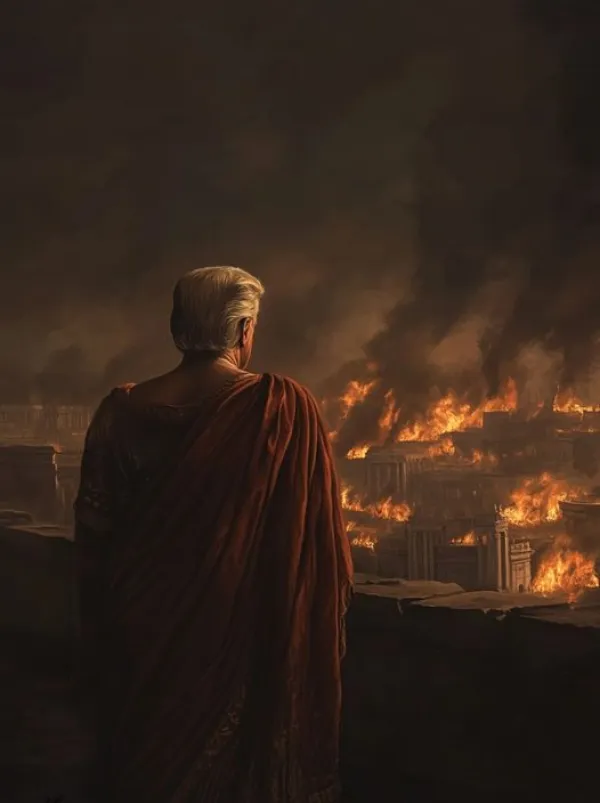
Democracy is invoked as moral legitimacy in war, while Iran’s authority rests on layered political, religious, and historical foundations.
Democracy, however, is not the enemy. Its manipulation is.
For decades, Western political discourse has equated legitimacy with elections—numbers counted on a single day, certified by institutions that themselves operate within systems shaped by immense financial power. The result is a troubling reduction: legitimacy becomes procedural rather than moral.
In the United States, democracy functions within a political economy deeply influenced by corporate financing, lobbying structures, and concentrated media ownership. Public opinion is not merely informed; it is engineered. Electoral competition exists, but within boundaries drawn by wealth and institutional continuity.
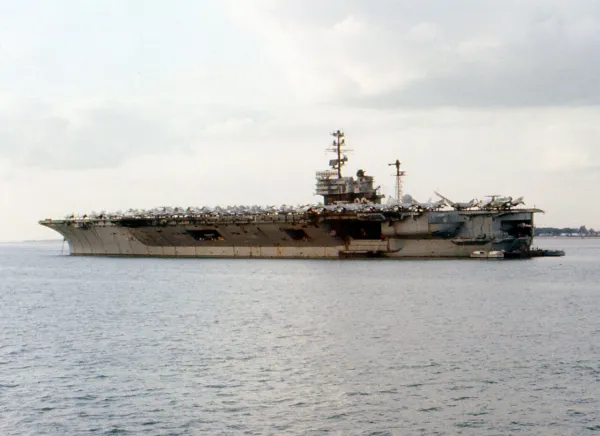
The war on Iran has not merely opened a new military front in the Middle East. It has shattered long-standing myths that have shaped US policy and regional politics for decades. What has unfolded in the past days is not simply a battlefield confrontation; it is a historical rupture.
Several narratives that once appeared unassailable have collapsed under the weight of reality. At the same time, theories long dismissed as ideological or exaggerated have been confirmed with startling clarity.
The Myth of American Protection
For decades, Washington has portrayed itself as the ultimate guarantor of regional security. US military bases, aircraft carriers, air defense systems and bilateral security agreements were marketed as shields protecting allies from existential threats.
This war has exposed that promise as hollow.
Despite overwhelming US military presence across the Gulf, regional allies have faced missile alerts, drone incursions and maritime threats. American troops themselves have been killed. Energy infrastructure has been threatened. Shipping routes have been destabilized.
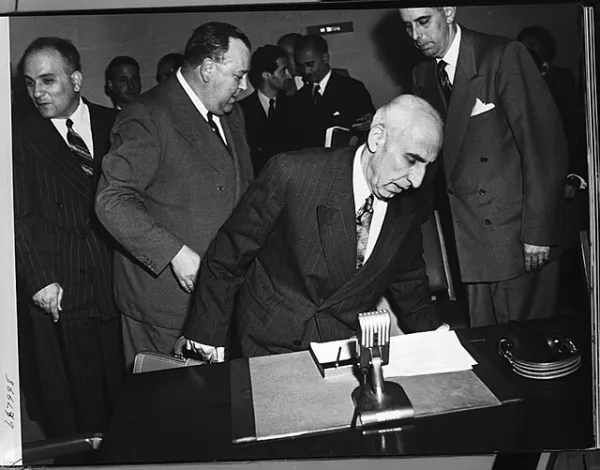
“So this is how we get rid of that madman Mossadegh.”
In the summer of 1953, Secretary of State John Foster Dulles reportedly held up a copy of a top-secret plan—Operation Ajax—and made that declaration. The operation, engineered by the United States and Great Britain, overthrew Iran’s democratically elected prime minister, Mohammad Mossadegh. In his place, Washington and London restored Mohammad Reza Pahlavi, a monarch whose rule would last 26 years and whose regime would become synonymous with repression, inequality, and dependency on Western power.
Dulles delivered the news in his characteristically brisk and forceful manner. Applause reportedly followed. President Dwight D. Eisenhower and senior policymakers regarded the coup as a triumph of American resolve against Soviet influence. In Washington, it was celebrated as strategic genius. In Iran, it planted the seeds of lasting resentment. For his service, Dulles would later receive the Presidential Medal of Freedom—America’s highest civilian honor.
History, however, has a long memory.

When Daniel Ellsberg died in 2023, the world lost a unique voice of sanity. Five decades earlier, as a “national security” insider, he had released the top-secret Pentagon Papers to expose the official lies behind the ongoing Vietnam War. From then on, he never stopped writing, speaking and protesting for peace, while explaining how the madness of nuclear weapons could destroy us all.
Now, Ellsberg’s voice is back via a compelling new book. “Truth and Consequence,” being published this week, provides readers with his innermost thoughts, scrawled and typed over a 50-year period. The result is access to intimate candor and visionary wisdom from a truly great whistleblower.
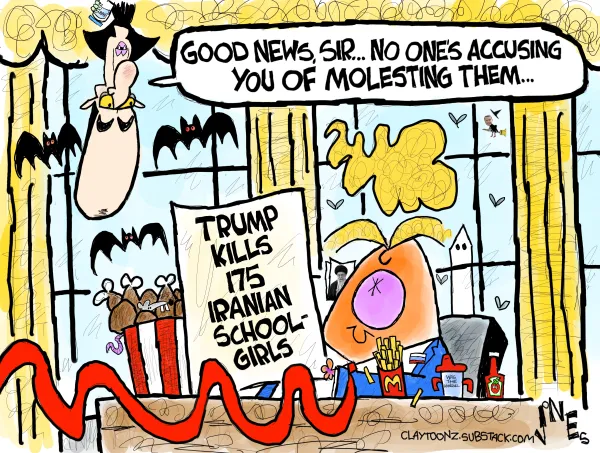
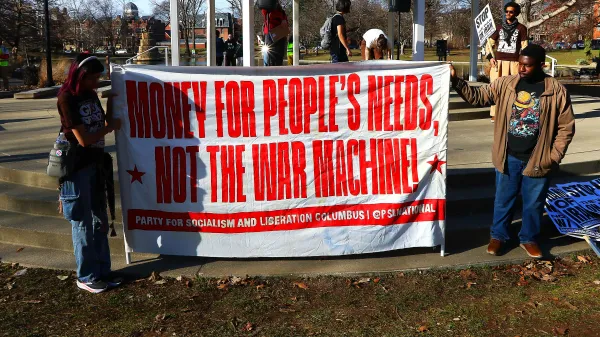
No matter how hard I try, I can’t seem to not read way too many of the stories about Trump’s Folly, the US and Israel attack on Iran. I fool myself, as I read, thinking I can figure out what the frick they think they are doing, and how this will turn out. Any silver lining in these dark clouds of war so far is escaping me.
The best I can figure from the cheap seats thousands of miles away is simple and maybe simple-minded. Trump and Netanyahu seem to have taken a war to Iran, because they could, and because they both think they will never have Iran in a weaker position than they now. They have no idea how this will turn out. They’ve crossed their fingers and are hoping they throw a bunch of missiles in that direction and somehow it will come out all right.
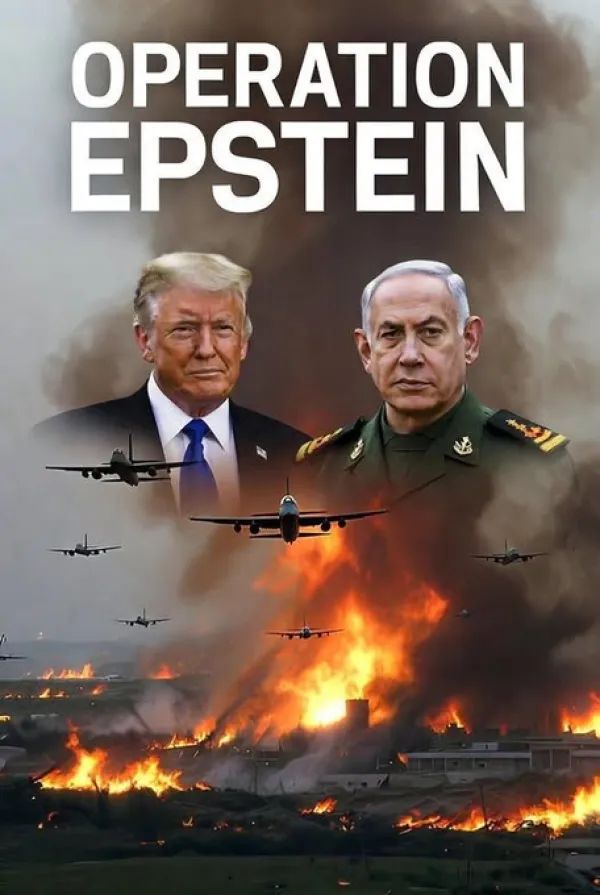
Israel and the United States launched a joint attack on various targets in Iran. The operation, codenamed Roaring Lion by Israel and Operation Epic Fury by the U.S. The more appropriate name for such a joint unprovoked attack on Iran should be "Operation Epstein Fury." Reason?
A declassified FBI memo from the Epstein files includes incendiary allegations about US President Donald Trump. The memo says that Trump was “compromised by Israel," that convicted pedophile Jeffrey Epstein worked with Israeli intelligence, and that a Jewish religious group calling itself Chabad-Lubavitch sought to hijack his first term in office. Source: Middle East Eye, Jan. 24, 2026.
The Associated Press and intelligence sources confirm today that the first strike hit its target in Iran at around 10:00 AM Tehran time on Saturday, February 28, 2026. The morning zero hour was calculated to trick Iran into believing that the ongoing negotiations in Geneva might end the conflict peacefully.