
Local
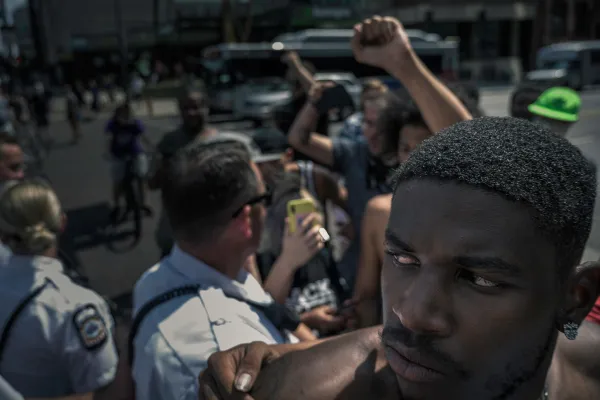
Our local police-state apologist broadcast news stations, such as Sinclair-owned WSYX Channel 6, can’t resist to lead their shows with the bloody crime-of-the-day from some of our urban neighborhoods.
Nothing like a morning and nightly dose of urban violence to get out the conservative vote or push back against defunding the police. In case anyone needs reminding, Sinclair Broadcast Group, which owns roughly 200 local news stations, is pro-Trump and has ideas on rivaling Fox News.
Mayor Ginther has held three press conferences addressing this apparent spike in violence. And even though the call for less police has never been louder, Chief Quinlan has recently suggested more officers are needed to prevent gun violence.
Thursday, August 27, 2020, 4:00 - 5:00 PM
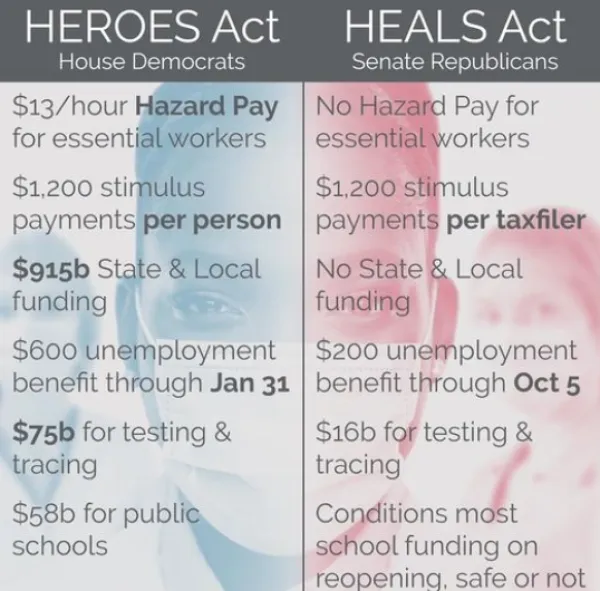
We will caravan to Ohio Statehouse to call attention to the need for Congress to act now. Join us to elevate this message! Caravan will start at both locations: East High School parking lot, 1500 East Broad Street, Columbus OH 43205 or Whetstone Community Center parking lot, 3909 North High Street, Columbus OH 43214. Cars will gather at these locations from 4:00p-4:30pm then we will proceed to the Statehouse and drive around it for 30 minutes. Create signs for your car or come without and we can provide. Let's join forces to support the #HeroesAct!
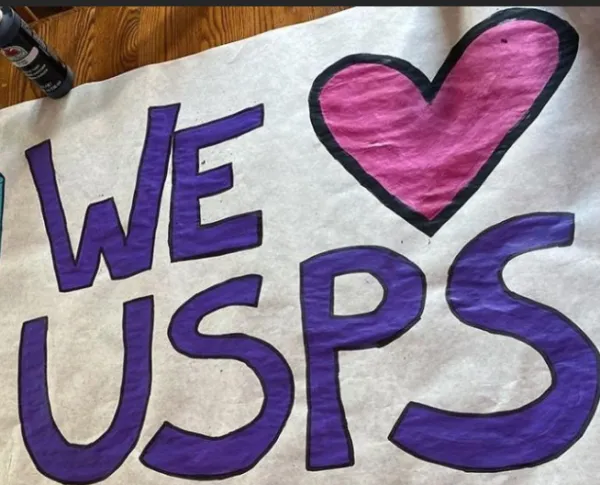
The Postmaster General just announced they would postpone cuts to the USPS until after the election. Meanwhile, Congress is refusing to increase funding for the USPS while seriously considering handing the Pentagon another $30 billion in the next COVID relief package. What kind of backwards priorities are these? Tell Congress to prioritize democracy and expand funding for the USPS NOW!

Definition from the Greek paradigm meaning pattern: “A paradigm is a scheme for understanding and explaining certain aspects of reality.”
For the last 2000+ years we’ve been in the Piscean Age which focuses on, among other values, money, power and control. The Aquarian Age is the new paradigm we entered in 2012. The focus of the Aquarian Age is love, brotherhood, unity and integrity. This book talks about the paradigm shift that we are currently experiencing on Earth. Paradigm Shifts don’t happen quickly; they can take hundreds of years to emerge, yet it seems like an abrupt change. As we saw in Who Moved My Cheese, people resist change and cling to the status quo with everything they’ve got. In our world today we see intense tribal and ethnic loyalties. Politics has become polarized all over the globe; you either agree with me or you are my enemy.
We’re still in the throes of this birthing process: bringing forth the new world order. As painful as the process is, no matter how tenaciously we cling to the old ways, the new paradigm WILL arise out of the ashes of the old paradigm.


David Rovics' political commentary through songs can all be found as episodes on the Song For Today podcast. Everything else can be found as an episode of the podcast, This Week with David Rovics. Both podcasts are at least allegedly available on all the usual podcasting platforms. They can also both be found front and center at davidrovics.com and on the David Rovics mobile app, as well as on the audio feed you can subscribe to via
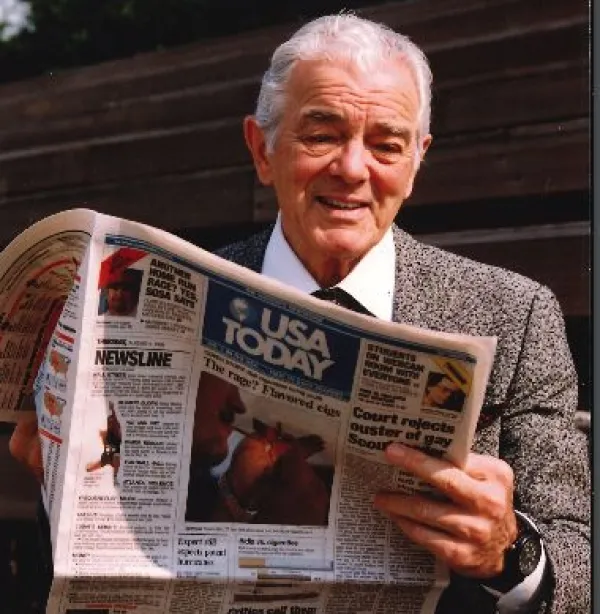
The Columbus Dispatch's corporate owners, the Gannett Co., are compelling it to become an honest, diverse newspaper. And you can blame the late, great Al Neuharth. I will explain shortly.
You would have to be a resident of outer space without satellite communication to not know that at the Dispatch, white men dominate the newsroom.
For as long as I can remember, the Dispatch and its companion websites have covered the news from the perspective of white men. Women, minorities, people practicing alternative lifestyles and the young have gotten the short shrift.

Systemic racism. According to some sources it’s a form of racism that is embedded as a normal practice within society or an organization. Recently, Merriam-Webster has decided to change their definition of racism to reflect systemic oppression and examples of such actions. I don’t have to read someone else’s definition of systemic racism. In fact, no minority person, who is aware of what it entails, needs to read it. We live, hear about it and see it, almost daily.
It happens everywhere, even in the grocery line. I was fourth in the line at Save-a-Lot in Northern Lights on Cleveland Ave, which is in a minority area. The line had stopped moving and I heard the security guard, white, say “Where’s your receipt for that?” in an aggressive manner to a clean cut, nicely dressed middle aged Black man. The man was speaking in low voice tone and I didn’t hear his response. The guard said, “How do I know you brought that across the street?”
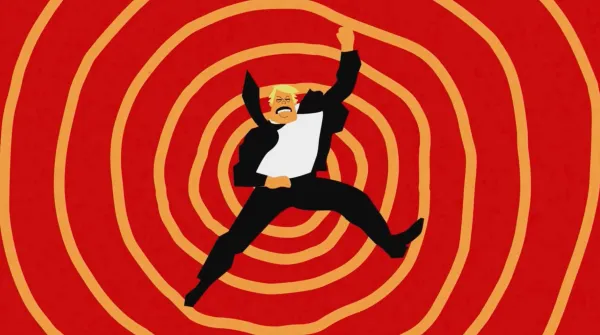
Political commentators have spent nearly four years trying to understand why Donald Trump spreads lies, ignores constitutional norms and otherwise fails to act like the president of the United States. In a new documentary by Dan Partland, mental health experts take on the challenge.
Their conclusion is spelled out in the film’s title: #Unfit: The Psychology of Donald Trump. The 45th president, they believe, is so psychologically impaired that he’s incapable of functioning responsibly. Specifically, they say he has “malignant narcissism,” which is marked not only by self-importance but by paranoia, anti-social behavior and sadism.
It’s actually George Conway—lawyer, Trump critic and husband of departing presidential counselor Kellyanne Conway—who first makes the charge. But health professionals such as psychologist John Gartner agree, which may raise a question or two in viewers’ minds:
First, can psychologists really diagnose someone they haven’t met? Yes, says Gartner. In fact, he claims that observing an individual’s behavior—as we’ve all had a chance to do with Trump since he took office—can yield a more accurate diagnosis than an in-person interview.
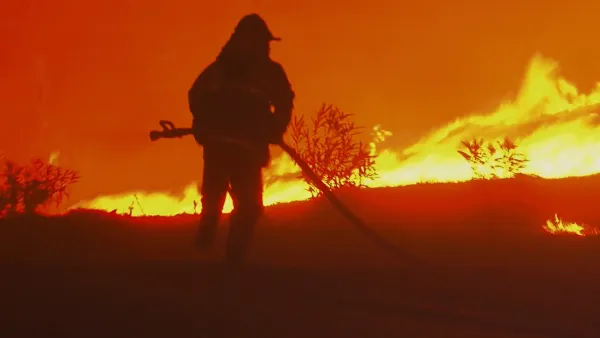
The first 10 minutes of Rebuilding Paradise are harrowing.
Ron Howard’s documentary is mostly about the aftermath of the November 2018 “Camp Fire” in Paradise, California, but first it shows us the fire itself. With the help of cellphone and dashcam footage, it recreates people’s terror as they attempt to escape a wildfire that engulfed their town only minutes after originating on a nearby hillside.
In one particularly hair-raising moment, we find ourselves inside a vehicle barreling along a road that has turned into a fiery obstacle course. Meanwhile, the air is so filled with smoke that the day appears to have turned to night.
The danger is real, we learn. By the time the fire is brought under control, 85 residents of Paradise are dead. Of those who survive, most have lost their homes, along with schools, municipal buildings and services.
Following this terror-stricken beginning, Howard’s documentary evolves into a month-by-month account of attempts by residents and officials to revive a community that has been largely destroyed. The result is a film that’s sincere and warmhearted.
And, it must be said, just a little dull.