
Local
Monday, August 24, 5:30-7:30pm
Worthington Village Green

Saturday, August 22, 12noon
North Broadway and High Streets
When: Tuesday, August 25th from 1pm until 3pm.
Where: A car caravan protest will circle the OSU Columbus campus, beginning from Bricker Hall on Annie and John Glenn Ave. A socially-distanced rally will take place at and around Bricker Hall.
Who: The Graduate Student Labor Coalition, an organization to build collective power among graduate and professional students at OSU, across all colleges and departments. The GSLC advocates for policies that are emblematic of an anti-racist culture, value fair compensation for graduate student labor, promote a collaborative and supportive work environment, and further a productive and restorative relationship with the greater Columbus and University communities.

Friday, August 21, 5:30pm
Goodale Park
Facebook Event
"Do not get lost in a sea of despair. Be hopeful, be optimistic. our struggle is not the struggle of a day, a week, a month, or a year, it is the struggle of lifetime. Never, ever be afraid to make some noise and get in good trouble, necessary trouble." -John Lewis
*Yoga with Ellen at the gazebo at 5:30!*
Speakers include:
Kiara Yakita
Kiara Curry
Jessica Smiley
Tyler Rutledge
And more TBA
Grab a mask and join us at Gooddale Park for a peaceful rally to support Black Lives Matter, Black liberation, justice, and the valuing of black lives. We will rally in the park with passionate speakers and march to allow our voices to be heard.
Friday, August 21, 5:30pm
Goodale Park
Kiara Yakita
Kiara Curry
Jessica Smiley
Tyler Rutledge
And more TBA Grab a mask and join us at Gooddale Park for a peaceful rally to support Black Lives Matter, Black liberation, justice, and the valuing of black lives. We will rally in the park with passionate speakers and march to allow our voices to be heard. Change comes from persistent efforts and the warrior spirit of those who wish to create a better world. We must let them know that we are still here and we will not submit or give up. We are uniting across racial and socioeconomic lines, in unity, to protect, uplift, empower and embolden Black Lives
Pint Size Protesters was created to give kids and their families a safe space in the Black Lives Matter movement, but also to support families with resources and opportunities to learn and grow so that we can truly bring about change. Our mission is to organize, educate, and demonstrate with the goal of hosting monthly educational and family friendly protest activities.
We formed in early July and were invited to participate in Worthington’s “Why We March” rally where we staged a protest that was well received by the community! This month, we kick off official Pint Size Protesters events with a lesson in racism featuring the book A Kids Book About Racism by Jelani Memory and our first protest, which took place in Dublin on 8/15.
Now onto September! With this being a very important election year, we thought it important to focus on voting and building the next generation of voters. Thus Pint Size Protesters presents: “Why Voting Matters” was born:
Date: September 12, 11am - 3pm
Location: The Vanderelli Room (Private Yard Space), 218 McDowell St, Columbus, OH 43215
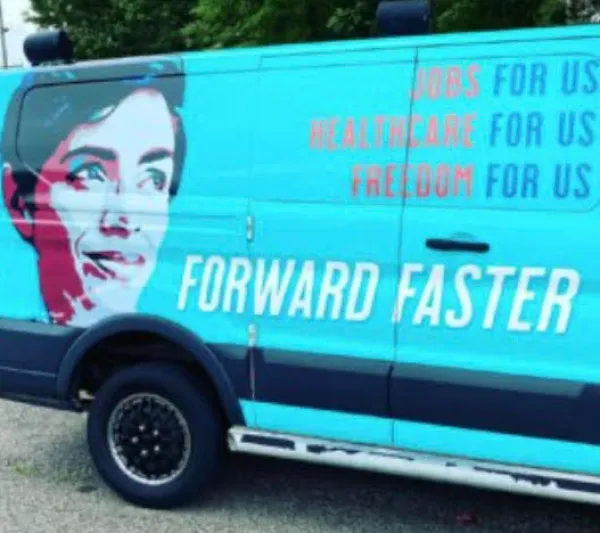
August 20, 2020, 4:45- 5:15 pm
Ohio Statehouse
Democratic Ohio-12 candidate Alaina Shearer, will lead our weekly Heroes Act protest caravan with her US BUS!
As teachers and shelter volunteers, we are seeing how COVID-19 is undermining the well-being of our community, especially members who were already in vulnerable positions before the onset of this pandemic. We were shocked when Congress did not pass the second relief bill in early August. Instead of extending the $600 weekly federal unemployment payments and eviction moratorium, Congress left for vacation. The Senate must return and compromise in order to pass a COVID relief package. People's lives are hanging in the balance. The economy stands on the edge of an even deeper collapse if a relief package is not passed. Our country needs a comprehensive plan to address our needs during the pandemic and beyond. This week we will be joined by local unions members as well as some citizens helping keep our neighbors safe in shelters.
The story that I am about to relate could well have been a contemporary adaptation of Dickens, yet I feel that even Dickens would have been impressed at the amount of adversity that I am about to tell. There is no exaggeration. I have even omitted parts, but that doesn’t make this story less brutal.
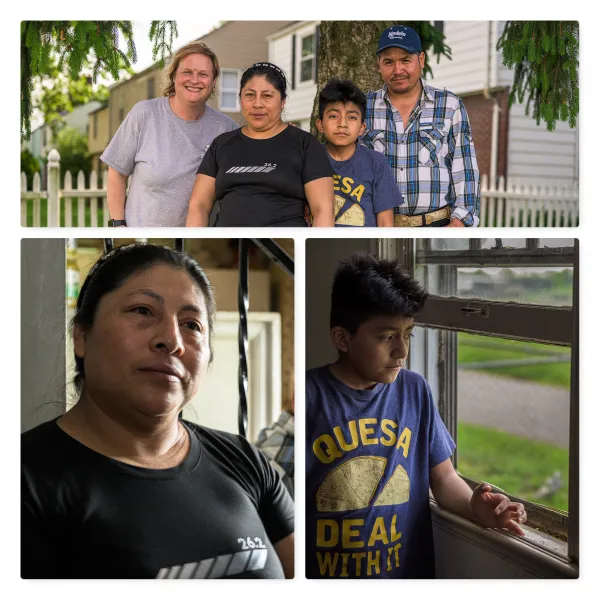
A little empathy is needed to understand this story. You would have to be a monster not to feel some compassion. This is a story of a poor Guatemalan family who escaped the brutality of their own country’s oppression and soul-crushing poverty to only find more heartache in the middle of Ohio.
I work locally as an interpreter and when I first met Huli at his school on the westside of Columbus back in 2017, he was a 10-year-old from Guatemala who was having nightmares. Not the nightmares most of us have sometimes. His nightmares were bloody and horrible and full of violence, impacting his school performance, his relationships, and himself.