
Local
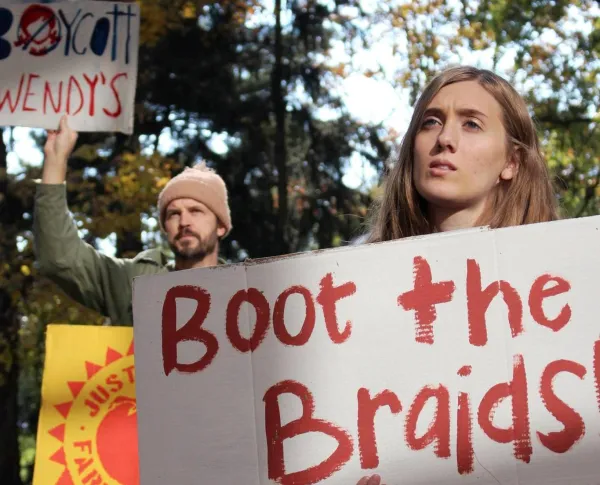
The Student/Farmworker Alliance held yet another protest on the Ohio State University campus on November 15. The student organization is engaged in a protracted struggle with OSU that began in April 2014, when they asked the university to terminate its contract with the Wendy’s Corporation. The fast food chain operates a restaurant in OSU’s Wexner Medical Center.
At issue is the human rights of farm workers in Wendy’s supply chain. Wendy's has refused to join the Fair Food Program developed by the Florida-based Coalition of Immokalee Workers (CIW). Joining the Fair Food Program would alleviate the poverty of farm workers who harvest the fresh tomatoes used in the Wendy's sandwiches and salads. The CIW's program also promotes a safer, more humane working environment, including zero tolerance for sexual harassment and slave labor — abuses still common in the agricultural industry.
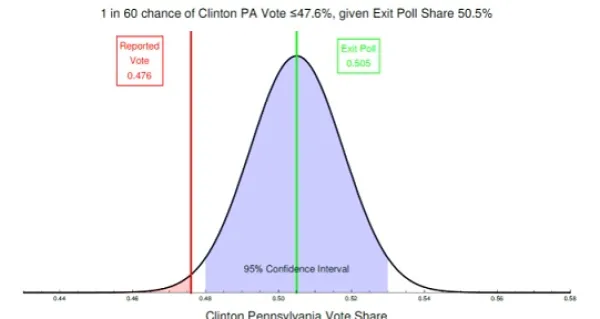
The article is contained in the attached PDF document.
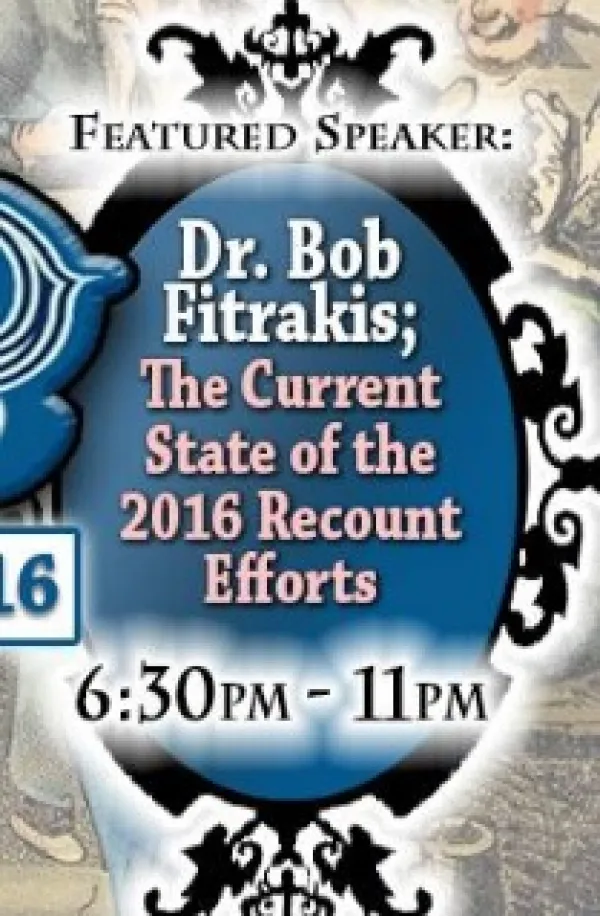
Sat, December 10, 6:30-11pm, 1021 E. Broad St.
(parking on street, in driveway or parking lot in rear)
Join progressive friends for food, drink and great music. Bob Fitrakis will speak about the recount.
Free, no RSVP required.
colsfreepress@gmail.com or 614-253-2571
I am an elected member of the Franklin County Democratic Party (FCDP) Central Committee. On Wednesday evening, I got an email on FCDP letterhead with an announcement from Columbus City Attorney Rick Pfeiffer. His message to the Democratic Party Executive Committee was that he will not be seeking re-election for City Attorney. He closed with an endorsement for his successor, City Council President Zach Klein.
I read this not so much as an endorsement, but as marching orders to support the candidate hand-picked by the party elite.
This morning I got confirmation. I received an email from Mayor Andrew Ginther announcing that he is also endorsing Zach Klein for City Attorney. There hasn’t been any Central Committee or Executive Committee meeting to discuss, and there certainly hasn’t been a broader conversation to get feedback from the public. This is what our democracy looks like in Columbus. I wish I could say I was surprised.
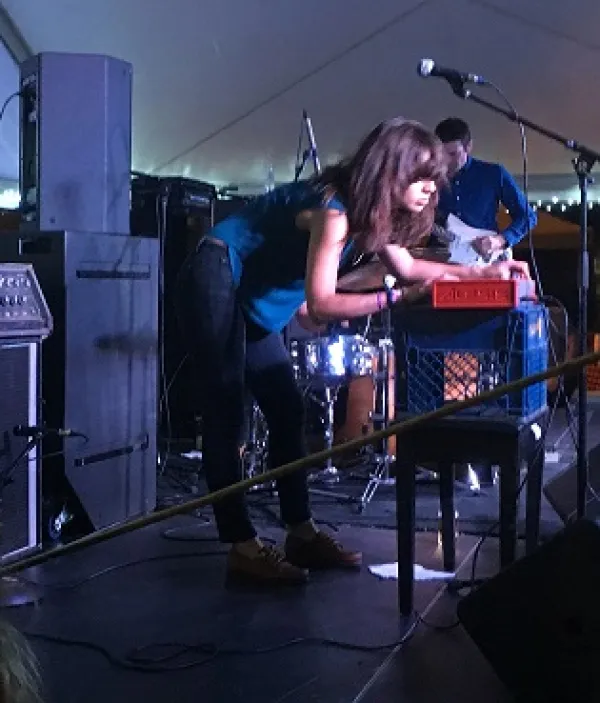
In the beginning of 2016 I hoped: if we get over this election we will be one step closer to a social evolution. Today, I think. Well. 2017 brings us the dystopian future of 2004. So forgive me how far this thing goes back.
Benefactor of the Unfortunate Election Columbus Hip Hop Album of the Year
Blueprint – Vigilante Genesis
Did I say 2004?
Well, I’m going to jump to 1988 when Iran-Contra proved the government can wage War on Drugs while selling guns on live television. George Bush Sr. used race-baiting to win the election despite the Iran-Contra hearings existing.
At the same time, Public Enemy’s “It Takes A Nation of Millions To Hold Us Back” and Boogie Down Productions “By Any Means Necessary” are released.
The impact of the Futuristic Hip Hop P.E. created coupled with BDP’s illustration of how someone could be both a revolutionary, and a graffiti writing BBOY was obviously influential on the work by people like Aesop Rock & Blueprint who rose to fame in the Post-911 era where George Bush JR. lied to us to destabilize Iraq, which created ISIS.
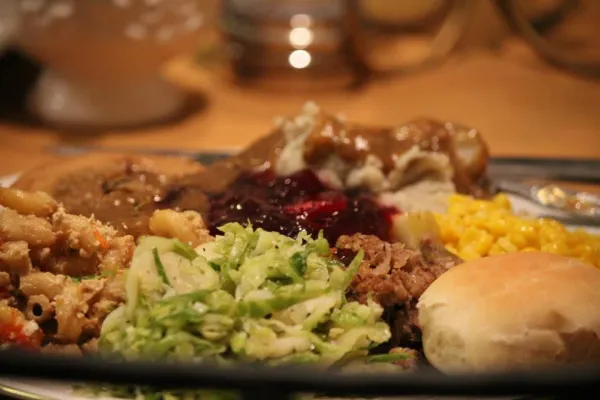
One of the most beautiful holidays I can remember since I became vegan happened in the earlier days of my vegan advocacy. It was 2002, and a non-vegan family I had been recently introduced to, made the most heart-warming and functional suggestion a non-vegan family could possibly make to welcome a vegan into their family. They invited me to share the holidays with them, yet the invitation alone, wasn’t what blew me away. It was the fact that, not only were they curious about veganism, they wanted to know ALL about it. It was also the fact that they asked me to share with them all my favorite vegan holiday recipes, and most amazing, was that they volunteered to get ALL the ingredients necessary, and to all pitch in to make a completely vegan ThanksLiving dinner! It was a fantasy come-true. If that fantasy family does not happen in your life, you can always go to meetup.com (and/or Facebook) and join The Columbus Vegan Meetupgroup and attend one of the many gatherings that are happening in throughout the holiday season.
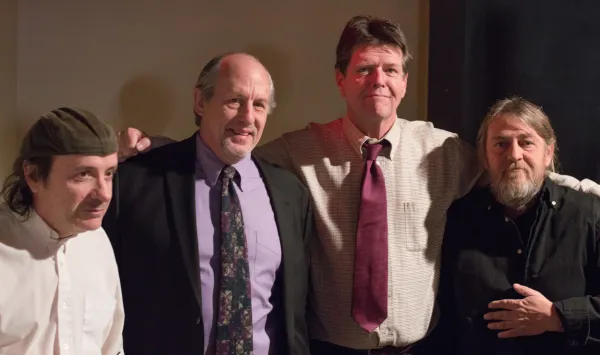
It's about me and Hillary, mostly, and how she blows off steam after a major disappointment in life by flying secretly into Columbus, then takes a special Ultra-Secret Uber to my pad where she works off her angst kama sutra kamikaze-style.
On me. It's wild. Unreal.
We met at a fund-raiser in Lima years ago, at the tank plant."Save the tank and let's get spanked," I wittily broke the ice with her at the hor d'oeuvres where she was sucking up the sushi with a hose from her purse. We got to talking about love and war. We clicked like a crazed gigolo Goober of Mayberry and a frisky Aunt Bee. We began our body work later that night. She got really limber after a few sessions. But that was long ago and many primaries away. Sigh.
Nowaday's it ain't purdy, as we used to say in Texas, in one of my many unpublished daydream novels, this energy-work she and I do.
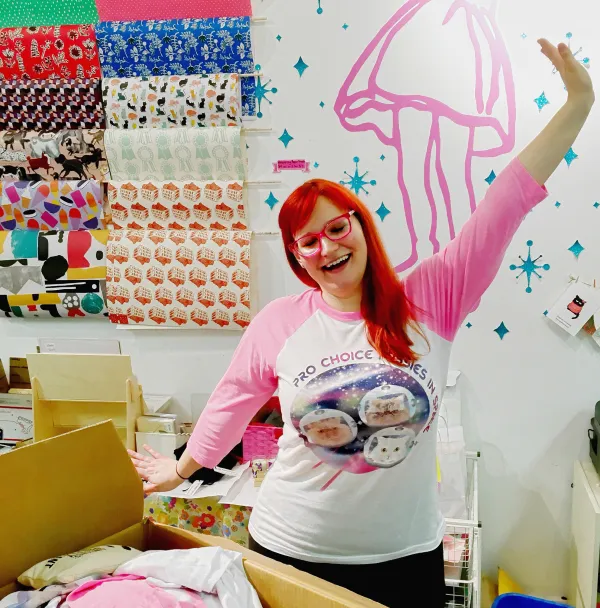
When it comes to reproductive rights, Amanda Patton isn't one to pussyfoot around. The cat-lover-turned pro-choice activist has made it her mission to raise awareness of the attack on women's rights that is going on in our country today. Patton is the founder of Prochoicecats.com, which advocates for reproductive rights and access. In March, Amanda successfully lobbied Columbus City Council to draft and pass a clinic protection ordinance.
A photo of women being bullied by pro-life protesters outside a Toledo clinic in 2014 was the match that lit the fire. The image prompted Patton and some friends to volunteer at the only remaining independent abortion clinic in Columbus, the Founder's Women's Health Center. There, they escorted frightened women through the gauntlet of hostile zealots. Before long, she left her tech job to take a patient-advocate position at the facility. Seeing firsthand the intimidation endured by women who were exercising their legal right to choose, Amanda became determined to do even more.

Radioactive Nuclear Waste: The August and November issues of The Columbus Free Press had articles about the dangerous nature of the depleted uranium hexafluoride (DUF6) radioactive waste – contaminated with plutonium – at the Portsmouth Nuclear Site in Piketon, OH, and at the Paducah Nuclear Site in Kentucky. This waste was generated from the gaseous diffusion uranium enrichment process that went on at the two sites for the better part of 50 years, starting in the 1950s and ending in 2001 at Portsmouth and continuing until 2013 at Paducah. Uranium was first enriched at both sites for nuclear bombs, then later for nuclear power generation. The enrichment process separates the one percent of fissionable (able to generate a nuclear reaction) uranium isotope from the bulk of the uranium.
Corroding Cylinders: Chemical reactivity is causing the cylinders that hold the DUF6 to rust and leak. Many of the corroded cylinders are over 60 years old. There are over 24,000 of these 14-ton cylinders at Portsmouth and 40,000 at Paducah.
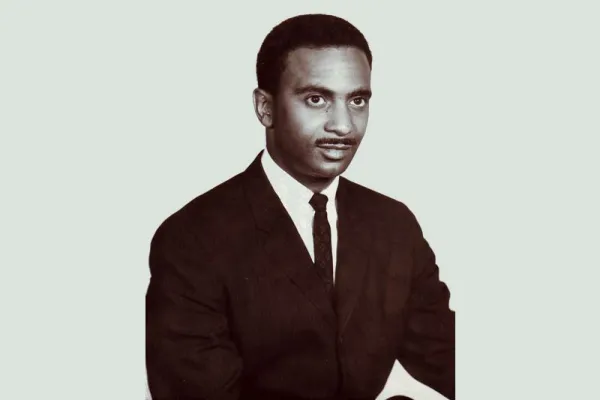
Jim Robinson earned a journalism degree from the City University of New York (CUNY) and was later hired by F. & R. Lazarus and Company as Urban Affairs Director and as Assistant to the Vice President of Credit Sales Promotion – winning accolades for innovation in advertising and marketing from his colleagues on Madison Avenue. His journalism career included the development of the Columbus Communicator News, as well as serving as its first Editor in Chief. He has also been a columnist for numerous newspapers over the years, including the Columbus Dispatch, the Call and Post, Columbus Post, and Business First (Columbus), to name a few.
Jim Robinson’s radio career included hosting talk radio on WVKO, a weekly jazz show on WJZA, and voice overs on multiple stations. He is most notably known for his daily segment on WCKX in the 1990’s, “Rich, Black Thought.” He was quite often referred to as “The Voice.” He was instrumental in revitalizing activity around Mt. Vernon Plaza, with promotions of businesses and events at the Focal Point, during the time that the office for James T. Robinson Marketing Services (JTRMS) was located there.