
Local
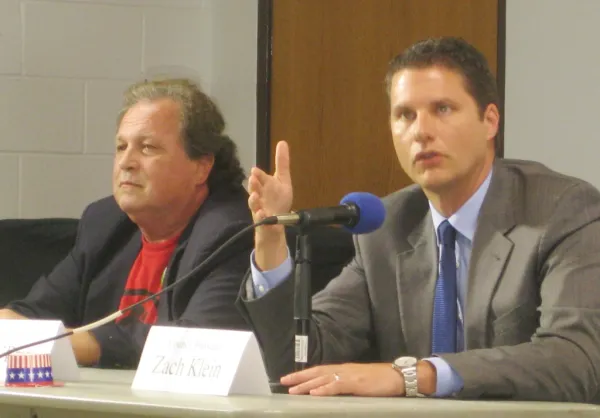
On September 14, two candidates for Franklin County Prosecutor answered questions about how they would respond to officer-involved shootings, if elected. As the candidates’ forum at Mt. Olivet Baptist Church proceeded, only one mile away 13-year-old Ty’re King was pursued and shot multiple times by Columbus police. He was taken to Nationwide Children’s Hospital and pronounced dead a few minutes after the candidates’ forum ended.
Adrienne Hood spoke at the beginning of the forum. Her son Henry Green was killed by Columbus police on June 6. “It’s unfortunate that the person who can give me the justice that my son deserves is not here,” she said, indicating the empty chair reserved for Ron O’Brien, the incumbent County Prosecutor candidate. O’Brien has not responded to demands by Green’s family to indict the officers who shot him and appoint an independent prosecutor to oversee the case.
Diversion programs
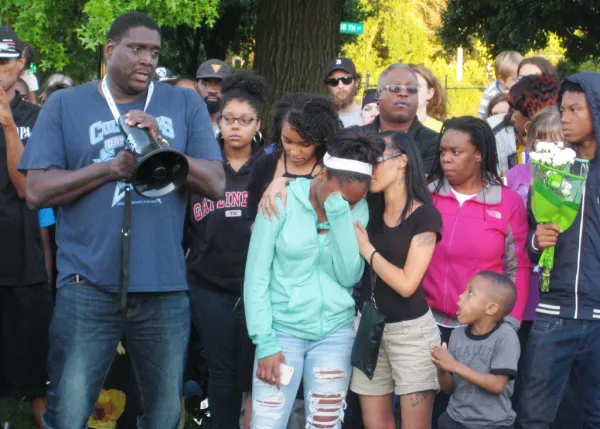
On Thursday evening family, friends, and neighbors of 13-year-old Ty’re King gathered in a field on South 18th Avenue in the Near East Side, close to where King was killed by Columbus police Wednesday evening. Over 200 joined the vigil, including the Columbus Day Stars, King’s middle school football team.
Police say that King was fleeing officers who were investigating an armed robbery, and pulled out what appeared to be a handgun. He was shot multiple times by officer Bryan Mason, a nine-year veteran of the Columbus Police Department. A toy pellet gun was recovered at the scene.
“Ty’re King was a 13-year-old boy,” said Amber Evans of the People’s Justice Project. “For black children, playing with toy guns is considered being armed in the eyes of police. But it’s not the same for white children.”

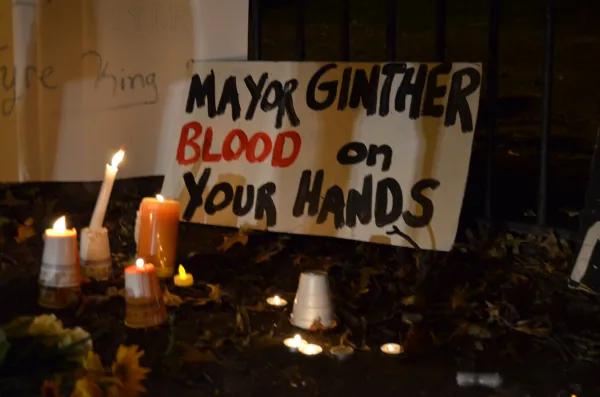
Students and community people gathered on OSU's south Oval at 5pm today to mourn the death of Tyre King, shot to death by Columbus police last night, September 14. Police stated that the 13-year-old had a BB gun. NBC 4 news reported that Bryan Mason, the officer who shot King, had been involved in another fatal shooting in 2012. News reports throughout the last 24 hours have offered differing facts regarding the shooting. Activists were skeptical of the information about the incident given at the Columbus Mayor's press conference and that there would be any repercussions for the officer's actions. Signs at a memorial at the site of the incident clearly indicate the community's distrust in the city of Columbus and Columbus police and or that anyone will be held accountable.
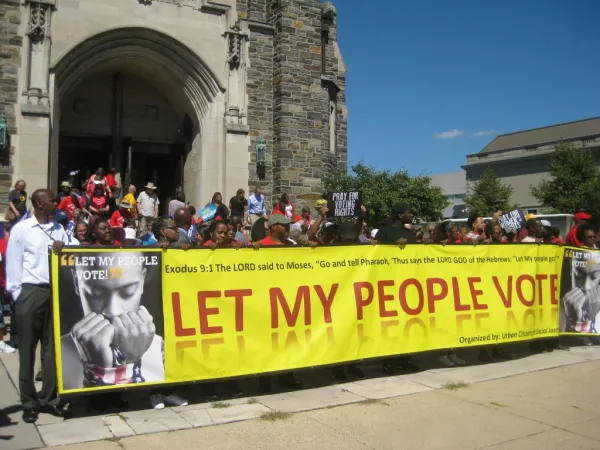
Lao Tzu said that silence is a source of great strength. This principle was evident on September 12, when about 400 people of faith marched in silence from the First Congregational Church in downtown Columbus to the Ohio Statehouse.
It was a revival, on a much larger scale, of the Moral Monday rallies held at the Statehouse before the November election two years ago. Started by Rev. William Barber in North Carolina, the Moral Monday movement reclaims the moral narrative from the religious right, which in recent years has defined morality almost exclusively in terms of restricting reproductive rights and condemning LGBTQ people.
Rev. Susan Smith modeled the silent march on an event from the height of the civil rights movement. “An attorney’s house was bombed,” she said. “They marched from the University of Tennessee to city hall. All you could hear was the shuffling of people’s feet on the pavement. When you’re marching and you’re silent, people don’t know what to do, except listen. The power comes in the very silence.”
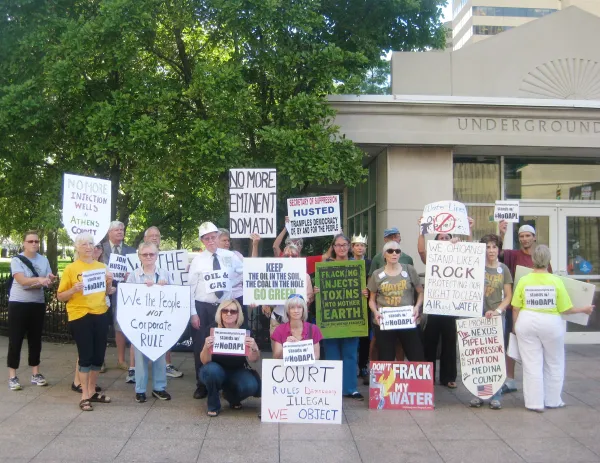
Members of the Ohio Community Rights Network gathered outside the Ohio Statehouse on September 12 to demand the right to ban fracking wastewater injection wells and shale natural gas pipelines in their local communities. They compared the impact of the proposed Nexus Pipeline on Ohio communities to the threat posed by the Dakota Access Pipeline to the Standing Rock Sioux reservation.
Actors impersonating Ohio Governor John Kasich, Secretary of State John Husted, and the oil and gas industry performed a street theater piece that was both entertaining and deadly serious.
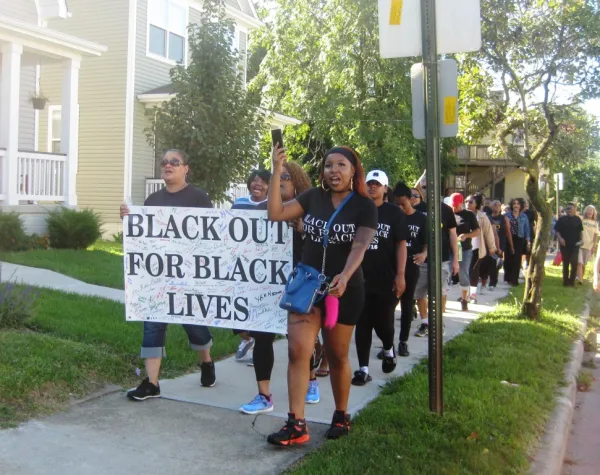
Over Labor Day weekend a group of Columbus residents took action against the systemic racism that drives police brutality by restricting the lifeblood of the system: corporate profits. They held an economic blackout (or boycott) of all large corporate enterprises, including chain stores and banks.
About 100 protesters kicked off the blackout by marching from Franklin Park to the King Arts Complex, where organizer Karla Carey explained the blackout strategy. “This weekend we’re asking that if you have to spend money, that you reinvest it in the black community, to keep the black community thriving.”
African Americans only spend about 3 to 5 percent of their dollars in black-owned businesses, Carey said. “Economically, we need to have our voices heard. This makes a difference to the big chains and corporations.”
The discussion then turned to police brutality. “Ron O’Brien has held the office of County Prosecutor for 18 years,” Carey said. “Not one Columbus police officer has been indicted in a police-related shooting. If you’re OK with that, then don’t vote in November. But if you’re not, vote for Zach Klein.
Dear Ohio Activists and Concerned Residents,
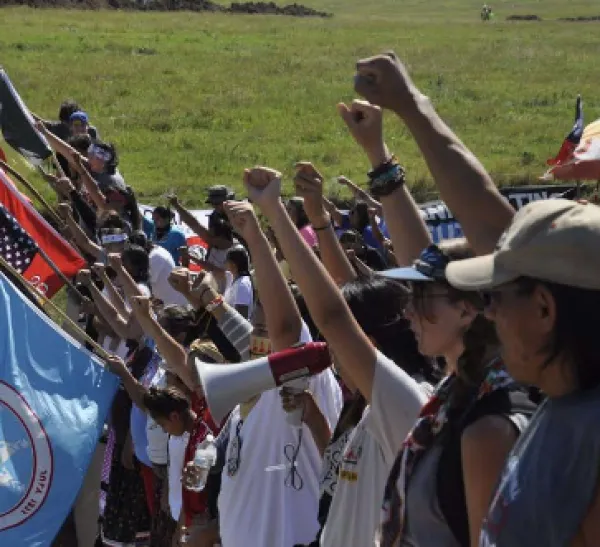
Many of us have been watching the events unfolding on the Standing Rock Sioux Reservation in North Dakota. The Native Americans who live on the Standing Rock Reservation are not willing to simply stand by and watch a destructive pipeline project ruin their water and desecrate their sacred land. The company behind the project is Energy Transfer Partners/Enbridge. The U.S. government is willing to break treaties with the Native Americans in order to allow the pipeline to be built, putting corporate profits and greed above the rights of the people and nature on the reservation. We fully support and applaud the efforts of all the residents at Standing Rock

Finally, the major for-profit media is approaching consensus that it’s easy to hack U.S. political elections. Even candidates Hillary Clinton and Donald Trump are raising unprecedented doubts – from very different directions – about the reliability of the upcoming vote count.
Ultimately, there is just one solution: universal hand-counted paper ballots, with carefully protected voter registration rolls, and a transparent chain of custody.
The corporate media and the Democrats are obsessed with the “Russians.” Donald Trump rants about a mythological army of voters voting multiple times.
But the real threat to our election system comes from private for-profit corporations that register voters, control voter databases, then count and report the vote with secret proprietary software and zero transparency, accountability, or recourse.
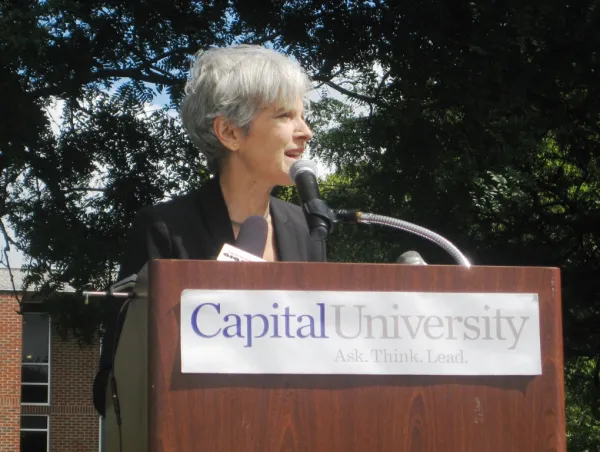
As a crowd waited for Green Party presidential candidate Jill Stein to join a September 2 political rally at Capital University, local Green Party members took the podium to explain the key role of third party politics, and how Stein’s presidential bid coalesces with state and local efforts to transform the political landscape.
“Politics creates the kinds of communities that we will live in,” said Anita Rios of Toledo, who ran for Ohio Governor in 2014. “Somebody is going to make those decisions, and if it’s not somebody who understands our needs, they’re going to make decisions based on the people who give them money — decisions that simply do not work for us.”
Healing our communities requires a groundswell of Americans participating in politics at the local level, Rios said, “not just as voters, but also as candidates.” She described her Ohio gubernatorial run as a grueling effort that required great sacrifices from herself, her family, and a legion of Green Party activists.