
Local

In the wake of the Cleveland Cavaliers’ upset victory over the Golden State Warriors, a minor squabble has erupted over the 10-story tall LeBron James banner that presently hangs on the Sherwin-Williams building in downtown Cleveland. Mega-paint company Sherwin-Williams had initially intended to take down the banner and replace it with a giant company advertisement in time to welcome attendees of the Republican National Convention set to begin on July 18th. Concerned that a perceived slight to King James in his moment of triumph would send a million enraged Ohioans into the waiting arms of competitor Benjamin Moore and Co. Paint, however, Sherwin-Williams has since reversed course on that plan.
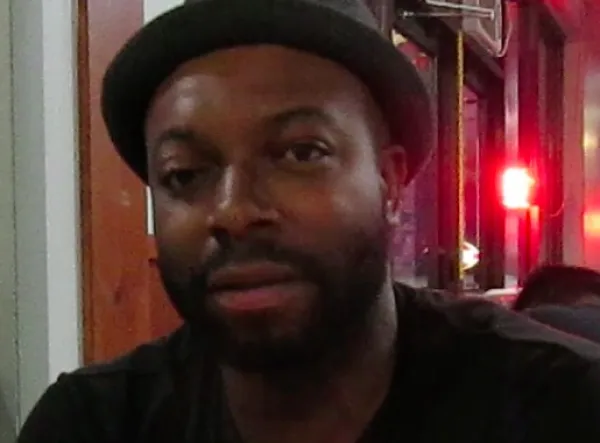
I swapped info to set up this interview regarding Illogic’s new album, “A Man Who Thinks With Own Mind” while Aesop rock was performing.
It was heartwarming to see that some of underground rap’s finest were still friends.
“A Man Who Thinks With His Own Mind” is being released by Illogic after doing two albums with Aesop’s neighborhood friend Blockhead.
Obviously these dudes have been cutting records since Aesop’s “One Brick” off 2001 Labor Days.
Illogic and I linked up a week or so later at Fitzy’s Diner near Schrock Rd and he answered questions over coffee.
The album title stems from one of Illogic’s middle names: Korega, which literally means, “A Man Who Thinks With His Own Mind.”
This album reflects Illogic’s self-reliant cognitive abilities.
It also reflects the fact that this is the first album he has released himself. We tried to figure out how many albums Illogic has released since 1998.
Illogic quipped, “Too Many.” There was a humble answer.

Fresh Kitchen has brought healthier, tastier, sustainable vegan options to the Mill Run Shopping Center in Hilliard. From refreshing salads, to “power” bowls, to satiating sandwiches, everyone can find something for them, including vegans and gluten-free diners. The Sesame Ginger, Lemon Herb Chimi dressings and Sweet and Spicy Korean sauces are vegan. The pesto is not (dairy), neither are the smashed potatoes (dairy), Honey-Sesame Dressing, Citrus Vinaigrette, or Lemon Garlic Broccoli options (honey). Tofu is the current vegan protein option, however they are interested in adding cannellini beans for those seeking more whole foods, plant-based options.

Gov. John Kasich continued to hide from unfriendly questioners June 19 when his "interview" by Channel 4's Colleen Marshall was broadcast.
Marshall, the dean of Columbus news anchors, turned out to be another journalistic "poodle," asking softball questions and failing to hold Kasich accountable for neglecting his duties as governor for a year while he flopped as a presidential candidate and burned through an estimated $1 million-plus of taxpayer money for security and traveling expenses while campaigning out of state.
Sadly, Marshall was more interested in looking good and making Kasich look good than performing as a reporter.
She started the recorded episode of The Spectrum on that Sunday morning by bragging that hers was the first interview in Ohio of Kasich since he dropped out of the race for the GOP nomination. That was false. Two reporters from the Columbus Dispatch and cleveland.com beat her to it.
Marshall opened by telling the audience it would be a "no holds barred interview." Hardly.

Monday, June 6th, 2016 proved to be the start of a very long hot summer for the residents that live in the part of Columbus that the Columbus Police Department (CPD) have deemed “Hot Zone” areas. It also proved to be the day that another young Black man was killed by police officers “in the line of duty.”
Twenty-three-year-old Henry Green V, was shot to death by plainclothes police officers Jason Bare and Zachary Rosen. The officers were driving their unmarked car in a “Hot Zone” area. These officers were working under the guise of the city’s new Summer Safety Initiative program. A program initiated by our new mayor, Andrew Ginther, to help decrease violence in areas that the police say have the “highest crime rate” in the city.

I had an odd feeling when I walked into the local Cabela’s.
It’s a big, beautiful store, designed to appeal to campers, hunters and others who enjoy spending time in the great outdoors. I’d been there before and felt comfortable, if a little out of place.
But that was before June 12, when a lone gunman forced his way into a gay bar in Orlando and shot 102 people, killing 49. He was able to pick off so many because he was armed not only with a semiautomatic pistol but with a SIG Sauer MCX assault rifle capable of firing 30 rounds as fast as he could pull the trigger.
Though the shooter didn’t purchase his assault rifle at Cabela’s, he could have. Mixed in with the store’s tents, fishing poles and other outdoor gear are rifles and shotguns designed for shooting game both big and small. And mixed in with those are weapons designed for one purpose only: to kill as many people as possible in as little time as possible.
Those weapons include the MCX, which Cabela’s sells for $1,679.99 when stores can keep it in stock. It’s currently out of stock at Columbus’s Cabela’s, which is hardly surprising.

Anyone who has read the Bible, particularly the Old Testament, knows that it is full of wild stories – tales of sex, murder and betrayal that would make a dime-store novelist blush. But genocide? Incest? Yep, they're in there too. And according to a group of deep – and free – thinkers, those crimes against humanity are being celebrated in larger-than-life fashion just an hour south of the Buckeye state. And in part at taxpayers' expense, no less.
The Ark Encounter opens its doors on July 7th, and the word around the well is that Noah himself would have been impressed. At 510 feet long, 85 feet wide and 51 feet high, the timber-frame building (allegedly the world's largest) is built to the dimensions mentioned in the book of Genesis. Situated about midway between Cincinnati and Lexington on I-75 in Williamstown, Kentucky, the Ark Encounter will relive the saga of the thunderstorm to end all thunderstorms. Complete with animal couples (yes, even dinosaurs) the Ark Encounter serves as the companion piece to the Creation Museum, 45 minutes to the north.

Everything that was supposed to happen during my trip to Kurdistan, didn't. But what did happen all the time I couldn't have ever predicted happening at all.
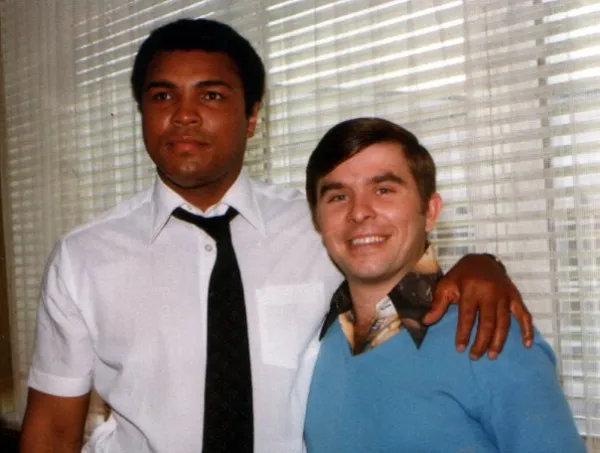
I knew the day was coming, but that doesn't mean I was looking forward to it.
That day was June 3, 2016, the day Muhammad Ali died.
It was gratifying to see the mainstream media give him his due. His passing was well covered and many people paid tribute to him. Most of them shared a personal story about the man known as “The Greatest.”
I have my own story to share.
In 1979 I was the television sports anchor for the American Forces Network Europe, stationed in Frankfurt, Germany.
One day as I was preparing my broadcast for that evening's show, the phone rang and I answered.
On the other end of the line was a man with a thick German accent but who spoke very good English.
“Mr. Alwood,” he began politely. “I was wondering if you would like to interview Mr. Muhammad Ali?”
There is an old joke I remember:
Q.: “How do you know when a politician is lying”
A: “His/her lips are moving.”
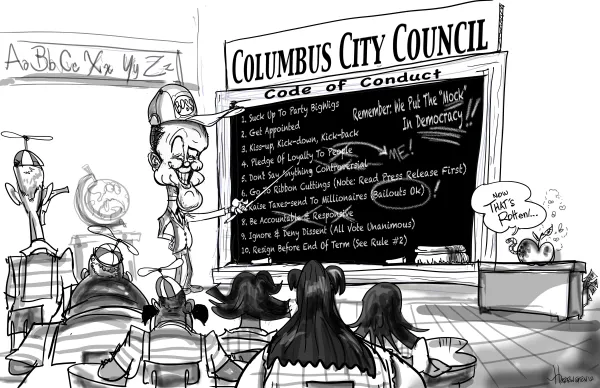
This certainly seems to be the case with One Columbus, the politician-supported political action committee (PAC) formed to oppose Issue 1 – the citizen’s ballot issue that will be voted on in a special election August 2nd proposing a change to Columbus City Council. The group appears to be launching a campaign against the citizens’ initiative, based solely on lies or distortions.