
Local

Friday, April 22, 11am
Ohio State house one saatate capital 1 Capital square Columbus, Ohio 43215
Protestin unfair practices and bringing awareness.
Bob Fitrakis, Free Press Editor, will speak at this event at noon.

This evening, the Franklin County Democratic Party Central Committee is holding its first meeting since the primary election to appoint new leadership. Before the meeting, elected leaders from Yes We Can Columbus, Count Me In, the Unity Ticket, and Franklin County Democrats United came together to promote shared values and goals to unite the local party.
The following quotes can be attributed to Mario Cespedes, a Ward 40 Central Committee member and leader with Yes We Can Columbus:
“I was elected, because people in my neighborhood want a change. They feel like our democracy is broken and their voice isn’t being heard. The folks in my neighborhood want big money out of politics and they want a debate around raising the minimum wage and empowering our local neighborhoods in Columbus.”
The following quote can be attributed to Deb Steele, Clinton Township Central Committee member and leader in the Unity Ticket:

Wednesday, April 20
11 am - 1 pm
Ohio Statehouse
You/We CAN make a difference!
Simply Living is one of many sponsors of the Climate Action Coalition that
is organizing a Rally and Lobby Day at the Statehouse.

WHAT Educational and advocacy event to learn more about legislative solutions to issues impacting women.
WHEN Wednesday, April 20, 2016 from 9:00 AM to 12:30 PM
WHERE Trinity Episcopal Church - 125 East Broad Street, Columbus, OH 43215 - View Map
Women United For Change, a coalition of a group of nineteen organizations, has joined together to create an educational and advocacy event opportunity to learn more about legislative solutions to issues impacting women. This event will also be an opportunity to learn tips on how to effectively advocate for legislation that positively impacts women at the Ohio Statehouse.
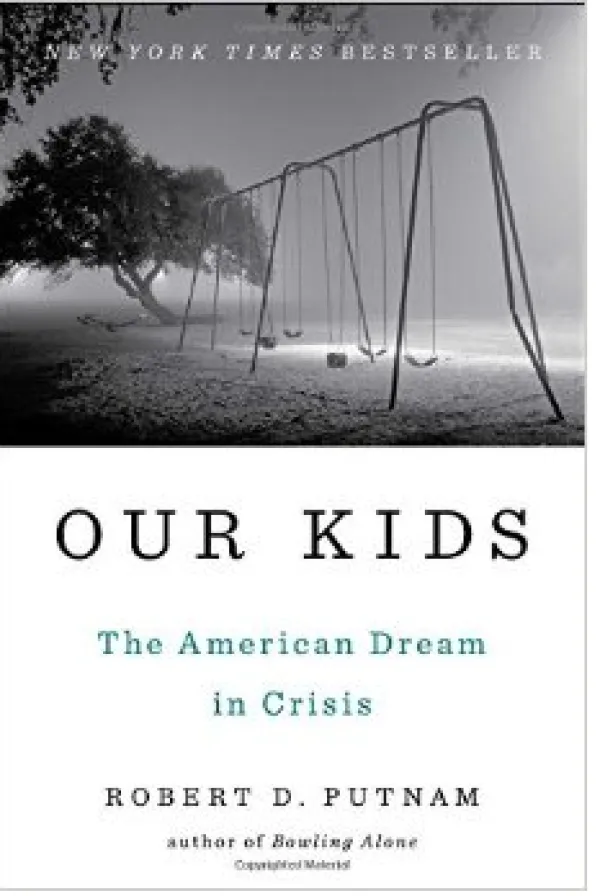
The last time there was a serious discussion about poverty in America was during the presidential campaign of 2008 when former United States Senator John Edwards (D-NC) announced his intention to run for the office from the back yard of a home in New Orleans. The city was still reeling from the impact of Hurricane Katrina in 2005–the natural disaster that made poverty in America visible again. Edwards had been identified as a champion for the poor throughout his legal career during which we successfully represented plaintiffs in seemingly unwinnable cases as they fought large corporations, physicians and others, winning multimillion dollar settlements for his clients. He was also the director of the Center on Poverty, Work and Opportunity at the University of North Carolina Chapel Hill School of Law. During his political career Edwards had proposed that the government should place poor people in middle class neighborhoods through the use of one million housing vouchers. The idea went nowhere, and once again, poverty fell off America’s agenda.

I was asked to write an article about “420.” Apropos, I guess, considering my name. So I began conceptualizing the piece. Perhaps a few interesting innuendos and stoner stories peppered with a traipse through time. As light-hearted as 420 seems to be, there are also uneasy overtones to this holiday of the high. Where to begin.
How about at the beginning. The vaunted Wikipedia confirms that “four-twenty” was coined at San Rafael High School forty-five years ago as clandestine code used by some students to denote a specified time and place for consuming cannabis – 4:20 pm in the shadow of Louis Pasteur. The term morphed to mean a need to find weed. Mushrooming through the local Grateful Dead culture, 420 landed in the hands of High Times’ Steve Bloom in the 1990s, pollinating globally through one of cannabis culture’s most time-honored magazines.
So with the approach of this hempy holiday, a happy 420 to you!

The final year for using medical marijuana illegally on 420 could be 2016 as two groups are seeking to put a medical marijuana amendment on this November’s ballot. Parallel to these 420 activists are Ohio lawmakers who introduced a medical marijuana bill a week before April 20th.
State lawmakers plan on fast-tracking the bill (House Bill 523) to Gov. John Kasich before any November ballot, and they said if it passes this summer, Ohioans could be using medical marijuana by 2018.
The two groups seeking a citizen vote on medical marijuana – Ohioans for Medical Marijuana and Grassroots Ohio – will most likely stay the course, as they have said they don’t have confidence in the Republican-dominated Ohio Legislature passing an effective law. Thus Ohio could have competing medical marijuana measures on this fall’s ballot.

Orphan struggles to survive in mesmerizing ‘Jungle Book’
The best movie I’ve seen so far this year is about a boy who was raised by wolves. It may also be the most harrowing movie of the year to date.
Disney’s The Jungle Book tells the story of Mowgli (Neel Sethi), who lives with the wolf pack that took him in as an infant. Though he clearly doesn’t fit in with the other “cubs,” he’s loved and protected by adopted mother Raksha (Lupita Nyong’o) and the rest of the clan. He’s also watched over by Bagheera (Ben Kingsley), the stern panther who brought the orphaned child to the wolves in the first place.
Mowgli’s odd but comfortable existence is upset during a dry spell that brings the human-hating tiger Shere Khan (Idris Elba) to the local watering hole. Honoring the truce that’s enforced when the water level is low, Shere Khan spares the boy’s life but claims the right to kill him at a later date—or to take revenge on the rest of the wolf pack if he’s denied this privilege.

The Community Festival
Thursday, May 5, 7:30 PM - MEMBERSHIP MEETING
Goodale Park Shelterhouse Building
(come at 7 for a meal - bring your own plate and utensils)
www.comfest.com
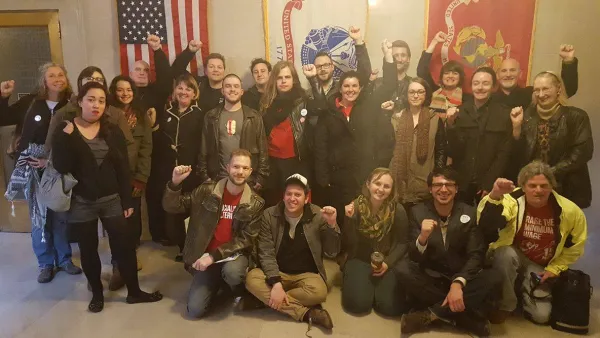
On April 4, the same day that California and New York State raised their minimum wage to $15 an hour, supporters from grassroots organizations spoke in Columbus City Hall to remind City Council members of their campaign promises and push for a clear commitment to raising the minimum wage to $15 in Columbus.
“We’re a city where children go to bed hungry because their parents have to decide whether to buy food or pay rent,” said Jordan Patton, a Capital University law student and member of Socialist Alternative. “We’re a city where the corrupt grow richer, while people working multiple jobs struggle to pay their rent on time.”