
Local

When Malala Yousafzai took a bullet after standing up for the cause of girls’ education, she became a feminist hero. It seems a little odd, then, that a new documentary about the Pakistani teen is titled He Named Me Malala.
Just who is this “he,” and why is he sharing top billing?
Turns out he’s her father, and the meaning of the title soon becomes clear. In the first of several animated segments sprinkled throughout the film, we learn that Ziauddin Yousafzai named his daughter after a legendary Afghan woman who was killed in battle while encouraging her country’s troops to repel a foreign invader.
This raises a question that director Davis Guggenheim and his subjects address: Did Malala’s name predestine her to suffer for a heroic cause?
In case you’ve forgotten the details of Malala’s rise to international fame, she was shot by a Taliban gunman in 2012 because she’d spoken up against the group’s attempt to prevent girls from being educated. Though she miraculously survived, the wound left permanent damage to her face and hearing.

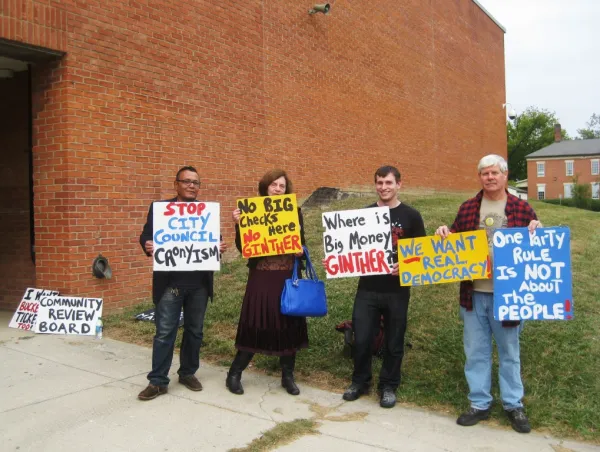
“People should not have to work three jobs just to make ends meet,” said Columbus resident Jasmine Ayres at the “Our City, Our Stories, Our Future” public meeting and candidates’ night on October 1. “People who work 40 hours a week should be able to feed their families. They should be able to pay their bills. There are people who are really struggling in this city. They would really benefit from raising the minimum wage.”
“Minimum wage should cover at least the minimum cost of living,” said former OSU football defensive back Anthony Gwinn. “Can you imagine working 40 to 60 hours a week as a single parent and raising children with a minimum wage of $8.10?”
The moderator posed this question to ten candidates for Columbus City Council: “If elected to City Council, will you raise the Columbus minimum wage to $15 by 2020?”
Democrats
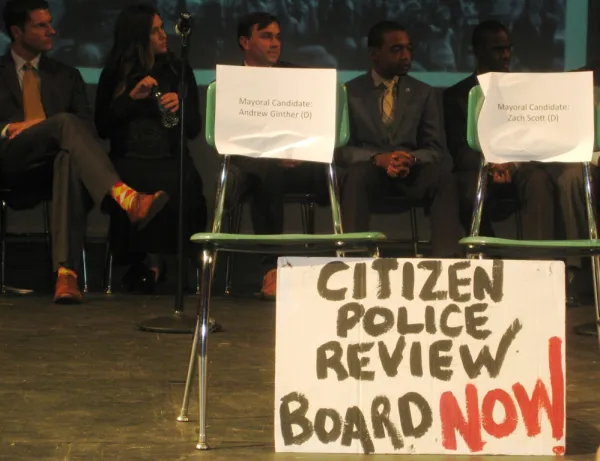
“This is a tale of two cities,” said Tammy Alsaada of the Ohio Organizing Collaborative last Thursday at the Fort Hayes Education Center. She was speaking at a public meeting and candidates’ night about two populations in Columbus: those who are prosperous and feel protected by the police, and others who suffer from economic inequality and don’t feel protected. The theme of the public meeting was “Our City, Our Stories, Our Future.”
Ten candidates for Columbus City Council attended the event, organized by the Ohio Student Association and the People’s Justice Project. Conspicuously absent were invited mayoral candidates Andrew Ginther and Zach Scott.
Civilian Review Board
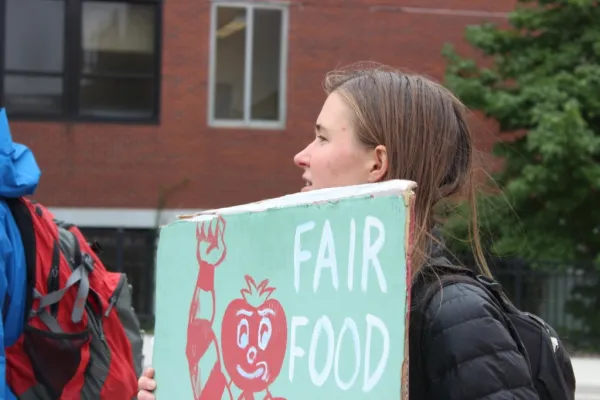
In the fight for fair labor practices in the U.S. food industry, grass-roots organizing by conscientious consumers has been taking an increasing role. A case in point is Friday afternoon, when a dozen members of the Student/Farmworker Alliance (SFA) gathered at Mirror Lake on the OSU campus and marched to the Wendy’s restaurant in the Wexner Medical Center as part of the “Schooling Wendy’s” national week of action.
“Our march to Wendy’s today is one of over 20 marches, letter deliveries, and demonstrations at campuses across the country — campuses with Wendy’s on campus and near campus — to tell Wendy’s to listen to what students and farmworkers are asking them to do: join the Fair Food Program,” said SFA member Ben Wibking. “Until then, students across the country will be boycotting Wendy’s and getting our universities to cut ties with Wendy's until they do the right thing by farmworkers.”
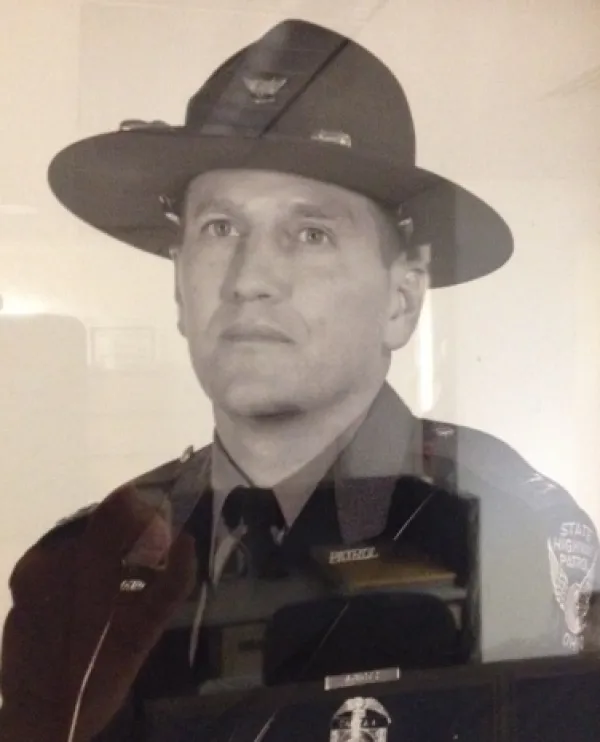
Perhaps the greatest law enforcement officer in Ohio history died on September 18, 2015. David Sturtz served for 31 years with the Ohio State Highway Patrol, retiring as a major. In 1988, Governor Richard Celeste appointed him the state’s first Inspector General to investigate public corruption plaguing Ohio’s state agencies. Republican Governor Voinovich, elected in ’91, retained Sturtz as Inspector General until he began to uncover serious scandals involving the Governor’s family business in 1994.
Sturtz uncovered a vast network of corruption in Ohio involving unbid jail contracts going to the so-called “V” Company owned by Voinovich’s family; ties between Les Wexner and Carl Lindner, Jr., organized crime and the CIA; the “Coingate” scandal connected to the Ohio Bureau of Worker’s Compensation and their money laundering into the George W. Bush campaign. As a result of these investigations, Voinovich fired Sturtz in 1994
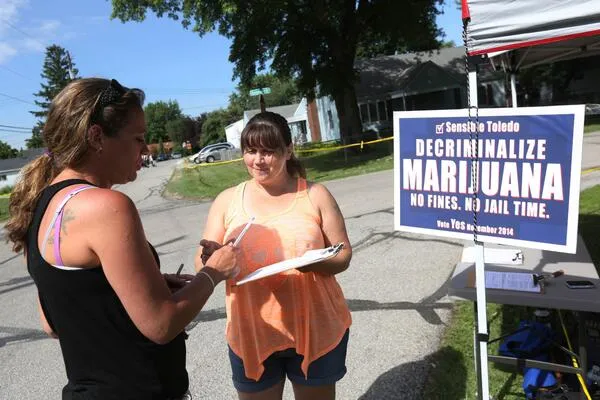
The voters of Toledo are to be congratulated! By more than a 2 to 1 margin of victory, they abolished any jail terms and penalties for possession of marijuana up to 200 grams. Toledo’s Issue 1, The Sensible Marijuana Ordinance passed on September 22, 2015, establishes complete decriminalization for misdemeanor marijuana offenses. Sensible indeed! The Free Press wishes Columbus would come to its senses soon.
Campaign manager Sean Nestor, Ohio Green Party Political Director, was correct when he told the Toledo Blade that: “I do think what we have is pretty potent as far as protecting cannabis users. We feel this is important even on a national scale.”
One big difference between Toledo and Columbus is that their mayor and city councilmembers believe in citizen’s initiatives and democracy. Had this effort been attempted in here, Columbus City Council President Andy Ginther backed by City Attorney Rick Pfeiffer would have dreamed up a technicality to keep the people from voting on the measure.
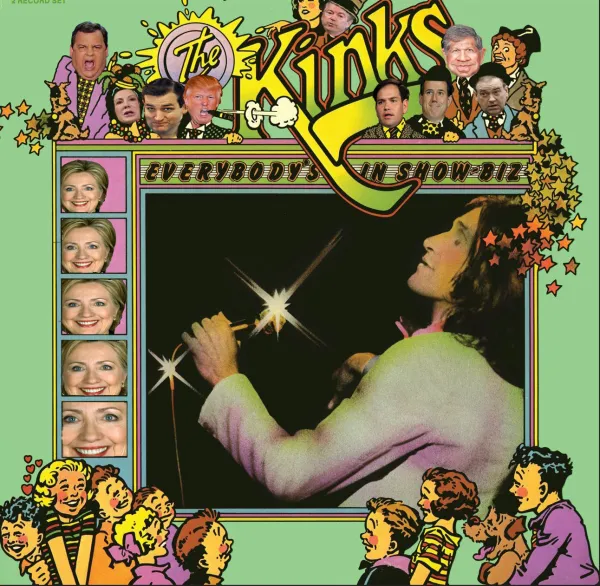
It's beginning to look like political season has finally arrived, and it isn't just that we have two debates under our belt and primaries about to begin. The telling statistic is that fully 85 percent of op-ed writers, most of whom ought to know better, have finally succumbed to the temptation of reacting to some piece of insane gibberish emanating from our dear friend Donald Trump. It's the journalistic equivalent of a weekend off, a “phone it in and come to bed honey” moment. More fool them – the man is plainly a Democratic plant, as is his friend Tom Brady.
But this is a music column, and we don't ask the easy questions here. If you want to know John Kasich’s stance on net neutrality, the Dispatch would be more than happy to oblige you. Here, however, we roll up our sleeves and get down to the ugly core of what makes someone deserving of the presidential office – if a candidate was a Kinks songs, which Kinks song would they be? Cue “The Contenders,” in alphabetical order:
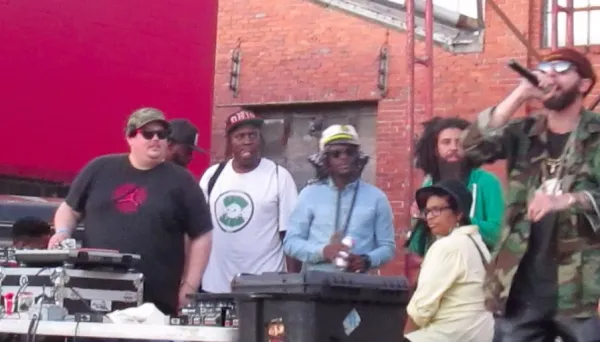
“88 Like We Bringing the Rooftop Back.”- Iggy Azealia or Nas
“I didn’t meet Rakim til later with Scott/I remember we were jammin’ at the Rooftop.” - Krs-One
Columbus Hip Hop holds a special regard for Bernie's Distillery similar to how people in New York discuss LQ or the Rooftop or L.A people speak on the Good Life. The talent nurtured at the Short North Record Store Groove Shack in the mid-90’s called the grimy dive-bar home when MHz, Weightless, S.A. Smash and J. Rawls rose to worldwide prominence.
Bernie’s was a home that had character to hold up to the talent-level thanks to a crew of deejays (the Fonosluts) and the location’s campus slum punk rock nature. (The Fonosluts were Detroit transplant DJ PRZM, DJ Lo-zone, DJ Pos 2 and host So What?)
This month presented itself to reflect on the weekly Fonosluts Hip Hop event that existed from ‘99-2005.
First off because Bernie's is set for not-to-exist after December 31, 2015.
Secondly, it was the last Daymon Day in this form.
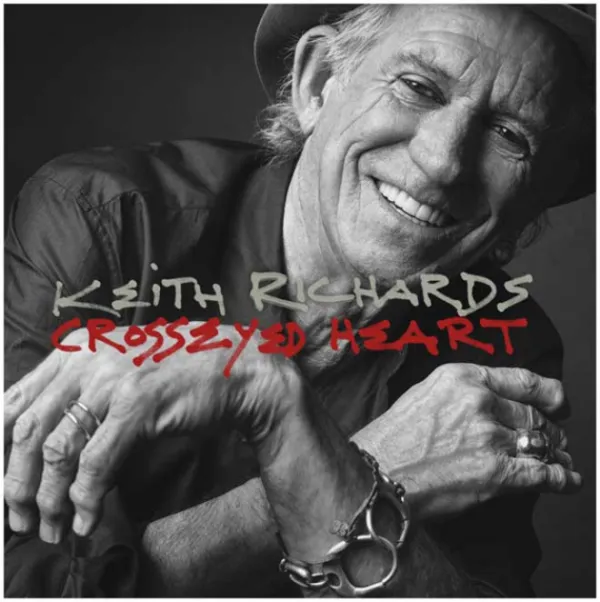
You get three things in spades with new Keith Richards album: feel, feel and more feel. You don't automatically think it--that comes second. You...feel it. But of course. Then you think, ah, the old bastard's back, nice, so let's cop a feel--or 15. With a dozen-plus-three tracks on Crosseyed Heart, the ageless aging dude's third solo album released last week, it's a quiver-full of Keith's many trademarks. Dirty guitar chords, night-cat rockers with leather-jacket desperado charisma, surprisingly tender ballads, reggae grooves better than what you hear on the radio, and oh my, oh, there's more.
Verdict: it don't quit/it won't quit. It just rolls a bit more subliminally than it appears. That's Keith's magic and that's why we love him, right? Goddam right.