
Local

As the nation waits on President Barack Obama to unveil his “Ten Point Plan” for overhauling the U.S. Immigration policy via executive action, which may suspend deportations for millions, one family in Columbus may be broken apart soon.
When Ángel Bustos arrived at the Immigration and Customs Enforcement (ICE) office in Columbus on October 27, he never imagined that he might never see his wife April and 7-year-old son Christian again. Ángel was accustomed to weekly meetings with ICE while his petition to remain in the U.S. was being processed. David Deweese, supervising ICE officer for the Columbus field office, denied Ángel’s petition.
Ángel was arrested and has been in detention since. Today, Ángel is fighting to stay with family and asking Deweese to exercise prosecutorial discretion to make this happen.
The Department of Homeland Security's frequent deportation of low-level offenders, undocumented minors and breadwinners for U.S. citizens has rallied immigrant rights activists and organizers asking to “Stop The Deportations.”

This event was created to call attention to hate crimes committed against sex workers all over the globe. Dr. Annie Sprinkle and the Sex Workers Outreach Project USA began this event 10 years ago as a memorial and vigil for the victims of the Green River Killer in Seattle, Washington. It is now an internationally recognized event to raise awareness towards hate crimes committed against sex workers. It also works to remove stigma, discrimination and to reform laws against sex work, in the hopes of diminishing violence towards sex workers.
A red umbrella is the symbol for event. After using it for an anti-violence march in 2002, the red umbrella now symbolizes resistance against discrimination for sex workers around the world.

What: Rally and delivery of over 500 signatures asking David Deweese, Supervising Officer at the Customs Enforcement (ICE) Immigration Office to Stop the Deportation of Angel Bustos
When: November 14, 2014 - 10am
Where: Customs Enforcement (ICE) Immigration Office - Leveque Tower - 50 W. Broad St., Suite 306 - Columbus, Ohio 43215
Who: April Withrow; wife of Angel Bustos, family members, people of faith, friends and allies
Columbus, Ohio- As the nation waits on President Obama to unveil his “Ten Point Plan” for overhauling the U.S. Immigration policy via executive action which may suspend deportations for millions: one family in Columbus may be broken apart soon.
When Ángel Bustos arrived at the Immigration and Customs Enforcement (ICE) office in Columbus on October 27, he never imagined may never see his wife and son again. Ángel was accustomed to weekly meetings with ICE while his petition to remain in the US was being processed. David Deweese, supervising ICE officer for the Columbus field office, denied Ángel’s petition.

Remember Deep Throat, the mysterious source who helped to unravel the Nixon administration’s Watergate scandal by meeting a reporter in a parking garage? Citizenfour begins with a series of cryptic email exchanges that makes that secrecy precaution seem like child’s play.
“This will not be a waste of your time,” a would-be informant assures documentary filmmaker Laura Poitras. When Poitras and a couple of reporters for a British newspaper finally meet the informant in a Hong Kong hotel, this proves to be the understatement of the decade.
The man is Edward Snowden, a consultant who until recently had been working with the National Security Agency. He has an astounding story to tell about how much the government has infringed on the average citizen’s privacy in its efforts to fight terrorism. As Poitras’s camera watches and the reporters take notes, he proceeds to do just that.

First in a series
Since the Bush-Cheney-Rove theft of the 2000 election in Florida, the right of millions of American citizens to vote and have that vote counted has been under constant assault.
In 2014, that systematic disenfranchisement may well have delivered the US Senate to the Republican Party. If nothing significant is done about it by 2016, we can expect the GOP to take the White House and much more.
The primary victims of this GOP-led purge have been young, elderly, poor and citizens of color who tend to vote Democratic. The denial of their votes has changed the face of our government, and is deepening corporate control of our lives and planet.
There’s no doubt the Democrats have alienated their core constituency and given millions of their former supporters little reason to vote. Perpetual war, blank checks for mega-banks, stiffing the working poor while giving away the planet to the rich----these are all part of the malaise. Our political landscape is currently defined by corporate personhood and its gutting of the Democratic Party.

Anita Rios received nearly 100,000 votes as the Green Party candidate for governor this Election Day 2014. This 3.3% of all votes in Ohio needs to be placed in historical context. The Ohio Greens needed 2% of the statewide vote to remain on the ballot for future elections.
In five Ohio counties, the Greens polled more than 4% of the total vote: Athens County at 6.52%, Franklin County at 4.53%, Cuyahoga County at 4.28%, Portage County at 4.4% and Meigs County at 4.3. The only counties showing Rios votes under 2% were Darke, Mercer and Putnam. She received more than 2% in all 85 remaining Ohio counties.
The Green Party, committed to grassroots democracy and reining in unfettered corporate capitalism, reached numbers in Ohio that often reflect a much broader mass progressive movement.
In 1932 for example, Norman Thomas received 2.2% of the vote as the Socialist candidate for President. Scholars speak of the Socialist Party as the last mass movement of the “Old Left.” The high point of the Old Left was Eugene Debs’ 6% of the vote, gained in 1912 at the apex of the progressive era.
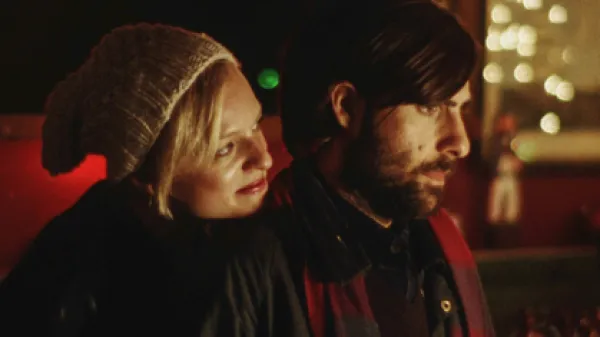
Alex Ross Perry says he was inspired to write and direct Listen Up Philip because he read a novel in which the central character disappears for much of the book. He thought it would be interesting to make a movie in which the same thing happens.
After seeing Listen Up Philip, I think he should have waited for a little more inspiration.
Perry says he also was influenced by a period in his own life when he was forced to travel and thus lost touch with his own friends and relationships: “they were all being put on hold.”
But presumably Perry had been a more devoted friend than title character Philip (Jason Schwartzman), who’s so self-centered and devoid of empathy that he’s basically absent from other people’s lives even when he’s physically present. In light of that shortcoming, what difference does it make to them—or to us—if he decides to go away for a while?
The young writer is feeling stifled by his life in New York and by the expectations that follow the success of his first novel. So when established author Ike Zimmerman (Jonathan Pryce) invites him to spend time at his secluded upstate home, Philip readily accepts.
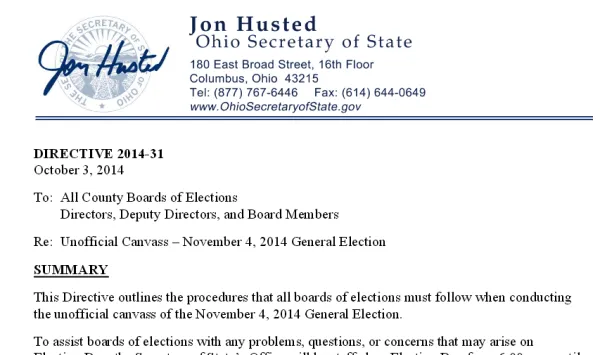
On October 3, Ohio Secretary of State Jon Husted issued a directive that no longer requires county boards of elections to send precinct-by-precinct level data to his office in time-based increments on Election Day. The new requirement is to provide their county’s “summary results” only, instead of individual precinct-by-precinct data.
On October 2, the Columbus Free Press published an article entitled “What’s up with Ohio’s election night reporting system? Nobody really knows what happens on Election Day” by Bob Fitrakis and Gerry Bello. The article pointed out that an existing Ohio Secretary of State directive had very specific requirements for county boards of elections to send precinct-by-precinct data starting once their first precinct reported, and continuing on a time schedule of every 15 minutes, 30 minutes or by the hour.
We all know that Congress is corrupted by big money and no longer represents the interests of ordinary Americans. We know that the two major parties put their partisan political interests above the interests of the country. We know that it doesn’t have to be this way and that the American people deserve better. However, as Congress is incapable of reforming itself we also know that we must organize an independent democracy movement to reclaim our government for the people.
Congress claims that it is divided because the country is divided—that’s not true. Over 75% of Americans want an immediate increase in the minimum wage, support comprehensive immigration reform, favor shoring up Social Security without any benefit cuts, and want to close tax loopholes that allow large corporations to use overseas tax shelters to avoid paying billions of dollars in taxes each year. Yet Congress refuses to act.
In 1948, Alfred Hitchcock released Rope, a murder mystery with an intriguing gimmick: The film was shot in long takes that mimicked the continuous action of live theater.
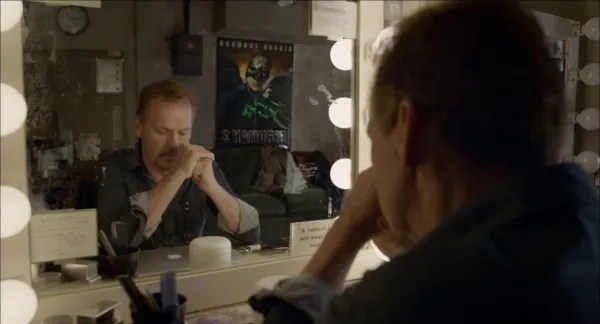
In 2014, Alejandro Gonzalez Inarritu has attempted the same high-wire act with Birdman (or, The Unexpected Virtue of Ignorance). Actually, the Mexican director/co-writer (Biutiful) has gone his predecessor one better. While Hitchcock was forced to introduce a new shot at 20-minute intervals to coincide with the changing of reels when the film was screened, Birdman appears to have been made in one unedited take.
It wasn’t, obviously, but Inarritu’s bold attempt to carry off the illusion (with help from Oscar-winning cinematographer Emmanuel Lubezki) adds an extra measure of eccentricity to a film that already defies convention.
In a role that partially mirrors his own career, Michael Keaton stars as Riggan Thomson, an actor whose popularity peaked when he played a superhero named Birdman in a trio of blockbuster hits. (Keaton, of course, had his greatest success playing the Caped Crusader in 1989’s Batman and its 1992 sequel, Batman Returns.)