
Environment

Another 25,000 have signed at Roots Action. An independent advisory group of scientists and engineers is also in formation.
The signatures are pouring in from all over the world. By November, they will be delivered to the United Nations.
The corporate media has blacked out meaningful coverage of the most critical threat to global health and safety in decades.
The much-hyped “nuclear renaissance” has turned into a global rout. In the face of massive grassroots opposition and the falling price of renewable energy and natural gas, operating reactors are shutting and proposed new ones are being cancelled.

ACTION ALERT:
OCTOBER 15—CRITICAL “WASTE CONFIDENCE” MEETING IN TOLEDO AREA
If you want to do one thing to oppose nuclear power this year, this is it. In June of 2012, a critical win in a lawsuit brought by a coalition of groups including the Sierra Club and the DC Court of Appeals, overruled the “Waste Confidence” decision of the U.S. Nuclear Regulatory Commission (NRC).
Since 1984, the NRC has maintained that it has “confidence” that a solution will be found for disposing of high-level radioactive waste -- defined as the used, irradiated fuel rods from nuclear power reactors. The NRC maintained that waste is a “generic” issue, so no entity could legally oppose a license or license extension based on the fact that waste could be a problem. Issues such as large amounts of waste accumulating on sites, or in overcrowded fuel pools, or in aged, deteriorated casks, or in areas prone to flood or earthquake -- could not be brought up.
With the court ruling, the NRC has halted all license proceedings that rely on Waste Confidence. This includes FirstEnergy’s application for a license extension at Davis-Besse.
We are now within two months of what may be humankind’s most dangerous moment since the Cuban Missile Crisis.
There is no excuse for not acting. All the resources our species can muster must be focused on the fuel pool at Fukushima Unit 4.
Fukushima’s owner, Tokyo Electric Power Company (Tepco), says that within as few as 60 days it may begin trying to remove more than 1300 spent fuel rods from a badly damaged pool perched 100 feet in the air. The pool rests on a badly damaged building that is tilting, sinking and could easily come down in the next earthquake, if not on its own.
Some 400 tons of fuel in that pool could spew out more than 15,000 times as much radiation as was released at Hiroshima.
The one thing certain about this crisis is that Tepco does not have the scientific, engineering or financial resources to handle it. Nor does the Japanese government. The situation demands a coordinated worldwide effort of the best scientists and engineers our species can muster.
Why is this so serious?
There is no excuse for not acting. All the resources our species can muster must be focussed on the fuel pool at Fukushima Unit 4.
Fukushima’s owner, Tokyo Electric (Tepco), says that within as few as 60 days it may begin trying to remove more than 1300 spent fuel rods from a badly damaged pool perched 100 feet in the air. The pool rests on a badly damaged building that is tilting, sinking and could easily come down in the next earthquake, if not on its own.
Some 400 tons of fuel in that pool could spew out more than 15,000 times as much radiation as was released at Hiroshima.
The one thing certain about this crisis is that Tepco does not have the scientific, engineering or financial resources to handle it. Nor does the Japanese government. The situation demands a coordinated worldwide effort of the best scientists and engineers our species can muster.
Why is this so serious?
H2 { margin-bottom: 0.08in; }H2.cjk { font-family: "SimSun"; }H2.ctl { font-family: "Mangal"; }P { margin-bottom: 0.08in; }A:link { }
Just when it seemed things might be under control at Japan's Fukushima Daiichi nuclear power plant, we find they are worse than ever.
Immeasurably worse.
Massive quantities of radioactive liquids are now flowing through the shattered reactor site into the Pacific Ocean. And their make-up is far more lethal than the "mere" tritium that has dominated the headlines to date.
Tokyo Electric Power Co (Tepco), the owner/operator, and one of the world's biggest and most technologically advanced electric utilities, has all but admitted it cannot control the situation. Their shoddy performance has prompted former US Nuclear Regulatory Commissioner Dale Klein to charge: "You don't know what you are doing."
The Japanese government is stepping in. But there is no guarantee, or even likelihood, it will do any better.
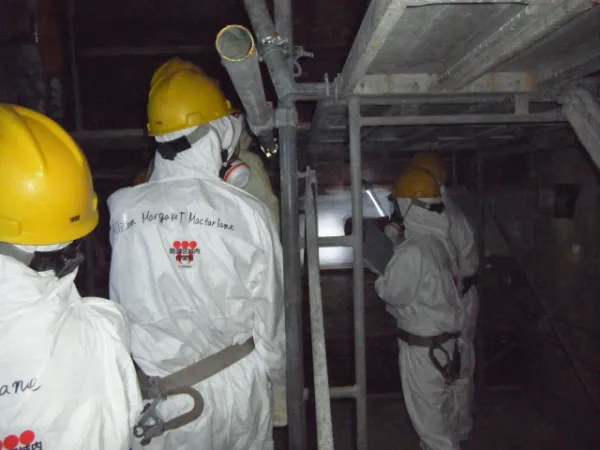
Just when it seemed things might be under control at Japan's Fukushima Daiichi nuclear power plant, we find they are worse than ever.
Immeasurably worse.
Massive quantities of radioactive liquids are now flowing through the shattered reactor site into the Pacific Ocean. And their make-up is far more lethal than the "mere" tritium that has dominated the headlines to date.
Tokyo Electric Power Co (Tepco), the owner/operator, and one of the world's biggest and most technologically advanced electric utilities, has all but admitted it cannot control the situation. Their shoddy performance has prompted former US Nuclear Regulatory Commissioner Dale Klein to charge: "You don't know what you are doing."
The Japanese government is stepping in. But there is no guarantee, or even likelihood, it will do any better.
In fact, there is no certainty as to what's causing this out-of-control flow of death and destruction. Some 29 months after three of the six reactors exploded at the Fukushima Daichi site, nobody can offer a definitive explanation of what is happening there or how to deal with it.