
News

The holiday weekend’s smoke has cleared from the summer sky, but a different kind of haze lingers over cities like Columbus. It is the acrid aftermath of a celebration scarred by gunfire, a pall that hangs over communities trying to reconcile the promise of America’s birthday with the reality of its violence.
On the South Side at a house party that should have been filled with the sounds of summer, the life of 17-year-old Cameron Moore was extinguished. His death was one of at least six youth fatalities in a five-day span that saw 25 other young people wounded in shootings across America.
The bloodshed was as tragic as it was predictable. Criminologists like James Alan Fox of Northeastern University have long identified Independence Day as consistently the most violent day of the year in the United States. The holiday’s mix of large social gatherings, warm temperatures, and alcohol consumption creates a volatile environment where the presence of firearms can instantly escalate conflict to fatal ends. This year was no exception as local officials grapple with the paradox of surging violence against a backdrop of statistically declining crime.
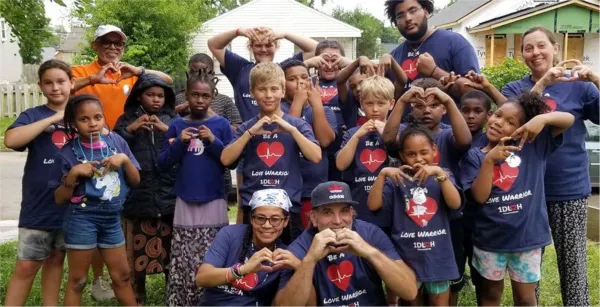
Columbus City Council last Monday awarded more money to the beleaguered Franklinton “harm reduction” drop-in center Sanctuary Night yet gave nothing to 1DivineLine2Health, the original and competent West Side drop-in center started by Esther Flores.
Flores, a registered nurse, is a Columbus pioneer. She was the first to open a drop-in center – a much-needed safe house – for the addicted “street sisters” of Franklinton, the Hilltop and the rest of the West Side, for that matter. She took it upon herself in 2015 to create what amounts to a brave and gutsy grassroots movement, risking everything to take care of thousands of sex-trafficked and homeless women and their children. Flores, a Catholic, has earned the nickname “The Saint of Sullivant Avenue” from the Free Press and was the news org’s Libby Award winner for 2021.
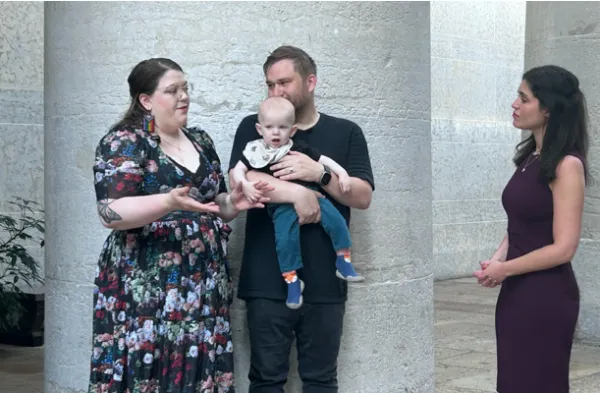
Last Wednesday, a new Ohio bill was introduced to give legal rights to embryos and fetuses. Sound bizarre? We've seen it in other states, because it's an extreme plot by anti-abortion groups to ban all abortion, but the idea would go so far that it also criminalizes IVF and bans many forms of contraception and miscarriage management.

This article first appeared on Rachel Coyle's Substack.
A budget is a moral document. It shows us your priorities.
For example, Ohio’s budget can fund programs that support children and families — or it can fund tax cuts for billionaires. It just depends on who our state considers important.
Right now, Ohio’s priorities should sicken us all.

US Solar Cell Manufacturing Grows Despite Cloudy Days Ahead
The US doubled its solar cell manufacturing capacity and added 8.6 gigawatts in the first quarter of 2025, marking the third largest quarter for new solar manufacturing capacity on record.
According to a report recently issued by Wood McKinsey for the Solar Energy Industries Association(SEIA), new solar generating capacity totaled 10.8 gigawatts. That's 7 percent lower than installations for the first quarter in 2024, 43 percent lower than installations for the fourth quarter of last year. It's still the fourth largest quarter of deployment on record according to the same report.
The top five states for solar growth this quarter include Texas, Florida, Indiana, Ohio, and Wisconsin.
Despite growing demand for energy, the solar industry faces a rocky road over the next few years, particularly if the Senate concurs with the renewable energy tax credit cuts that have already been passed by the House.

What can a community do when the democratic process itself has been outlawed?
That’s the question facing residents of Ohio. In 2019, the State legislature prohibited communities from enacting “rights of nature” laws after Toledo residents overwhelmingly voted for a law, the Lake Erie Bill of Rights. The budget bill passed on July 17th of that year established that “nature… does not have standing to participate in or bring an action in any court.”

Following a sound study in 2010, the Ohio Department of Transportation (ODOT) told Franklinton residents at an area commission meeting that stretches of SR-315 and I-70 were once again eligible for a sound wall.
This was a re-confirmation, as ODOT had said in 1993 that Franklinton was eligible considering it was a “pre-existing” neighborhood, meaning the community was there before the freeways. And surely deserving of a sound wall, as SR-315 cuts through the middle of Franklinton’s eastern end while its southern end is almost entirely bordered by I-70.
Nevertheless, back in 2010, ODOT said the project could start in 2013 and be completed by 2023. Between this time, residents called ODOT for an update. There are more cars than ever on these freeways, they said, and the public health impacts are real. ODOT responded, saying there was a new plan in place. They were going to expand I-70 and the sound wall would be installed when this project would be completed.
The calendar turned to 2023, and there was still no sound wall or even a hint the 70-expansion project was in the works. Franklinton residents once again reached out to ODOT.
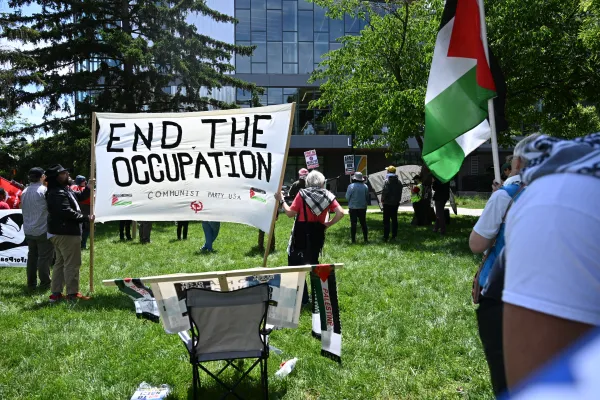
As the NATO Parliamentary Assembly sat for its spring session, hundreds of protestors representing a broad coalition of the peace movement, workers, and environmentalists demonstrated just on the other side of the perimeter to protest, loudly, against the continued expansion of NATOs imperialist mission.
Demonstrators gathered early Saturday morning on the grassy lawn of the Dayton public library, closed to the public for the day to accommodate the NATO meeting. Outside hundreds gathered to hear speeches from the coalition of organizations behind the protests, including Veterans for Peace, the Ohio Peace Council, the Ohio Nuclear Free Network, and the Communist Party USA.
Just next door, separated by 12 foot high portable security fencing and dozens of heavily armed police, representatives and staff of the 32 nation NATO alliance were contained within a multi-block security perimeter in the Oregon riverfront district of downtown Dayton. Windows of the hotels looked down over the day's festivities and the protesters just outside the walls.
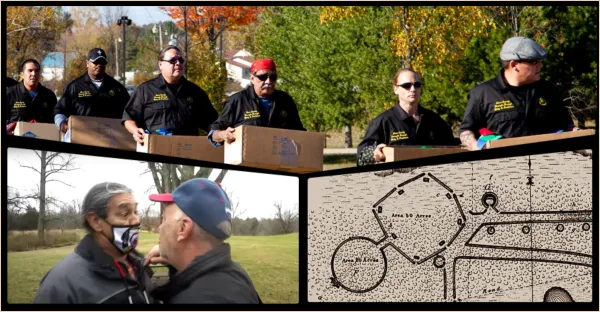
Ohio is one of three states which allows the owners of private property to do as they please with human remains if dug up during construction on their property, according to the Ohio Archeological Council. Couple that with the construction boom across Central Ohio, and Ohio-based Native American activists are increasingly worried about the continuing desecration of their ancestors.
Cranes and construction equipment these days are seemingly everywhere in Columbus and surrounding counties. Rising out of the excavated dirt are apartments, roads, data centers, and everything in between. Just east of Columbus in Licking County – home to the Native American earthworks that became Ohio’s first World Heritage site – the “Silicon Heartland” is slowly being built by Intel and others.
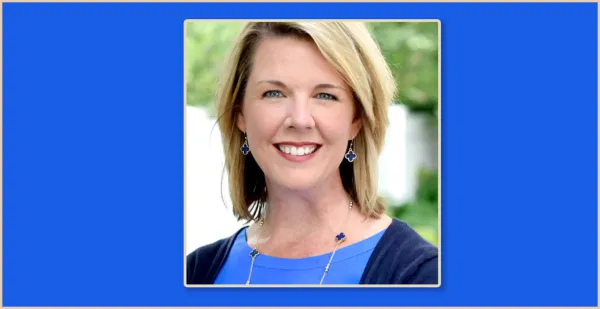
House Minority Leader Allison Russo (D-Upper Arlington and pictured above) today released the following statement after Wednesday’s Ballot Board meeting that advanced the Citizens for Property Tax Reform’s proposed constitutional amendment to abolish property taxes in Ohio:
“I think the effort to put this forward as a constitutional ballot amendment clearly demonstrates frustration by Ohioans on this issue. When the legislature doesn’t respond, the people usually step up – often through ballot initiatives. However, this particular initiative concerns me because while it eliminates the property tax, it doesn’t explain how we’ll replace the funds that support police, fire departments, public education, and other critical services,” said Leader Russo. “Democrats have been introducing bipartisan legislation for the last couple of General Assemblies to provide direct relief, but none have been prioritized by the Republican majority. It’s beyond time to provide direct property tax relief for Ohioans.”