
News

How do some of the candidates for Columbus City Council stand on some of the most contentious issues in our city? The Columbus Free Press contacted all ten Columbus City Council candidates on the May 5, 2015 primary ballot and asked for their positions on three key issues of concern to our editorial board. Only half of the candidates responded.
The three incumbent Democrats – Zack Klein, Melissa Mills and Jaiza Page – did not respond. State Representative Michael Stinziano was the only Democratic Party-endorsed candidate that sent in his answers. Of the three Republican-endorsed candidates – John Rush, Dimitrius Stanley, and Besmira Sharrah – only Rush responded to our questions. All three candidates who are not endorsed by the two major parties responded to our questionnaire: Will Petrik, Ibrahim Sow, and Kiwan Lawson. Petrik is endorsed by the Franklin County Green Party.
A ward system
The first question the Free Press asked was: Where do you stand on incorporating a ward system into the Columbus City Council structure and do you support any ward representation?

SMITHVILLE, OHIO—The American Civil Liberties Union of Ohio and the PETA (People for the Ethical Treatment of Animals) Foundation have settled a lawsuit on behalf of teacher Keith Allison against the Board of Education of Green Local School District in Smithville, Ohio.
“We are pleased to have reached an agreement that upholds the First Amendment rights of public school teachers, such as Keith Allison,” said Joseph Mead, an ACLU cooperating attorney representing Allison. “The settlement vindicates Keith for his Facebook post and affirms the school district’s obligation to permit its employees to freely express their opinions on community concerns outside of work.”
At its Monday meeting, the board of education approved a statement in which it acknowledged its employees’ right to speak out on matters of public concern. Additionally, the board agreed to a financial settlement to compensate the plaintiff for back salary and pension contributions, pay out-of-pocket expenses to the ACLU and the PETA Foundation, and cover attorney fees.
Quietly and gradually since the 1980s, a bastion of free-market excess on Franklin County’s southernmost border has been selling-out the American worker while making piles upon piles of money for a select few. It is called “Free Trade Zone #138,” and its main operations are located at Rickenbacker Inland Port, which of course was once Rickenbacker Air Force Base.
In 2013, a record breaking $6.3 billion in merchandise was imported into Free Trade Zone #138, ranking it in the top-10 of the nation’s 177 Free Trade Zones or FTZs, this according to the Columbus Regional Airport Authority, the zone’s operator and federal grantee. The growth of foreign-made goods brought into FTZ #138 has been staggering over the last decade. In 2006, just $250 million was processed.
An FTZ site essentially is a logistics hub legally outside the jurisdiction of US Customs and thus goods can be imported to the site without paying custom duties and other fees. For the most part, FTZs are intended for companies that import parts from around the world, assemble the final product in the US, and then be required to only pay a duty on the final product.

What if Columbus was a Zero Waste City by 2040? Sound impossible? Interestingly enough, a city with about 30,000 more people aims to reach that goal by 2020. San Francisco has a landfill diversion rate of over 80 percent. A “green team” is employed to ensure residents and businesses help clean up their city and a massive composting program was created to reuse food waste that then is used as fertilizer. Green jobs and nutritious food would be a win-win arrangement to make Columbus more green.
To some, a single object that best symbolizes towering landfills could be the notorious styrofoam take-out container, but the greatest image for throw-away culture today is the pitiful, plastic grocery bag. Columbus is considering measures to place a surcharge on such bags or to even, potentially, ban them. If the capital city adopts such initiatives, we will consciously decide to further care for our neighborhoods and natural landscape and to move towards zero waste.
Stagnate to Striding

Are innocent citizens pulled over, beaten and arrested by Columbus Police?
Meet Dale Phillips. He claims he was roughed up, thrown to the ground, maced directly into his eyeballs and violently assaulted resulting in a ripped bicep tendon. His so-called “crime” – trying to back his car up to allow a police cruiser to proceed through an intersection. The charge -- ironically, “obstructing official business.”
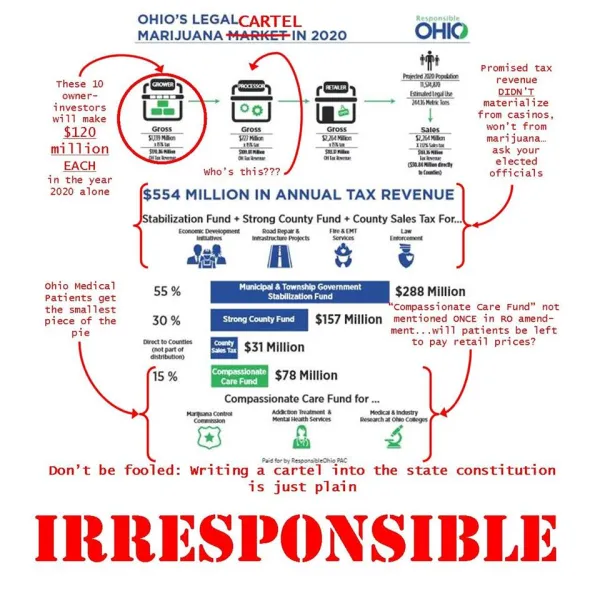
Did you know that it is perfectly legal to lie in a political campaign? Sounds false, doesn’t it? Ohio, where weird new concepts like “Responsible Ohio” come to roost, found itself at the nexus of a court decision that made lying and deception perfectly legal. It gave RO card carrying membership in the Funny Numbers Club.
Last September 2014, a federal judge struck down an Ohio law that permitted the Ohio Elections Commission to regulate political speech, particularly egregious falsehoods. The case centered around a complaint filed by then-Ohio Representative Steven Driehaus that billboards to be erected by the Susan B. Anthony List (SBA) were factually incorrect. Driehaus sued the SBA, which in turn filed a brief in federal court to overturn the law, stating that bars against false political speech violate the First Amendment right to free speech. Even though a lower court and an appeals court turned down this counter intuitive challenge, the U.S. Supreme Court took up the case and, ruling in favor of the SBA, remanded it back to the lower court, where egregious falsehoods – and funny numbers – became A-OK.
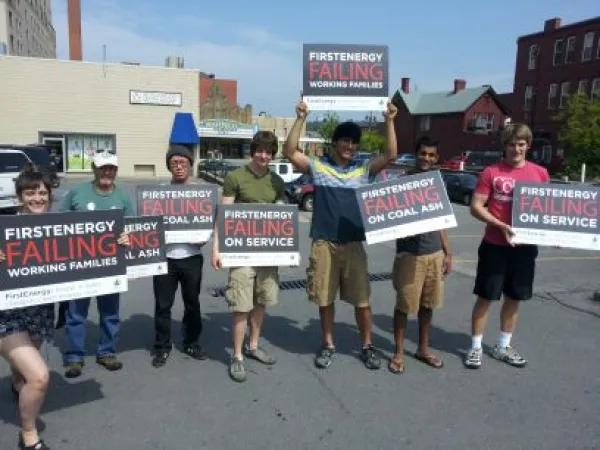
Ohio’s energy and economic future is now in the hands of the Public Utilities Commission.
(updated 12-05-2022)
“The basic principle of parole is that while people must be punished for their wrongdoing, most are capable of growing, changing and rejoining society before the end of their sentence…. The difficult job of determining when someone is ready is entrusted to parole boards, which should weigh, among other things, a person’s behavior behind bars and the likelihood that he or she will not commit another offense if released.” ~ New York Times editorial, February 16, 2014.
Columbus mayoral candidate Andy Ginther in his latest commercial hails the local economy as one of the “strongest in the Midwest.” Last month the consumer-focused website Nerd Wallet crunched the numbers of 100 cities and declared Columbus was the third best city to find a job in 2015.