
People
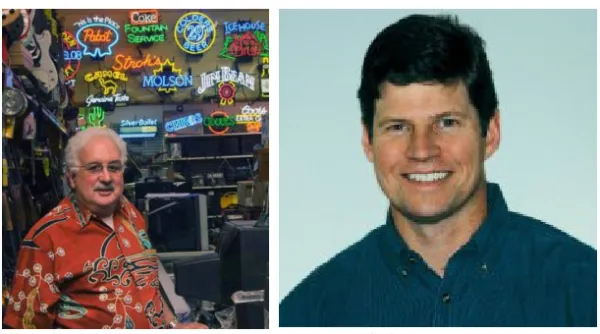
Columbus lost two prominent local business leaders last year, each embodying one of the three basic principles of environmentalism: Reduce, Reuse, Recycle. Championing the recycling movement, there was Dan Weisenbach, 53-year-old owner and President of Weisenbach Recycled Products. And, not often thought of as an environmentally-friendly business, but clearly advancing the re-use of items in the spirit of “one man’s trash is another’s treasure,” was Gary Chasin, of Uncle Sam’s Pawn Shop.
Dan Weisenbach, Recycling Superhero
Weisenbach pioneered the production of eco-friendly promotional products made of recycled scrap materials. “Everyone knows Dan was a dogged champion of recycling since he was a teen and convinced the family to create Weisenbach Recycled products,” said Chuck Lynd of Simply Living.
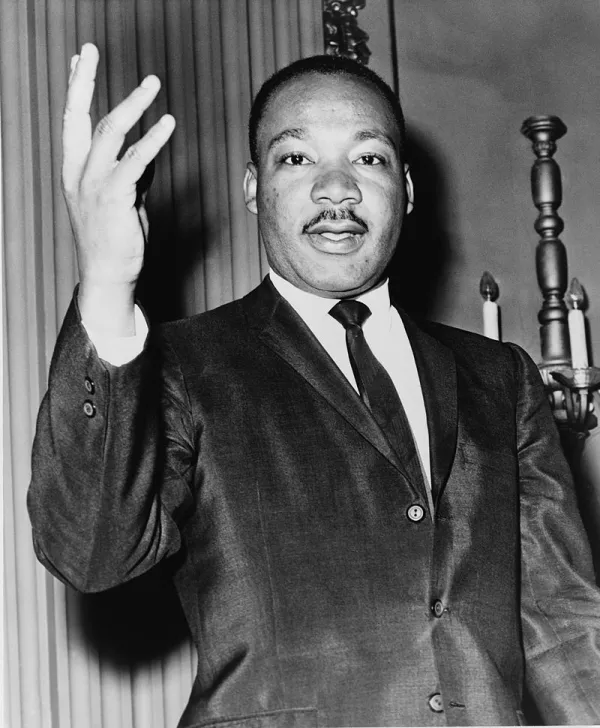
“We as a nation must undergo a radical revolution of values. We must rapidly begin the shift from a ‘thing-oriented’ society to a ‘person-oriented’ society. When machines and computers, profit motives and property rights, are considered more important than people, the giant triplets of racism, extreme materialism, and militarism are incapable of being conquered.” - Dr. Martin Luther King, Jr. “Beyond Vietnam,” 1967


This past November 7, 2015 a historic moment took place in Columbus. Fifteen African American Columbus residents were sworn in as the first Board Members of the Columbus Civilian Community Board (CCCB). They will hold this position for one year and were approved by residents of Columbus who have been meeting on a weekly basis for months before the induction ceremony.
Khari Enaharo, a board member and the originator of this movement states that the main goal of the CCCB, known by some as the Triple CB, is to “minimize conflict and maximize cooperation to produce constructive outcomes between Black people and others in our communities.”
Deborah Muhammad, also a board member says her main goals are to “be an example of the Code of Conduct that we are going to implement in our communities, becoming more unified and cleaning up our communities and making them safe.”

If your name is Donald Trump, or Dick Cheney, or George W Bush, then don’t bother reading this. This article is to help the rest of us to better understand how Donald Trump et al think. The psychiatric literature has long known that people with narcissistic personality disorder, also called the narcissistic sociopath, are far more common at the upper end of politics and business in the United States. About 1% of people in general show the criteria of the condition, yet 20% of CEOs in “Fortune 500” companies and many politicians in this country have these characteristics.
So it pays to know how these people think since it allows us to accurately predict their behavior. The cause of narcissistic personality condition can be summarized in three words: low self-esteem. The person’s thinking process is overwhelmed with the need to show them as powerful and important. It is much more common in men than women, and, thus, testosterone, one of the key driving forces of emotional behavior, powers this condition.

A bipartisan group of Columbus residents, led by Whitney Scott, unveiled citizens’ latest effort to reform Columbus City Council. The group, Represent Columbus, seeks to move Columbus City Council from its current setup with seven members, all elected in citywide elections (at large), and form a 13 member council, with three members elected at large and 10 elected by their neighbors in each of ten districts to be created and revised every ten years by an independent apportionment board.
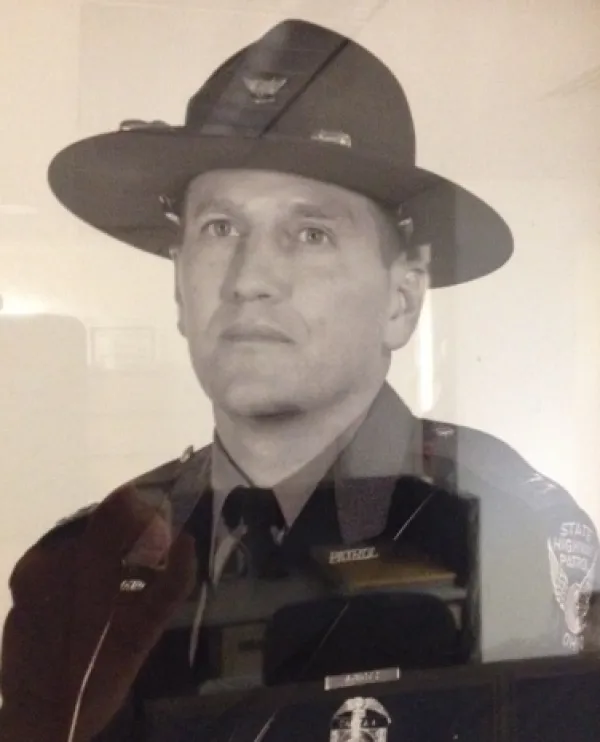
Perhaps the greatest law enforcement officer in Ohio history died on September 18, 2015. David Sturtz served for 31 years with the Ohio State Highway Patrol, retiring as a major. In 1988, Governor Richard Celeste appointed him the state’s first Inspector General to investigate public corruption plaguing Ohio’s state agencies. Republican Governor Voinovich, elected in ’91, retained Sturtz as Inspector General until he began to uncover serious scandals involving the Governor’s family business in 1994.
Sturtz uncovered a vast network of corruption in Ohio involving unbid jail contracts going to the so-called “V” Company owned by Voinovich’s family; ties between Les Wexner and Carl Lindner, Jr., organized crime and the CIA; the “Coingate” scandal connected to the Ohio Bureau of Worker’s Compensation and their money laundering into the George W. Bush campaign. As a result of these investigations, Voinovich fired Sturtz in 1994

I interviewed two dominatrices, Mistress Eve Minax and Miss Theresa. Each have over 15 years of professional experience. Asking them about their profession, providing insight on what makes a good client. They were asked to answer the questions they preferred, not all questions are answered by both women.
1. How did you start working as a Dominatrix? What flicked the switch for you, from enjoying being a top to getting paid for it and having clients?
EM: Long story, mostly, post 9/11 no work for literary people and yet clients lined up from afar.
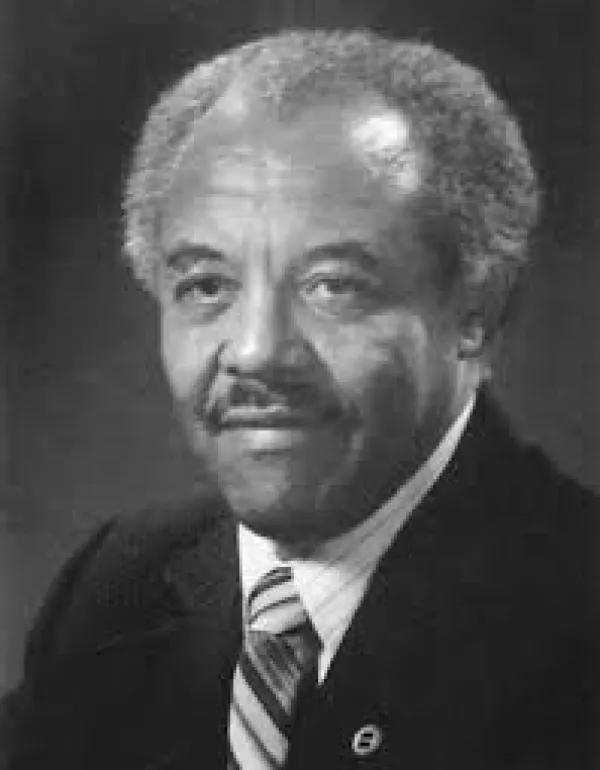
Amos Lynch
(19252015)
Everyone refers to Amos Lynch as the “godfather” of black journalism. But he was more than that.
He helped set the black political agenda in Columbus as well as covering stories of Jim Crow
practices that inspired progressives to action. For 33 years he edited the Call and Post and launched
the career of perhaps Ohio’s most famous black writer, Wil Haygood. I remember reading the front
page of the Call and Post in the 80s and 90s and contrasting it with the Dispatch and the difference
was literally black and white. All the great moral issues of the day were covered first and more
complete in the Call and Post. Whether it was freeing Nelson Mandela or police brutality – the
actual existing conditions for the poor and minorities and advocacy on their behalf was to be found
in the papers edited by Amos Lynch. The Free Press hopes that we can, in a small way, carry on
his legacy. Lynch died at age 90 on July 24, 2015. ~ Bob Fitrakis

The Free Press is proud to salute one of our contributors, local photographer Bob Studzinski, for the honor or having his work included in a digital art display at the Louvre in Paris, France on July 13, 2015. One of his photographs was displayed among work by an international group of photographers from over 191 countries.
Studzinski’s photograph was part the Fifth Annual Exposure Award, was included in a digital display of images presented at the Exposure Award Reception at the Louvre and in a Documentary Collection book. The curators congratulated him on having his work seen by over five million photo enthusiasts from around the world. Sales of the book will benefit the charity Pencils of Promise which is working to build schools in developing nations.