
People
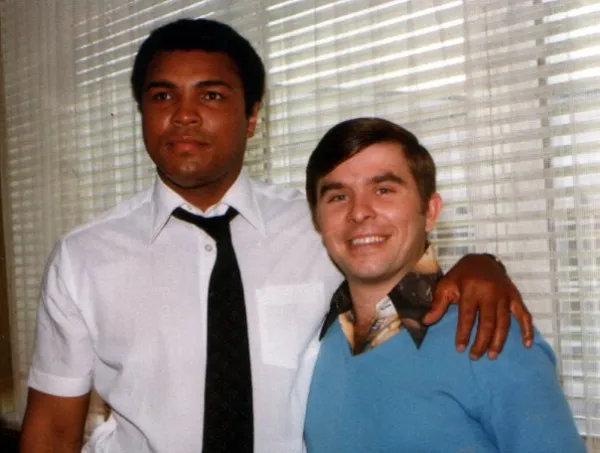
I knew the day was coming, but that doesn't mean I was looking forward to it.
That day was June 3, 2016, the day Muhammad Ali died.
It was gratifying to see the mainstream media give him his due. His passing was well covered and many people paid tribute to him. Most of them shared a personal story about the man known as “The Greatest.”
I have my own story to share.
In 1979 I was the television sports anchor for the American Forces Network Europe, stationed in Frankfurt, Germany.
One day as I was preparing my broadcast for that evening's show, the phone rang and I answered.
On the other end of the line was a man with a thick German accent but who spoke very good English.
“Mr. Alwood,” he began politely. “I was wondering if you would like to interview Mr. Muhammad Ali?”
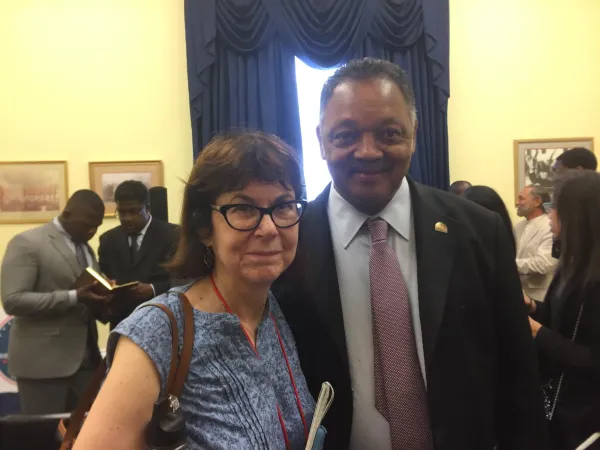
In a small press room on the fourth floor of the Cannon House building, an oversized crowd heard Revs. Jesse Jackson and Lennox Yearwood, joined by members of the newly formed (see http://www.opednews.com/articles/Congressional-Briefing-Apr-by-Marta-Steele-Bipartisan_Congressional-Committees_Corruption_Democracy-160422-490.html ) Congressional Voting Rights Caucus, and others, including Terri O'Neill, president of the National Organization for Women (NOW). The subject was the insidious disappearance of voting rights, including the relevant legislation, and what we can do to reverse it.
Barbara Arnwine moderated the event with energetic enthusiasm. This former executive director of the Lawyers' Committee for Civil Rights under Law, now presides over the Transformative Justice Coalition, which she recently founded.
Thanks to U.S. District Court of Southern Ohio Judge Michael Watson, the voting public should have more days to cast their ballots. On Tuesday, May 24, Judge Watson ruled that Ohio violated voters’ rights by reducing the number of days included in “early voting.” In 2014, Ohio cut early voting from 35 to 28 days and eliminated the “Golden Week” when citizens can both register to vote and cast a ballot. Judge Watson deemed this “unconstitutional” and decided it violated the Voting Rights Act.
Judge Watson’s opinion rejected Ohio Secretary of State Jon Husted and Ohio Attorney General Mike DeWine’s contentions that cutting early voting was necessary to prevent fraud and voter confusion. The Judge stated that the shorter early voting period would instead cause longer lines at the polls and potentially deter would-be voters.
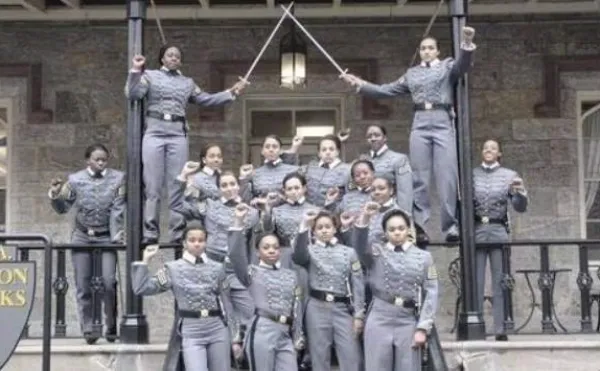
Like a violent storm the US Army sought to squash any signs of expression when a group of graduating black female West Point cadets took a photo with raised fists. Their raised fists a sign of solidarity with Black Lives Matter.
Military insiders have reported the black female cadets have complained to senior officers the racism within the mostly white and male-dominated academy is too much to take. The military would never allow these cadets to speak publicly, however, so it may never be known whether they meant the picture to go viral.

Central Ohio activists Marilyn Welker, Bob Hart, Ellen Baumgartner and Chuck Lynd were among the 400 people arrested on the steps of the US Capitol during the “Democracy Spring” – one of the largest civil disobedience actions since the Vietnam War protests, demanding a democracy that works for everyone. They were supported by another Central Ohioan, Kathleen Gmeiner. Between April 11th-18th, 1,300 people were arrested.
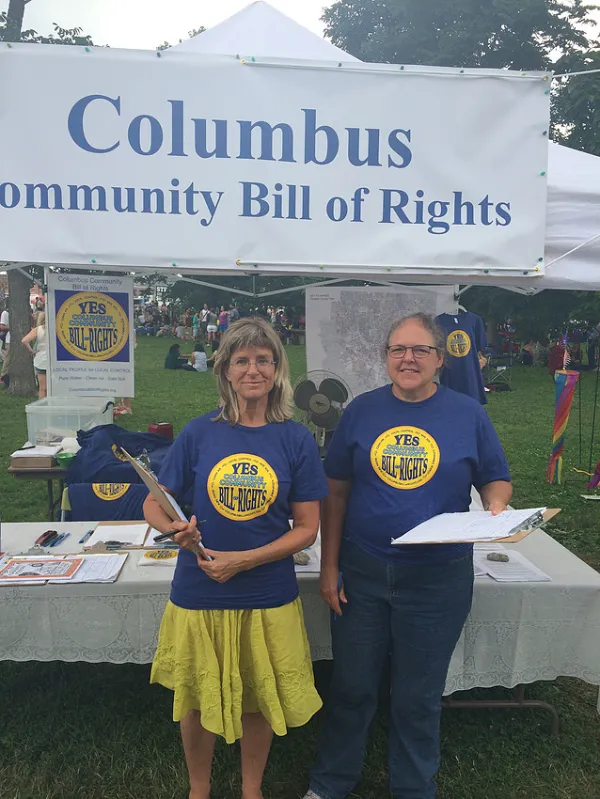
Ohio’s jobs “Driver” is getting pretty hot in the Democratic debate as of late, and will likely flare up the Republican stage before Cleveland. I’m following it closely, how can I help it? I can’t go more than two songs on Pandora or watch Prime Time without hearing, in surround sound, the virtues of Fracking.
A few years ago I became a volunteer researcher for the Columbus talk radio show, All Sides with Ann Fisher. Linda, the producer, was a former improv student of mine. I had taught and performed improv and legit theatre for over 20 years, and at 52, I was ready for change, something to sink my teeth into - that would help the world.
At All SidesI researched authors of fiction, non-fiction, history, local celebrities, artists, politicians, ornithologists, etc. And the day Linda gave me the assignment to research fracking, my world changed. And I haven’t looked back.

The last time there was a serious discussion about poverty in America was during the presidential campaign of 2008 when former United States Senator John Edwards (D-NC) announced his intention to run for the office from the back yard of a home in New Orleans. The city was still reeling from the impact of Hurricane Katrina in 2005–the natural disaster that made poverty in America visible again. Edwards had been identified as a champion for the poor throughout his legal career during which we successfully represented plaintiffs in seemingly unwinnable cases as they fought large corporations, physicians and others, winning multimillion dollar settlements for his clients. He was also the director of the Center on Poverty, Work and Opportunity at the University of North Carolina Chapel Hill School of Law. During his political career Edwards had proposed that the government should place poor people in middle class neighborhoods through the use of one million housing vouchers. The idea went nowhere, and once again, poverty fell off America’s agenda.

The Community Festival
Thursday, May 5, 7:30 PM - MEMBERSHIP MEETING
Goodale Park Shelterhouse Building
(come at 7 for a meal - bring your own plate and utensils)
www.comfest.com

Did you know that trolls, Internet or otherwise, have a mental disorder? So found a study in the Journal of Personality and Individual Differences. Researchers surveyed 1,200 respondents, giving each one a personality test and then analyzing their Internet comments. The subjects’ behaviors were matched to a “Dark Tetrad” of personality traits that include sadism, psychopathy, and Machiavellianism. You remember Machiavelli, the 16th Century writer whose work endorsed deceit and duplicity as tools of control? The trolls in the study scored highest in sadism. Congratulations.
Unfortunately for us non-sadists and psychopaths, trolling has become rampant in all areas of social activism. You might think marijuana, the last presumed bastion of peace and love, would be immune, or at least, less vulnerable. You’d be wrong. Some have called this booming industry, and Ohio in particular, a circular firing squad, rampant with infighting and hell bent on self-destruction.
JP Marat: What is your name?
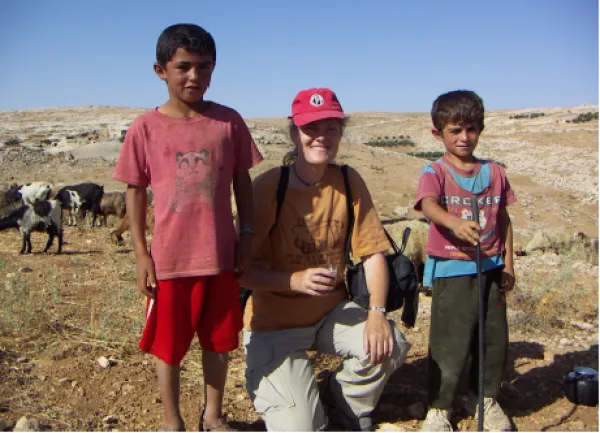
Mary: My name is Mary Yoder. I’m a registered Nurse in Columbus, Ohio.
Tell us about yourself
I grew up in a big Mennonite family. I’m a member of Christian Peacemaker Teams and Jewish Voice for Peace. Both groups advocate for human rights for the Palestinian people.
Don’t Israelis and Palestinians all want to live in peace?
Yes! I’ve met many good people on both sides who want to live in peace and harmony but Israeli government policy makes that impossible.
What attracted you to Christian Peacemaker Teams (CPT)?
I’ve always been interested in communal living. I like getting to know people on a deeper level than just being casual friends at work. CPT empowered me to live that way while working for Peace and Justice in Palestine. I attended preliminary training in Chicago for four weeks then traveled to Palestine for three months. During our time in Chicago we studied advocacy, after trauma care, acting as a human shield, lobbying local government organizations, nonviolent resistance, etc.