
The Free Press is bringing back a Reviews section after some absence. We hope to review plenty of events around town. Check back frequently and if what\'s going on is any good.
Arts & Culture
Image

Rogue Machine’s very first musical, Diane Frolov’s wacky Come Get Maggie, is simply out of this world. And Judith Borne must be the craftiest PR genius on this or any other planet, as she is uncannily promoting Maggie by arranging for the U.S. military to shoot down UFOs, just as this play about flying saucers debuts. Talk about publicity stunts! (Just don’t tell NORAD…)
The eponymous Maggie (Melanie Neilan) has the misfortune of having the brains of a nuclear physicist but living during America’s conformist fifties. Pressured to get with the patriarchal program, Maggie makes an ill-considered marriage to stick-in-the-mud Hugh (Chase Ramsey, who appeared on Broadway in The Book of Mormon and in episodes of Law and Order and Yellowstone). Feeling straightjacketed by her straitlaced suburban existence, hemmed in by the droll “Mothers Militia” and by Hugh’s Auntie Ruthie (Ovation and NAACP Theater Award winner Jacquelin Lorraine Schofield), who all enforce strict adherence to bourgeois society’s notions of norms, Maggie breaks free of this orbit of conventional expectations through the juiciest deus ex machina since Aristophanes: Alien abduction.
Image

Writer/performer Kayla Boyle nails this role as the title character in her one-woman show, Call Me Elizabeth, as – who else? – none other than the legendary Elizabeth Taylor. The one-acter takes place in 1961 in a bungalow at the Beverly Hills Hotel where the superstar unspools her personal and professional saga through the plot device of revealing details about her tumultuous life and loves to journalist Max Lerner. He is taping her confessions for a planned biography about the actress who’d go on to depict Katharina in Franco Zeffirelli’s 1967 screen adaptation of Shakespeare’s The Taming of the Shrew (one of only three movies Taylor ever produced, although she appeared in about 75 silver screen productions).
Image

From the moment James Conlon lifts his baton and LA Opera Orchestra lets loose with Wolfgang Amadeus Mozart’s peerless score, listeners are in for an almost four-hour treat as the James Gray-directed The Marriage of Figaro unspools onstage. Along with Mozart’s majestic, matchless music is a rollicking, often slyly subversive story upending sex and class conventions. While there’s much talk nowadays about gender roles and “binary” identities, Mozart and company did that and more way back in 1786 when this rambunctious opera premiered at Vienna.
Image

Neil Young rocked America with his anthem “Southern Man” on his 1970 album “After the Gold Rush.” Similarly, the Black and white bards Sheri Bailey and Dura Temple struck gold with their outstanding Southern Girls drama, which was first mounted during the Reagan era and is, happily, being revived at the Hudson Backstage Theatre with an all-female cast and a woman director, Zadia Ife.
Set like To Kill a Mockingbird in smalltown Alabama, three of the eponymous females are white, two are Black and one is biracial. The play’s trajectory follows them from small kid days, when they played girlish games in the Jim Crow South, through the Civil Rights era, the Black Power movement and beyond. Southern Girls is exemplary in how it rather perfectly dramatizes how world historical events – from American apartheid to assassinations, et al – deeply impact individuals in their daily lives and the choices they do – and cannot – make.
Image
After departing Mangareva, everyone aboard Aranui 5 – from passengers to crew – must submit to the voyage’s second obligatory covid test, no exceptions. The first swab for the swabbies, of course, had been taken a day before shoving off from Papeete, and now another one to make sure outsiders don’t carry the dreaded plague to the 40-plus inhabitants of way out-of-the-way Pitcairn Island is also required. Testing positive back at Papeete meant being barred from boarding Aranui 5 for the voyage. While if one passed the test but later flunked it before reaching Pitcairn doesn’t quite mean the infected shipmate has to walk the plank, it does oblige the afflicted to remain solitarily sequestered in his/her cabin until testing negative.
Image
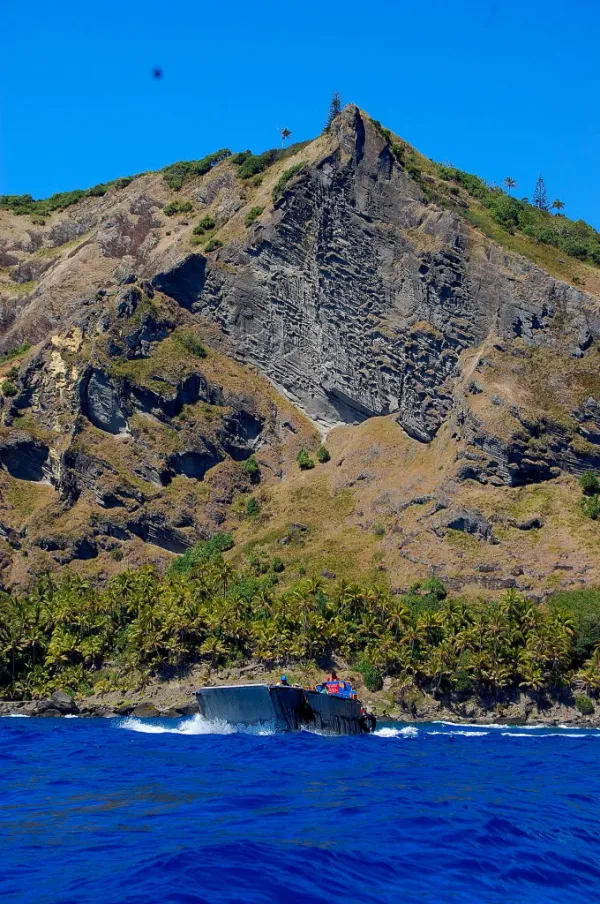
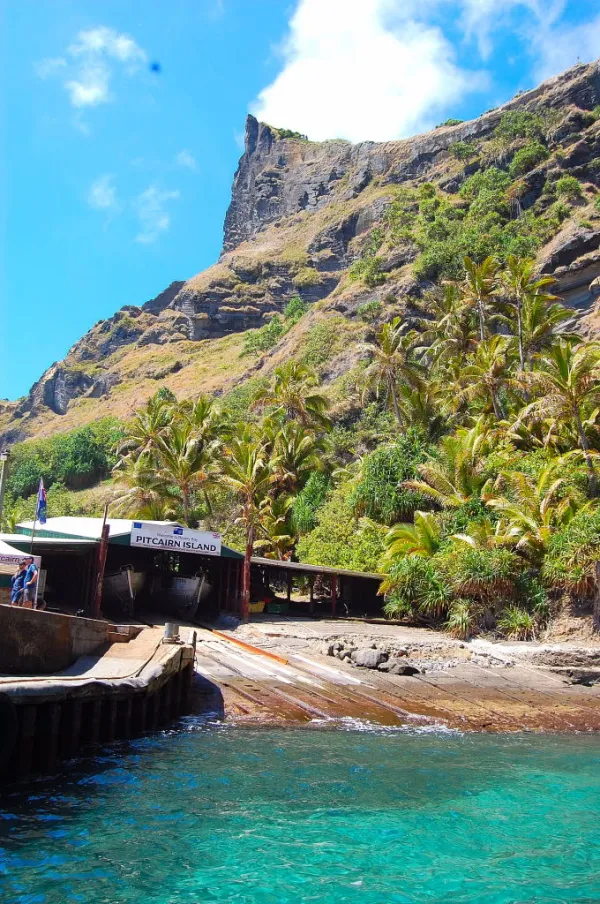
It’s full steam ahead aboard Aranui 5 to the raison d’etre of this far-flung voyage through French Polynesia’s remotest isles and atolls as we near way off the beaten track Pitcairn. The legacy of and lore surrounding this isolated spot at the end of the Earth has made it one of the most romanticized and fabled islands in history, dramatized, if not celebrated, by bestselling authors and Hollywood blockbusters. Here’s the bare bones outline of what has made little Pitcairn loom large for decades in the zeitgeist as the ultimate getaway and isle of escape, the polar opposite of Alcatraz, that infamous icon of the island as prison.
On December 23, 1787, His Majesty’s Armed Vessel Bounty departed from Spithead, England for Tahiti. The maritime mission’s purpose was to secure breadfruit, which grows in abundance at Polynesia, then sail to Britain’s Caribbean colonies, deposit the starchy staple foodstuff there, and return to England.
Image
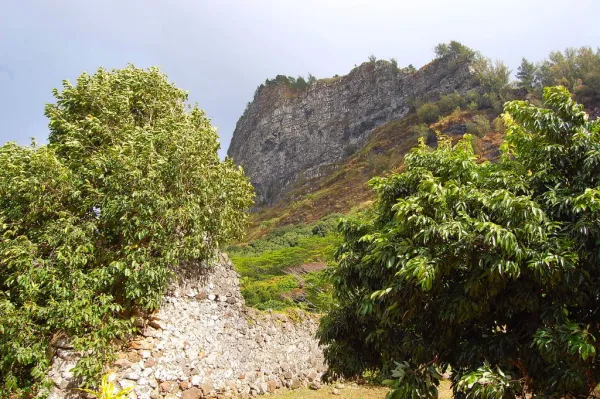
After visiting flat atolls of the Tuamotus and then a day out at sea, the appearance on the horizon of the Gambier group, with its high islands, emerges as a sharp vertical contract to the previous days’ horizontal vistas. This remote chain of mostly volcanic isles, located 1,000 miles southeast of Tahiti, is one of French Polynesia’s five archipelagoes that comprise a sprawling watery realm the size of Western Europe, and I’ve never been here before.
Image
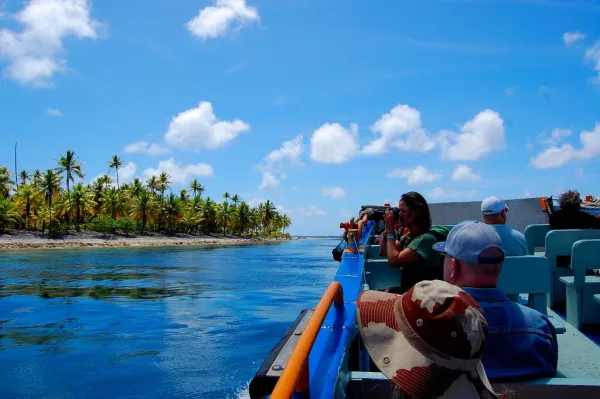
Our voyage to Pitcairn Island continues as Aranui 5 sets sail from Anaa for Amanu, another one of the far-flung 80 atolls spread out across the world’s largest archipelago, the Tuamotus, a vast expanse of mostly water that is roughly the size of Western Europe. Amanu’s flat coral islets form an Oceanic oval that stretches over a turquoise lagoon for about 20 miles, and the 413-foot cargo/cruiser anchors outside of the atoll. From Aranui’s hatchway passengers descend into a barge that, in a succession of trips, swiftly, safely carries us over tranquil water, past surf pounding in the distance through a pass to Hikitake Village. As we ride to another adventure, once again I rise and mimic John Wayne in a cowboy movie: “Let’s paddle up and move ’em out, Polynesians!”
Image
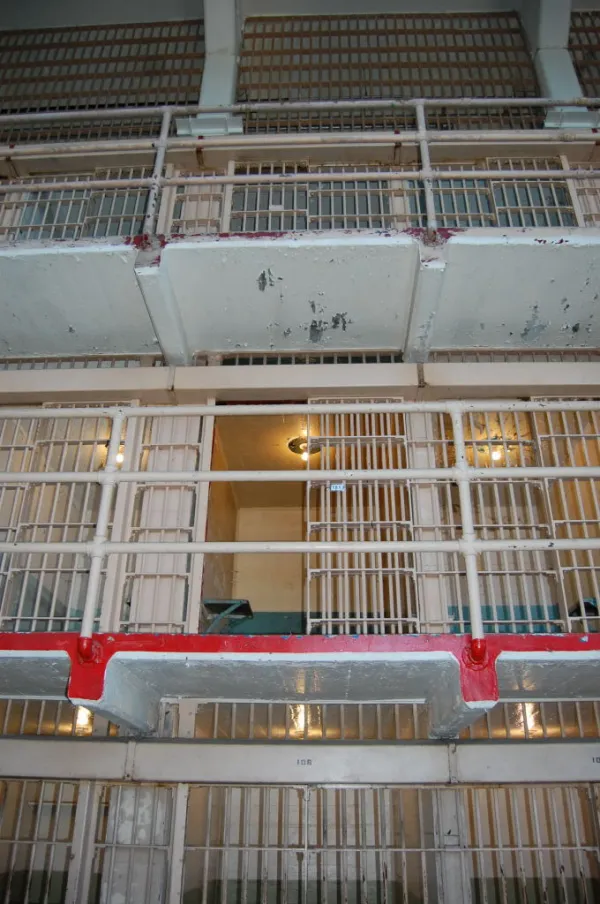
After Ranger Benny’s presentation about Alcatraz’s political prisoners, I climb uphill (trams are available) past cannons, barb wire and beneath a water tower to the main facility where audio equipment for “Doing Time: The Alcatraz Cellhouse Tour” are dispensed (at no extra charge). The taped exposition and explanation of the highly informative, entertaining audio tour are edited to be closely linked to what the lines of headphone-adorned visitors behold, unit by unit, while moving through the cellblocks.
Image
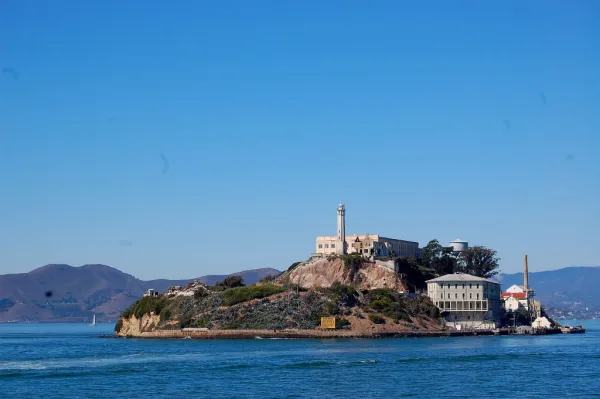
Separated by water from continents, islands have always represented freedom to me. When I graduated from Hunter College as a film major in the 1970s, I realized the Age of Aquarius was experiencing technical difficulties in ascending. So, inspired by movies like Mutiny on the Bounty, I decided to go search for paradise in the South Pacific, going on to visit and live at more than 100 islands in Polynesia, Micronesia and Melanesia.
Before my latest journey, only three islands remained on my bucket list. At the head of the list was the apogee of isles symbolizing liberty: Pitcairn Island, where the Bounty mutineers and their Tahitian lovers fled to escape capture and punishment by the British navy after seizing the Bounty and throwing Captain Bligh overboard in 1789.
For others, however, islands exemplify the idea of imprisonment. In 1814, Napoleon Bonaparte was confined at Elba in the Mediterranean, 6 miles off Italy’s coast. After the French Emperor returned to France and his army was defeated at Waterloo, the British took no chances and exiled Napoleon to remote St. Helena in the South Atlantic Ocean, 1,200 miles from southwestern Africa.