
Human Rights
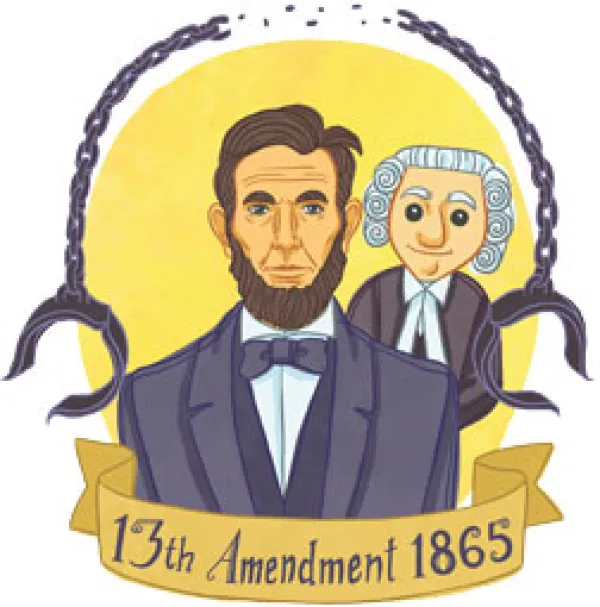
One hundred forty-five years ago on Jan. 1, Abraham Lincoln issued the Emancipation Proclamation, helping to transform this country from a union of states into a nation, from a country stained by slavery into one moving at great cost closer to “liberty and justice for all.”
On Jan. 1, 1863, in the midst of the Civil War, Abraham Lincoln, the Republican president, issued the proclamation on his own authority as commander-in-chief “in time of actual armed rebellion” against the United States. The emancipation was grounded on his wartime powers, as a “fit and necessary war measure for suppressing said rebellion.”
The emancipation did not end slavery in the United States. It applied only to the states still in rebellion, exempting the slave owning border states such as Maryland, Missouri and Kentucky that still had slaves. Lincoln was desperate to keep the border states from joining the South. Some abolitionists ridiculed him for this. “Where he has no power, Mr. Lincoln will set the negroes free, where he retains power we will consider them as slaves,” declared the London Times.

Al Franken the serial groper. Al Franken the scapegoat.
History proceeds clumsily. Innocent people — or “innocently guilty” people, like the junior senator from Minnesota — often get unfairly hung out to dry. Should he have to resign? As far as I can tell, his alleged sexual wrongdoings over the years consist of three butt grabs, several uninvited kisses, a breast grope and a waist squeeze.
There may be more, of course, and they add up to something beyond what could be called innocent mistakes or misunderstandings. An adolescent sense of entitlement seems to be at work here, but . . . this is the moral standard of a Congress open for purchase by corporate lobbyists? Who among us (Roy? Donald?) hasn’t committed transgressions worse than the above? And shouldn’t a person’s positive achievements be factored into the severity of his punishment, at least when no permanent damage has occurred?
Yet . . . yet . . .
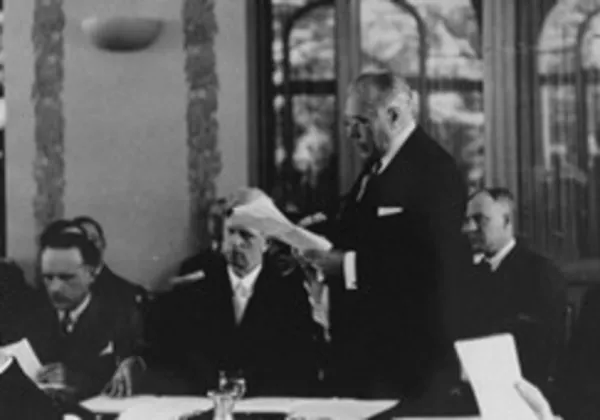
Evian is not just a bottled water company. And the town of Évian-les-Baines in France on the south shore of Lake Geneva is not just a location for luxury hotels. It’s also the location where, in July 1938, the first international effort was ever made (or feigned) to alleviate a refugee crisis.

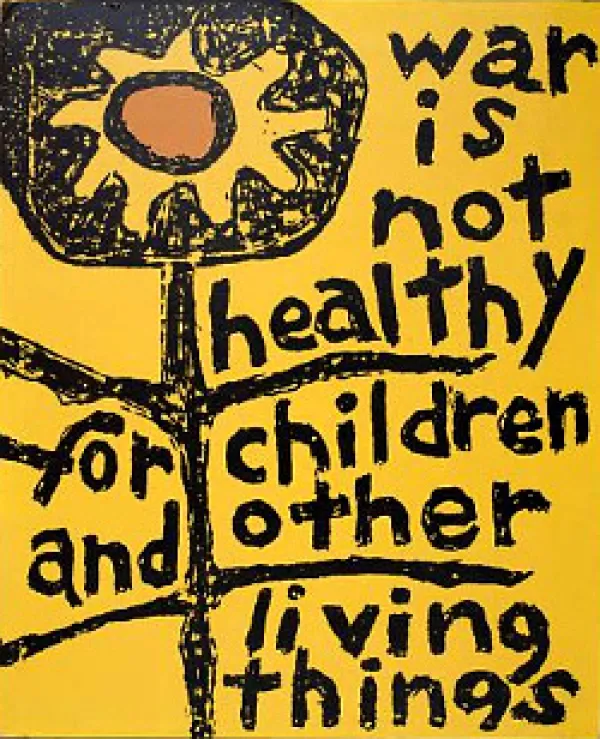
This is an exposition of the photographic essay by William Pepper about the children of Vietnam that Martin King first saw on January l4, l967. Initially, while he hadn’t had a chance to read the text, it was the photographs that stopped him. As Bernard Lee who was present at the time said, “Martin had known about the [Vietnam] war before then, of course, and had spoken out against it. But it was then that he decided to commit himself to oppose it.” Pepper’s essay contains the most powerful creative energy on earth: truth force. It is as relevant 50 years later as it was in 1967. Martin King steadfastly exhorted all to confront and grapple with the triple prong sickness—lurking within the U.S. body politic from its inception—of racism, extreme materialism, and militarism.
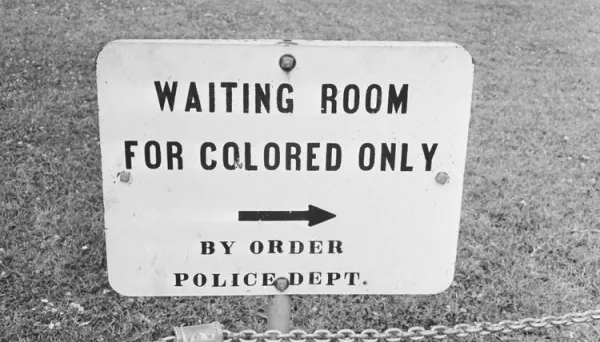
Dred Scott lives!
With the Supreme Court’s declaration that President Trump’s third version of a Muslim travel ban is now enforceable, even as legal challenges against it proceed, the court and the country reopen the racism that permeates American history.
“The question is simply this: Can a negro, whose ancestors were imported into this country, and sold as slaves, become a member of the political community formed and brought into existence by the Constitution of the United States, and as such become entitled to all the rights, and privileges, and immunities, guaranteed by that instrument to the citizen?”
Thus begins Chief Justice Roger Taney’s explanation of the Supreme Court’s 1857 ruling against the slave Dred Scott’s lawsuit that he was entitled to freedom when he was taken by his “owner” to a free territory. Taney’s answer, of course, was no. Sorry, you’re not one of us.

In his remarks on the recent International Day for the Elimination of Violence Against Women – see ‘Violence Against Women is Fundamentally About Power’ – United Nations Secretary-General António Guterres inadvertantly demonstrated why well-meaning efforts being undertaken globally to reduce violence against women fail to make any progress in addressing this pervasive crisis.
Hence, while the UN might be ‘committed to addressing violence against women in all its forms’ as he claimed, and the UN might have launched a range of initiatives over the past twenty years, including awarding $129 million to 463 civil society initiatives in 139 countries and territories through the UN Trust Fund to End Violence against women, his own article acknowledges that ‘Attacks on women are common to developed and developing countries. Despite attempts to cover them up, they are a daily reality for many women and girls around the world.’
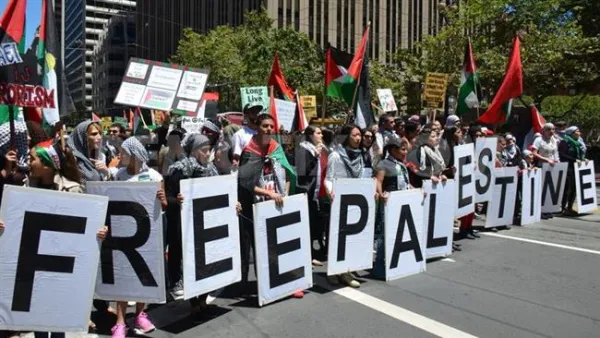
Zionism is a colonial movement invented in the 19th century to transform a
multi-religious Palestine to the apartheid “Jewish state of Israel”. It was
to be “a rampart of Europe against Asia, an outpost of civilization against
barbarism” (Herzl in the Jews’ State). This colonial racist idea remained
unchanged since founding of the “Jewish Colonization Association” in 1891
and the World Zionist Congress in 1897. Like all colonial movements, it
focuses on the dual task of destroying native life and creating new
exclusivist racist regimes and it gets support from empires and from
complicity.
Britain put the Al-Saud family in charge of the area of Hijaz (which was to
become the kleptocracy of “Saudi Arabia”). Abdul Aziz Al-Saud responded in
1915 to British requests by writing in his own hand: “I the Sultan Abdel
Aziz Bin Abdel Alrahman Al-Faysal Al-Saud decide and acknowledge a thousand
times to Sir Percy Cox the representative of Great Britain that I have no
objection to give Palestine to the poor Jews or to others as seen [fit] by
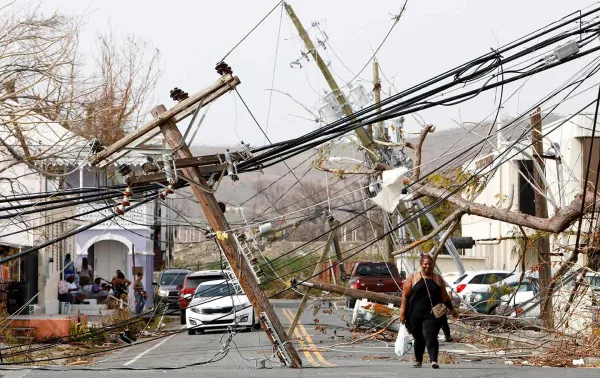
Two months after the Sept. 20 landfall of Hurricane Maria, Puerto Rico—like the nearby Virgin Islands—is still in a state of horrifying devastation. The help being offered by the Trump administration is thin to the point of being cruel and unusual.
At this point one must ask: Is Trump’s astonishing lack of aid part of a larger plan to cleanse the islands of their native populations, drive down real estate values and create a billionaire’s luxury hotel-casino-prostitution playground à la Cuba before the revolution?
In other words: ethnic cleansing for the superrich.
There is just one piece of good news: Rep. Ted Lieu, D-Calif., has joined Rep. Stacey Plaskett of the Virgin Islands in proposing that Puerto Rico’s electric grid be rebuilt with wind, solar and a network of micro-grids. More than half the original electric grid is still not functioning, with frequent blackouts occurring in areas where the grid is operational.

Childish oversimplification seems to be spreading throughout public discourse. Maybe it’s the character limits on tweets. Maybe it’s the second limits between commercials. Maybe it’s two-party politics. Maybe it’s an excess of information. Maybe it’s presidential example. Maybe it is, in fact, thousands of different things, because reality is actually very complicated.
In any case, the phenomenon I’m observing has been growing for some time. I recently found a professor willing to publicly debate me on the question of whether war is ever justified. Now I’m having the hardest time finding a university willing to host the debate or even to recognize the concept of civil nonviolent debate. But where would anyone go to observe such a thing? Not television. Not most text journalism. Not social media.
“There’s no difference between the Democrats and the Republicans.”
“The Democrats and the Republicans have nothing in common.”
These are both ridiculously stupid statements, as are these:
“Women always tell the truth about sexual assault.”
“Women always lie about sexual assault.”