
THE G-20 IN PITTSBURGH
by Tom Over 9-23-09
<br><br>
On Tuesday, Sept 22, activists from Philadelphia, New York City, Pittsburgh and other cities held a mock funeral procession to demand better policies for addressing the AIDS pandemic, a day ahead of the arrival of delegates for the G-20.
<br><br>
The approximately 50 participants in the New Orleans-style funeral march drew a mix of interest, irritation, and amusement from onlookers in the business district of downtown Pittsburgh.
<br><br>
At the head of the funeral march where pallbearers carried a cardboard coffin, a man shouted into a microphone while someone else carried a portable amplifier, “when people with AIDS are under attack, what do we do ?” and marchers shouted in unison, “fight back!”
<br><br>
Amidst the early afternoon bustle of an weekday, the demonstrators repeated this call-and-answer and similar chants as the funeral march made its way around the perimeter of the David L. Lawrence Convention Center, the site of the G-20 Summit later this week.
<br><br>
Erica Goldberg works with ACT UP Philadelphia. She said global health is not on the agenda of the G-20 Summit.
“One of the things that some of the G-20 nations have promised us is funding for the global fund to fight, TB, malaria, and HIV/AIDS. This is all really important, especially if we want to meet the United Nations’ Millennium goal of eradicating these diseases by 2015. As of right now, this won’t be met. We have to hold our leaders accountable. They are the ones making decisions for the poorer countries,” Goldberg said.
<br><br>
She commented on the timing of the demonstration. “We wanted this to be the first thing they (the G-20 delegates) see. They’re coming here tomorrow. We’re holding them accountable. This needs to be on the agenda.”
<br><br>
She said AIDS activists chose Sept 22, two days before the official start of the G-20 Summit, and one day before the arrival of the delegates, so as to not have to compete with other protests. Also, she said the AIDS activists figured there would be less of a chance of conflict with police if they staged their protest earlier in the week.
<br><br>
“We hope that this will hit the papers tomorrow, that it’s the first thing they see when they walk in, that they have this on their conscience and know we’re not going away,” Goldberg said. She urges people to contact legislators about supporting the Global Fund to Fight AIDS, Tuberculosis, and Malaria.
“President Obama, as much as I love him, went back on his promise to fulfill the funding,” Goldberg said.
<br><br>
She commented on how drug companies factor into all of this. “ Medication does not need to be this expensive. They can definitely lower their prices. We have big drug interests lobbying to prevent AIDS medication from getting” to developing nations.
<br><br>
Goldberg said debt cancellation for developing nations is a factor that comes into play.
“When you don’t cancel debts of nations and they have to pay back loans to the IMF and the World Bank, they won’t have the funds necessary for getting AIDS medication, or they might get the medication but can’t pay the health professional because of their debt.
<br><br>
She said vested interested motivated by huge profits stand in the way of doing a better job of addressing tuberculosis, malaria, and HIV/AIDS. “We have the power, the ability, and the medication.”
World News
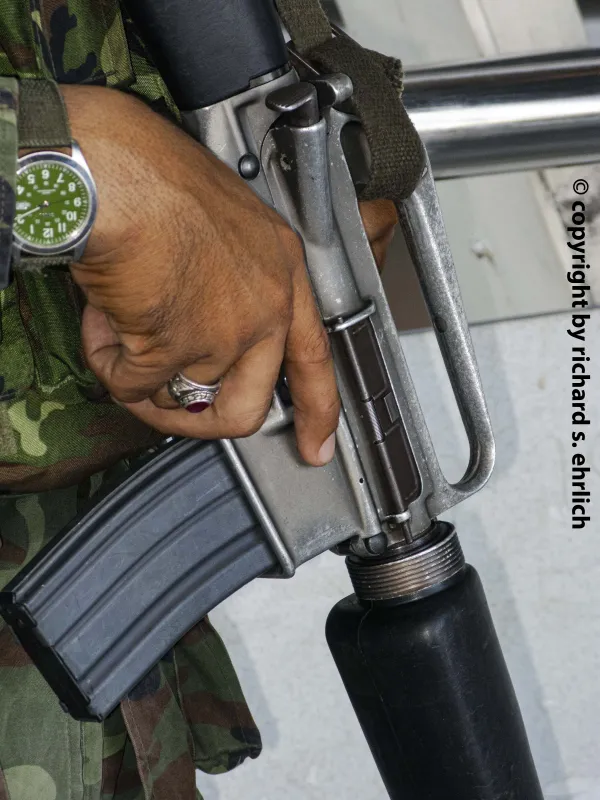
BANGKOK, Thailand -- Millions of Thais were gripped with suspense, misery, or delight seeing a Shakespearean display of political knives and an agonized "Et tu Brute?" echoing in the hostile Senate when it voted twice to crush popular Pita Limjaroenrat's chances to become prime minister.
The grim, militarized, junta-appointed 249-member Senate was not a welcoming place for Pita, 44, who won a nationwide House election in May, promising to reform the U.S.-trained military and stop them repeatedly seizing power through coups.
Pita also wanted to "reform" the constitutional monarchy, slash the military's opaque budget and lucrative commercial enterprises, downsize the swollen number of generals, end conscription, and disband the Internal Security Operations Command (ISOC) which is currently grappling with Islamist Malay-Thai separatists in the south.
The Senate's votes on July 13 and 19 ended Pita's current climb to the prime ministry.

The deadly Israeli invasion of Jenin on July 3 was not a surprise.
Also, unsurprising is the fact that the killing of 12 Palestinians, wounding of 120 more and the destruction of nearly 80 percent of the Jenin Refugee Camp’s homes and infrastructure will not make an iota of a difference.
Even Israeli Prime Minister Benjamin Netanyahu, despite his lofty promises of destroying the “safe haven ... of the terrorist enclave in Jenin”, must have known that his bloody exercise was ultimately futile.

Desecrating, then burning the Holy Quran in Sweden has, once again, raised a political storm of condemnation, but also of justification, if not outright approval.
Such acts are protected by law, top Swedish and EU officials have declared.
But why are the rights of those who oppose western agendas, colonialism, imperialism, Zionism and military interventions not equally protected by law?
The Palestine boycott movement, BDS, for example, is constantly fighting in western societies and institutions for the right to use certain language or merely challenge, though non-violently, Israeli occupation and apartheid.

BANGKOK, Thailand -- Job opening: Prime minister.
Must be able to end Thailand's cycle of coups by satisfying the demands of Thailand's U.S.-trained, putsch-empowered military.
Must be able to seduce junta-appointed senators into supporting the next government, and continue capitalist Thailand's balancing of relations with the U.S. and China.
Unfortunately for Pita Limjarouenrat -- the May 14 election winner to be prime minister -- the Election Commission on June 9 opened a "criminal case" against him for alleged election fraud, punishable by 10 years in prison and a political ban for 20 years.
Mr. Pita is vulnerable because his new Move Forward Party's (MFP) nationwide election victory was buoyed by idealistic, anti-military voters.
That rang alarms throughout Thailand's increasingly insecure army establishment.
Put on the khaki uniform of a politically entrenched general, and it is easy to understand why you might regard Mr. Pita's election as a challenge.
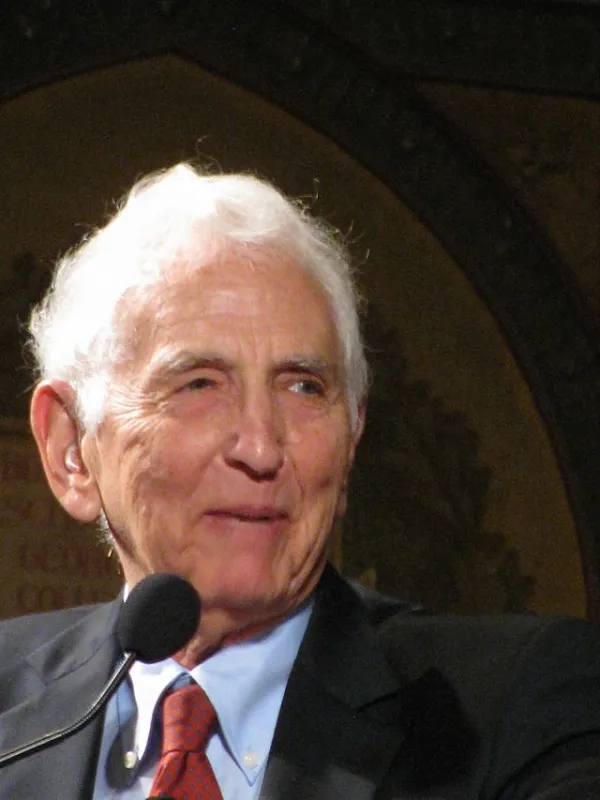
There’s a crucial, overlooked aspect of Daniel Ellsberg’s legacy that’s very much worth saluting, you might say: his transformation from a believer in the Vietnam war to a horrified opponent of it, ready to risk prison time to bring classified truth about its pointlessness into public awareness.
Ellsberg, who died on June 16 at age 92, had been part of the military-industrial establishment in the 1960s — a smart young man working as a Pentagon consultant at the Rand Corporation think tank. In the mid-’60s. he wound up spending two years in Vietnam, on a mission for the State Department to study counterinsurgency. He traveled through most of the country — witnessing not simply the war up close but Vietnam itself, and the people who lived there.

Europe keeps reminding us that geopolitical interests trump ideology.
European politics is the prime example of how states and political parties are willing to ditch their very ideological foundations to hold onto power, even if briefly.
The unmistakable political shift of attitude in Italian Prime Minister Giorgia Meloni and her Fratelli d’Italia party is the latest evidence that European politicians use ideology merely as a vehicle. Once in power, they are governed by the same neoliberal policies that control the rest of Europe.
This assertion applies equally to the Right and the Left.
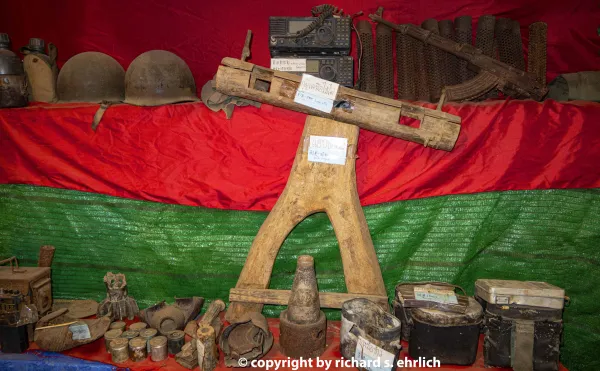
BAN RAK THAI, Thailand -- Rotting weapons, faded battlefield photos, and rough-sketched jungle maps from defeated, anti-communist, U.S.-equipped Chinese Kuomintang (KMT) guerrillas are cherished in this northern border village.
The KMT and China stopped killing each other decades ago.
Today, the KMT's descendants graciously serve China's fun-seeking tourists, sheltering them in cozy, Chinese-themed hotels and quenching them with locally grown, fermented oolong tea.
KMT families are thankful their victorious former foe is boosting their local economy.
The traumatic reversals in fortune on both sides display the way China's monetized soft power is influencing in this Southeast Asian country.
"Some Chinese come here and see these things, and say they are sorry for the way the KMT were treated so hard, years ago," said Wang Ja Da, gesturing inside his thatch-roofed restaurant at shelves displaying his family's rusty, decrepit machine gun alongside metal helmets, canteens, ammunition cartridge boxes, and other KMT equipment.
The dusty display is dotted with photos of armed, uniformed KMT who did not survive.

After signing a military decree on May 18, allowing illegal Israeli Jewish settlers to reclaim the abandoned Homesh settlement located in the northern Occupied West Bank, the Israeli government has informed the US Biden Administration that it will not turn the area into a new settlement.

BANGKOK, Thailand -- Pita Limjaroenrat is deliberately entering a political minefield, littered with politicians and governments which failed.
Wealthy Mr. Pita's youth-led victory in nationwide elections on May 14 to try and become Thailand's youngest prime minister, is a vivid rejection by a large swath of Thai society against the U.S.-trained military's unpopular political domination and coups.
Mr. Pita, 42, is now struggling to have his Move Forward Party (MFP) form a coalition government uniting smaller parties, while litigious knives sharpen around him.
Projecting robust defiance, Mr. Pita said May 15 it would be "quite far-fetched" for anyone to oppose his victory.
"With the consensus that came out of the election, it will be quite a hefty price to pay for someone who is thinking of abolishing the election results, or forming a minority government," Mr. Pita said at a celebratory reception.
Ballots from Sunday's election for the 500-member House of Representatives gave him and his MFP the most votes of all candidates and parties.
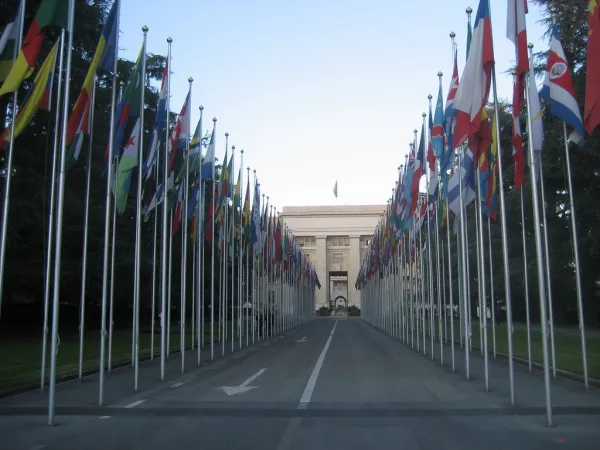
In anticipation of next month's United Nations Security Council talks on reforming the inherently archaic and dysfunctional political body, China’s foreign policy chief, Yang Yi stated his country's demands.