
Peace
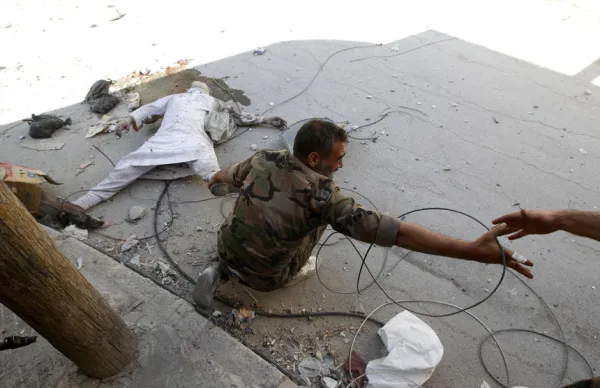
Statement by David Swanson as Director of World Beyond War at DC press conference August 8, 2017. http://davidswanson.org/purposeless-death-in-syria
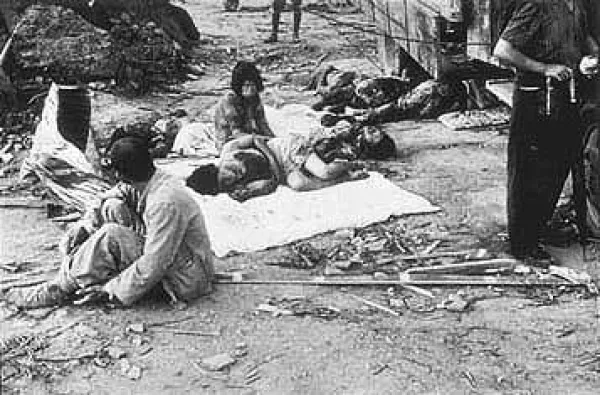
Thank you for inviting me to speak here. I’m grateful and honored, but it is not an easy task. I’ve spoken on television and to large crowds and to important big shots, but here you are asking me to speak to hundreds of thousands of ghosts and billions of ghosts in waiting. To think about this subject wisely we must keep all of them in mind, as well as those who tried to prevent Hiroshima and Nagasaki, those who survived, those who reported, those who forced themselves to remember over and over in order to educate others.
Perhaps even more difficult is thinking about those who rushed to make all those deaths and injuries happen or who went along unquestioning, and those who do the same today. Nice people. Decent people. People superficially similar to you. People who do not abuse their children or their pets. People perhaps like the commander of the U.S. Pacific Fleet who was asked last week if he would launch a nuclear attack on China if President Trump ordered him to. His response was a very principled and reasonable yes, he would obey orders.


Last Thursday the U.S. House Appropriations Committee unanimously passed an amendment that would — if passed by the full Congress — repeal, after an 8-month delay, the Authorization for the Use of Military Force (AUMF) passed by Congress just after September 11, 2001, and used as a justification for wars ever since.

This year, sit back with your favorite beverage or herb, prop up your feet and open your head to consider Independence Day in a whole new way.
A historically critical article about the American Revolution would typically discuss how the democratic promises of the Declaration were left hanging at war’s end, followed by a decidedly undemocratic constitution six years later.
Examples of that would include abandoning ideals stated in the Declaration like: “all men (sic) are created equal” and have unassailable rights to “life, liberty and the pursuit of happiness.” It could cite that:

The Persian Gulf nation of Qatar has been held in a weird kind of hostage situation since June 5. That’s when Saudi Arabia, the United Arab Emirates (UAE), and a few other countries decided to try to isolate and manipulate Qatar by cutting diplomatic relations and imposing an embargo and something of a blockade. A blockade is, by definition, an act of war, but the blockaders didn’t actually declare war, or send troops, or even make a clear statement of casus belli at the time. Qatar has long been a scapegoat for hardliners devoted to regional stability on their own terms only.

The U.S. Conference of Mayors on Monday unanimously passed three resolutions opposing the military-heavy Trump budget proposal, urging Congress to move funding out of the military and into human and environmental needs rather than the reverse.
In the United States you can attend a local “peace and justice” group meeting in almost any city and find people generally open to any new way of thinking or evidence of success that could help advance the causes of peace or justice.
But if you go to too academic a “peace studies” event you are likely to find people very focused on aid and development in distant poor nations selected from the list of those the United States is not heavily bombing at the moment — that, and a general resistance to organizing activism to end U.S. wars.
If, on the other hand, you go to a peace event organized by a national coalition you will typically find people excited to do peace activism as long as it takes the side of and is not overly confrontational toward elected Democrats.
When the U.S. public was told that Spain had blown up the Maine, or Vietnam had returned fire, or Iraq had stockpiled weapons, or Libya was planning a massacre, the claims were straightforward and disprovable. Before people began referring to the Gulf of Tonkin incident, somebody had to lie that it had happened, and there had to be an understanding of what had supposedly happened. No investigation into whether anything had happened could have taken as its starting point the certainty that a Vietnamese attack or attacks had happened. And no investigation into whether a Vietnamese attack had happened could have focused its efforts on unrelated matters, such as whether anyone in Vietnam had ever done business with any relatives or colleagues of Robert McNamara.
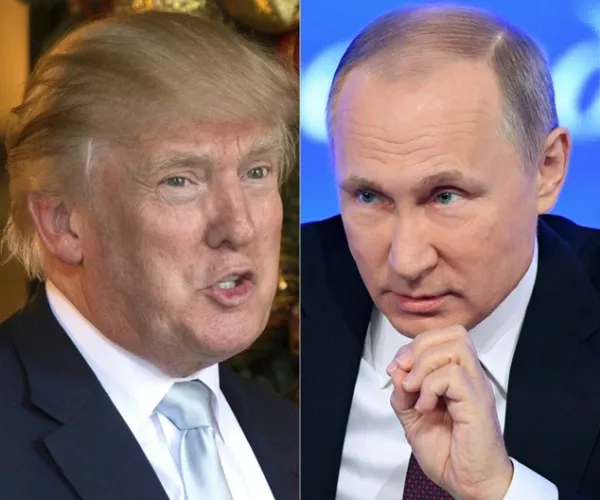
“Trump emphasized the need to work together to end the conflict in Syria” . . . and “emphasized his desire to build a better relationship between the United States and Russia.”