Peace

The United Nations Charter, to which all member states are signatories and which prevails over all other treaties and agreements, states that the organization is obligated to “determine the existence of any threat to the peace, breach of the peace, or act of aggression” and to take military and nonmilitary action to “restore international peace and security.”
The justices at the Nuremberg trials in 1946 concluded that “to initiate a war of aggression … is not only an international crime; it is the supreme international crime differing only from other war crimes in that it contains within itself the accumulated evil of the whole.”
A Morning Consult poll winks at me from my inbox: 57 percent of Americans support more airstrikes in Syria.
My eyeballs roll. Hopelessness permeates me, especially because I’m hardly surprised, but still . . . come on. This is nuts. The poll could be about the next move in a Call of Duty video game: 57 percent of Americans say destroy the zombies.
This is American exceptionalism in action. We have the right to be perpetual spectators. We have the right to “have an opinion” about whom the military should bomb next. It means nothing, except to those on the far end of the Great American Video Game, where the results are real.
While much of the world is engulfed in violence of one sort or another (whether violence in the home or on the street, exploitation, ecological destruction or war), a global network of individuals and organizations is committed to ending this violence in all of its manifestations.
With individual signatories in 100 countries and organizational endorsements in 35 countries, each of these individuals and organizations works on one or more manifestations of violence in their locality and some of the organizations and networks have considerable national or even international reach.
However, as you might understand, there is a great deal to be done and the Charter network continues to expand as more people and organizations are motivated to join this shared effort.
Sometimes our tame and compliant media upchucks a piece of truth. For instance:
“American officials had predicted that the missile strike would result in a major shift in Assad’s calculus, but the U.S. attack appeared to be symbolic in reality. Within 24 hours of the strike, monitoring groups reported that warplanes were again taking off from the bombed Shayrat air base, this time to attack Islamic State positions.”
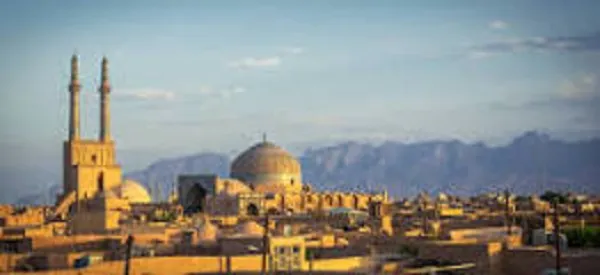
The real Donald Trump has been exposed. The man who promised a sensible and non-interventionist Middle Eastern policy and a reset with Moscow has now reneged on both pledges. His nitwit United Nations Ambassador Nikki Haley has directly linked Russia and Syria for punishment by the omnipotent Leader of the Free World lest anyone be confused.
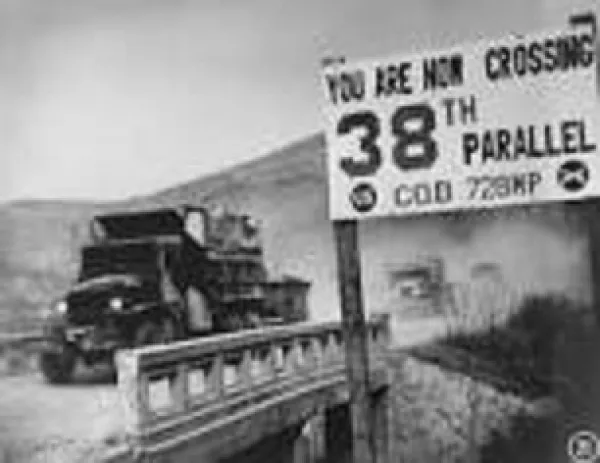
My biggest concern is not the embarrassment of a U.S. public afraid of the tiny impoverished nation of North Korea. If that embarrassed me, how would I survive what U.S. culture makes of ISIS, or -- for that matter -- the election of Donald Trump? My biggest concern is that U.S. war profiteers may end up using Korea to get us all killed.
The United States bombed the living hell out of North Korea, and -- in hopes that nothing would survive -- dropped diseased insects on the place, hoping to start plagues. One bit of later collateral damage was the release of Lyme disease in Lyme, but Hollywood came out of it with the concepts of brainwashing and Manchurian candidates, so some might call it a fair trade.
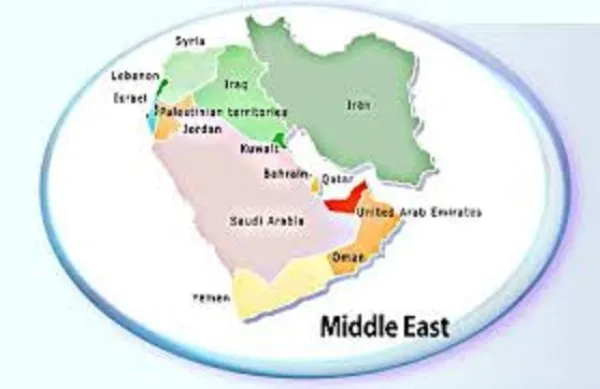
The first point I'd like to touch on is the idea that the Middle East is a culturally violent place that can be made less violent by bombing it. The first problem with this is that bombing places makes them more violent, not less. Nobody is shocked or awed into nonviolence, not 14 years ago and not for the past century. The second problem is that the Middle East's violence cannot be compared with that of other cultures without figuring out how to factor out the influence of the West. A hundred years ago, Britain and France carved up Western Asia, and not to spread democracy.
And the word of the moment is . . . opportunity:
“What unites our party is a belief in opportunity, the idea that however you started out, whatever you look like, whoever you love, America is the place you can make it if you try.”
Could you be any more tepid? The words were those of the former president the other day, giving his blessing to the naming of Tom Perez as the new chairman of the Democratic National Committee. Perez is the safe, establishment choice to lead the party forward into the maelstrom of Trump, under a banner that seems garishly inoffensive: Tolerate our differences, give everyone a chance.

rump proposes to increase U.S. military spending by $54 billion, and to take that $54 billion out of the other portions of the above budget, including in particular, he says, foreign aid. If you can’t find foreign aid on the chart above, that’s because it is a portion of that little dark green slice called International Affairs. To take $54 billion out of foreign aid, you would have to cut foreign aid by approximately 200 percent.
Alternative math!
But let’s not focus on the $54 billion. The blue section above (in the 2015 budget) is already 54% of discretionary spending (that is, 54% of all the money that the U.S. government chooses what to do with every year). It’s already 60% if you add in Veterans’ Benefits. (We should take care of everyone, of course, but we wouldn’t have to take care of amputations and brain injuries from wars if we stopped having the wars.) Trump wants to shift another 5% to the military, boosting that total to 65%.
Now I’d like to show you a ski slope that Denmark is opening on the roof of a clean power plant — a clean power plant that cost 0.06% of Trump’s military budget.