
THE G-20 IN PITTSBURGH
by Tom Over 9-23-09
<br><br>
On Tuesday, Sept 22, activists from Philadelphia, New York City, Pittsburgh and other cities held a mock funeral procession to demand better policies for addressing the AIDS pandemic, a day ahead of the arrival of delegates for the G-20.
<br><br>
The approximately 50 participants in the New Orleans-style funeral march drew a mix of interest, irritation, and amusement from onlookers in the business district of downtown Pittsburgh.
<br><br>
At the head of the funeral march where pallbearers carried a cardboard coffin, a man shouted into a microphone while someone else carried a portable amplifier, “when people with AIDS are under attack, what do we do ?” and marchers shouted in unison, “fight back!”
<br><br>
Amidst the early afternoon bustle of an weekday, the demonstrators repeated this call-and-answer and similar chants as the funeral march made its way around the perimeter of the David L. Lawrence Convention Center, the site of the G-20 Summit later this week.
<br><br>
Erica Goldberg works with ACT UP Philadelphia. She said global health is not on the agenda of the G-20 Summit.
“One of the things that some of the G-20 nations have promised us is funding for the global fund to fight, TB, malaria, and HIV/AIDS. This is all really important, especially if we want to meet the United Nations’ Millennium goal of eradicating these diseases by 2015. As of right now, this won’t be met. We have to hold our leaders accountable. They are the ones making decisions for the poorer countries,” Goldberg said.
<br><br>
She commented on the timing of the demonstration. “We wanted this to be the first thing they (the G-20 delegates) see. They’re coming here tomorrow. We’re holding them accountable. This needs to be on the agenda.”
<br><br>
She said AIDS activists chose Sept 22, two days before the official start of the G-20 Summit, and one day before the arrival of the delegates, so as to not have to compete with other protests. Also, she said the AIDS activists figured there would be less of a chance of conflict with police if they staged their protest earlier in the week.
<br><br>
“We hope that this will hit the papers tomorrow, that it’s the first thing they see when they walk in, that they have this on their conscience and know we’re not going away,” Goldberg said. She urges people to contact legislators about supporting the Global Fund to Fight AIDS, Tuberculosis, and Malaria.
“President Obama, as much as I love him, went back on his promise to fulfill the funding,” Goldberg said.
<br><br>
She commented on how drug companies factor into all of this. “ Medication does not need to be this expensive. They can definitely lower their prices. We have big drug interests lobbying to prevent AIDS medication from getting” to developing nations.
<br><br>
Goldberg said debt cancellation for developing nations is a factor that comes into play.
“When you don’t cancel debts of nations and they have to pay back loans to the IMF and the World Bank, they won’t have the funds necessary for getting AIDS medication, or they might get the medication but can’t pay the health professional because of their debt.
<br><br>
She said vested interested motivated by huge profits stand in the way of doing a better job of addressing tuberculosis, malaria, and HIV/AIDS. “We have the power, the ability, and the medication.”
World News
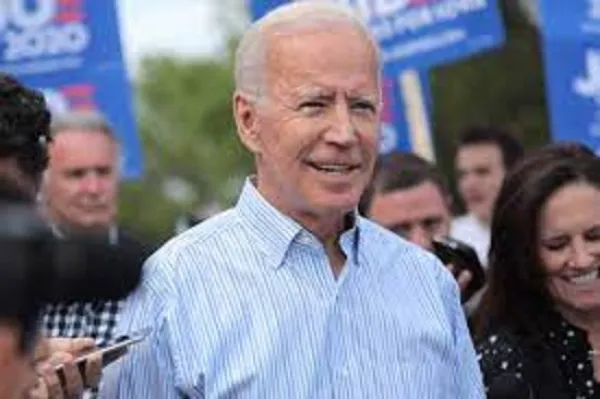
If one were only limited to viewing or reading the US mainstream media the story of how President Joe Biden went down on his knees to honor two visiting Israelis would never have surfaced. Fortunately, the story did make considerable waves in both the Israeli and the alternative media, though not enough to convince the faceless editors at CBS news and elsewhere to run with it. The kneeling incident reportedly took place while Biden was meeting in the White House with soon-to-be retired Israeli president Reuven Rivlin. Rivlin was doing something like his victory lap, having presumably completed his term of office without being charged with corruption, which is what the Jewish state’s leaders have traditionally been noted for.
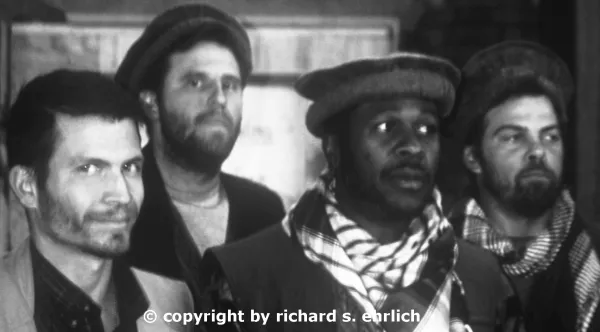
BANGKOK, Thailand -- When the U.S. invasion of Afghanistan secured Bagram Air Base in January 2002, a Special Operations officer said he motivated newly arrived 82nd Airborne Division troops with a human skull, because the young Americans became enthusiastic when they saw death's head.
"I'm a skull worshipper," Special Operations Command Sergeant-Major Raymond V. Cordell said in an interview at the time in Bagram Air Base, 42 miles (67 kilometers) north of Kabul.
A human skull, given to him by fellow soldiers, was mounted in his office at MacDill Air Force Base's Special Operations Command headquarters in Florida, he said.
"Apparently they got on the Internet and typed in 'skulls'. And what came up under 'skulls' were medical services, where you could actually buy one.
"They got together and chipped in all their money. I don't even want to know how much it cost them for just the skull.
"He [the skull] wears the actual 82nd [Airborne Division] beret. It's the maroon beret, which is the sign of the American paratrooper on jump status.

“The Palestinian Authority’s days are numbered”. This assertion has been oft repeated recently, especially after the torture to death on June 24 of a popular Palestinian activist, Nizar Banat, 42, at the hands of PA security goons in Hebron (Al-Khalil).
The killing - or ‘assassination’ as some Palestinian rights groups describe it - of Banat, however, is commonplace. Torture in PA prisons is the modus operandi, through which Palestinian interrogators exact ‘confessions’. Palestinian political prisoners in PA custody are usually divided into two main groups: activists who are suspected by Israel of being involved in anti-Israeli occupation activities and others who have been detained for voicing criticism of the PA’s corruption or subservience to Israel.

Many Palestinians believe that the May 10-21 military confrontation between Israel and the Gaza Resistance, along with the simultaneous popular revolt across Palestine, was a game-changer. Israel is doing everything in its power to prove them wrong.
Palestinians are justified to hold this viewpoint; after all, their minuscule military capabilities in a besieged and impoverished tiny stretch of land, the Gaza Strip, have managed to push back - or at least neutralize - the massive and superior Israeli military machine.
However, for Palestinians, this is not only about firepower but also about their coveted national unity. Indeed, the Palestinian revolt, which included all Palestinians regardless of their political backgrounds or geographic locations, is fostering a whole new discourse on Palestine - non-factional, assertive and forward-thinking.
The challenge for the Palestinian people is whether they will be able to translate their achievements into an actual political strategy, and finally transition past the stifling, and often tragic, post-Oslo Accords period.

Israeli Prime Minister, Benjamin Netanyahu, is as much American as he is Israeli. While other Israeli leaders have made their strong relationship with Washington a cornerstone in their politics, Netanyahu’s political style was essentially American from the start.
Netanyahu spent many of his formative years in the United States. He lived in Philadelphia as a child, graduated from Cheltenham High School and earned a degree in Management from the Massachusetts Institute of Technology in 1976. He then opted to live in the US, not Israel, when he joined the Boston Consulting Group.

How did Benjamin Netanyahu manage to serve as Israel’s longest-serving Prime Minister? With a total of 15 years in office, Netanyahu surpassed the 12-year leadership of Israel's founding father, David Ben Gurion. The answer to this question will become particularly critical for future Israeli leaders who hope to emulate Netanyahu’s legacy, now that his historic leadership is likely to end.

Why does the US advocate a free market while doing its utmost to stifle it? The current US-China economic war is a perfect example of this perplexing question.
The legacy of Milton Friedman, the founder of America’s modern political economy, was a representation of this very dichotomy: the use, misuse and manipulation of the concept of the free market.
Through the Chicago School of Economics, whose disciples have proved most consequential in the formation of the American approach to foreign policy, especially in South America, Milton constantly championed the virtues of the free market, emphasizing a supposed link between freedom and capitalism and insisting that governments should not micromanage markets.

BANGKOK, Thailand -- Some of Biden's and Trump's most active boosters
here in Southeast Asia have joined forces, demanding the State
Department vaccinate all American expats in Thailand, as a model for
international distribution, instead of discriminating against them.
"Biden has publicly announced that all Americans now have access to
vaccines, but the government and State seem to have forgotten about us
Americans living abroad," said the chair of Democrats Abroad in
Thailand, Paul Risley, in an interview.
"What are we, chopped liver?
"These are vaccines, offered for free to all in the U.S., and most of
them have been manufactured with taxpayer dollars."
Some worried American expats plan "to fly back to the U.S. -- costly
and risky travel that might bring variants back to the U.S," Mr.
Risley said.
Americans arriving in the U.S. on flights from Bangkok may "have to
stay in the U.S. for at least a month, to get two shots of an approved
vaccine.
"Some Americans may simply be too old to make the long flights, and
journey, back to the U.S," he said.
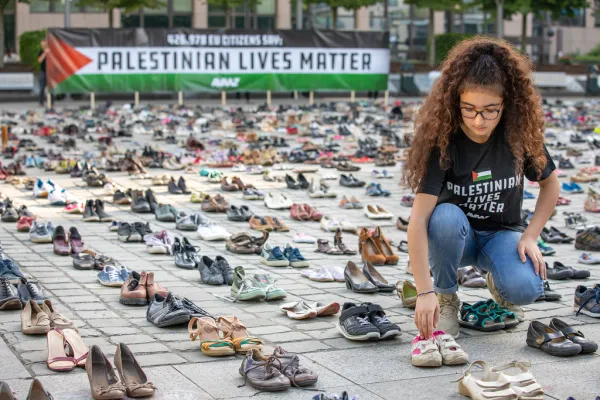
From the outset, some clarification regarding the language used to depict the ongoing violence in occupied Palestine, and also throughout Israel. This is not a ‘conflict’. Neither is it a ‘dispute’ nor ‘sectarian violence’ nor even a war in the traditional sense.

BANGKOK, Thailand -- Tiny Palau invited the Pentagon to build ports,
bases and airfields on its Pacific islands, after Chinese President Xi
Jinping bullied Palau by destabilizing its fragile economy, according
to defiant President Surangel Whipps.
"President Whipps' frank assessment of Chinese pressure -- and
invitation to host U.S. bases -- are unusually blunt for a Pacific
leader," Australia Pacific Security College Director Meg Keen said in
an interview.
There is a "high-stakes rivalry going on," between China and the U.S.,
said Ms. Keen.
"Pacific nations may have small populations and landmass, but should
be seen as 'large ocean states' intimately connected to other island
nations of the 'Blue continent'.
"China is wanting to bring as many Pacific nations into their Belt and
Road network as possible, so it has access across the Pacific to the
Americas and Antarctica," she said.
Pacific island nations could be exploited by either side if hostile
military action erupts between Beijing and Washington, analysts said.