
THE G-20 IN PITTSBURGH
by Tom Over 9-23-09
<br><br>
On Tuesday, Sept 22, activists from Philadelphia, New York City, Pittsburgh and other cities held a mock funeral procession to demand better policies for addressing the AIDS pandemic, a day ahead of the arrival of delegates for the G-20.
<br><br>
The approximately 50 participants in the New Orleans-style funeral march drew a mix of interest, irritation, and amusement from onlookers in the business district of downtown Pittsburgh.
<br><br>
At the head of the funeral march where pallbearers carried a cardboard coffin, a man shouted into a microphone while someone else carried a portable amplifier, “when people with AIDS are under attack, what do we do ?” and marchers shouted in unison, “fight back!”
<br><br>
Amidst the early afternoon bustle of an weekday, the demonstrators repeated this call-and-answer and similar chants as the funeral march made its way around the perimeter of the David L. Lawrence Convention Center, the site of the G-20 Summit later this week.
<br><br>
Erica Goldberg works with ACT UP Philadelphia. She said global health is not on the agenda of the G-20 Summit.
“One of the things that some of the G-20 nations have promised us is funding for the global fund to fight, TB, malaria, and HIV/AIDS. This is all really important, especially if we want to meet the United Nations’ Millennium goal of eradicating these diseases by 2015. As of right now, this won’t be met. We have to hold our leaders accountable. They are the ones making decisions for the poorer countries,” Goldberg said.
<br><br>
She commented on the timing of the demonstration. “We wanted this to be the first thing they (the G-20 delegates) see. They’re coming here tomorrow. We’re holding them accountable. This needs to be on the agenda.”
<br><br>
She said AIDS activists chose Sept 22, two days before the official start of the G-20 Summit, and one day before the arrival of the delegates, so as to not have to compete with other protests. Also, she said the AIDS activists figured there would be less of a chance of conflict with police if they staged their protest earlier in the week.
<br><br>
“We hope that this will hit the papers tomorrow, that it’s the first thing they see when they walk in, that they have this on their conscience and know we’re not going away,” Goldberg said. She urges people to contact legislators about supporting the Global Fund to Fight AIDS, Tuberculosis, and Malaria.
“President Obama, as much as I love him, went back on his promise to fulfill the funding,” Goldberg said.
<br><br>
She commented on how drug companies factor into all of this. “ Medication does not need to be this expensive. They can definitely lower their prices. We have big drug interests lobbying to prevent AIDS medication from getting” to developing nations.
<br><br>
Goldberg said debt cancellation for developing nations is a factor that comes into play.
“When you don’t cancel debts of nations and they have to pay back loans to the IMF and the World Bank, they won’t have the funds necessary for getting AIDS medication, or they might get the medication but can’t pay the health professional because of their debt.
<br><br>
She said vested interested motivated by huge profits stand in the way of doing a better job of addressing tuberculosis, malaria, and HIV/AIDS. “We have the power, the ability, and the medication.”
World News
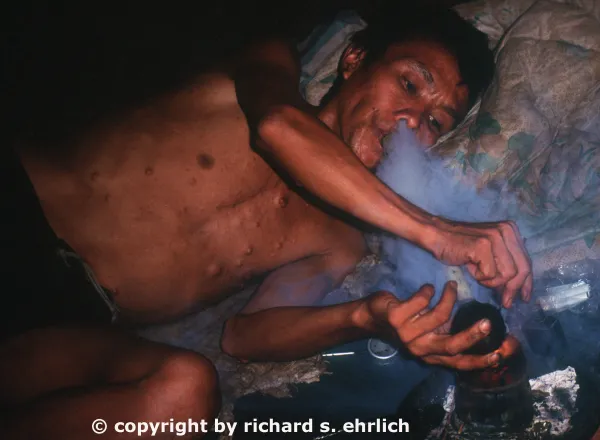
BANGKOK, Thailand -- When the CIA, Thai police, Chinese guerrillas and
others were linked to Southeast Asia's wealthy heroin dealers during
the 20th century, no one imagined fruit and vegetables would provide
delicious replacement crops to fight the official corruption and
rescue impoverished tribes growing opium in northern Thailand.
"Our project is the only one in the world that has succeeded in
replacing opium with other crops. No other country has done it,"
Prince Bhisadej Rajani, director of the Royal Project opium crop
replacement program said in an interview.
The project claims to enable more than 100,000 indigenous Hmong,
Yao, Akha, Karen and other ethnic tribal people to grow fruit,
vegetables, herbs, flowers, mushrooms, tea and coffee instead of
opium.
Initiated in 1969 by King Bhumibol Adulyadej, the project was
helped by U.S. taxpayers but is now supported by Thai government
subsidies, packaging and marketing.
The farms on land formerly used for opium fields also attract

BANGKOK, Thailand -- Millions of people staged the world's biggest
water fight celebrating a week-long holiday which ended on April 17,
during which traffic accidents killed 442 people and the military
regime warned females wearing wet shirts not to expose themselves in
Thailand's sweltering streets.
Bangkok "turned into City of Aquatic Mayhem," U.S. Ambassador to
Thailand, Glyn T. Davies, posted on his official Twitter account
@GlynTDavies during the April 11-17 Songkran New Year holiday.
"Happy Songkran all -- long life, happiness, blessings & fun," the
envoy wrote, celebrating Thailand's traditional new year and several
days of public water splashing during the hottest weather of the year.
Ambassador Davies also posted a photograph of himself and his wife,
both grinning and wearing sunglasses while gently squirting each other
with plastic sprayers alongside revelers in a busy Bangkok street.
At least 442 people died in nationwide traffic accidents during
April 11-17 -- annually dubbed the "Seven Days of Death" -- and 3,656
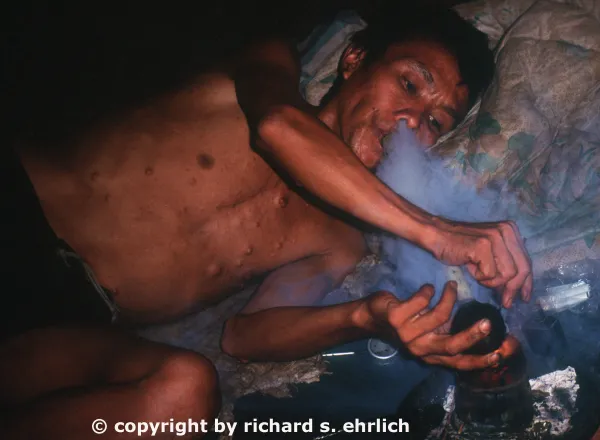
BANGKOK, Thailand -- When the CIA, Thai police, Chinese guerrillas and
others were linked to Southeast Asia's wealthy heroin dealers during
the 20th century, no one imagined fruit and vegetables would provide
delicious replacement crops to fight the official corruption and
rescue impoverished tribes growing opium in northern Thailand.
"Our project is the only one in the world that has succeeded in
replacing opium with other crops. No other country has done it,"
Prince Bhisadej Rajani, director of the Royal Project opium crop
replacement program said in an interview.
The project claims to enable more than 100,000 indigenous Hmong,
Yao, Akha, Karen and other ethnic tribal people to grow fruit,
vegetables, herbs, flowers, mushrooms, tea and coffee instead of
opium.
Initiated in 1969 by King Bhumibol Adulyadej, the project was
helped by U.S. taxpayers but is now supported by Thai government
subsidies, packaging and marketing.
The farms on land formerly used for opium fields also attract

BANGKOK, Thailand -- Thailand's coup-installed military regime
announced a new constitution Tuesday allowing for an appointed Senate
including six seats for the security forces, plus a possible unelected
prime minister and other blocks against popular politicians forming a
government based on majority rule.
The junta said it will permit about 50 million eligible voters to
decide for or against its constitution in a referendum on August 7,
but anyone who criticizes the charter too strongly could be jailed for
10 years.
If the constitution is approved, nationwide parliamentary elections
could be held in 2017.
"The important thing about this constitution -- although there is
no statement that people have the power -- everybody has rights,
everybody is equal, everybody is provided with protection," said
Meechai Ruchupan, chairman of the junta's appointed Constitution
Drafting Committee (CDC), displaying to reporters the 105-page,
279-article constitution.
The junta, which seized power in a May 2014 coup, calls itself a

BANGKOK, Thailand -- An American "cardiac electrician" who helped Dick
Cheney survive for 10 years and also eliminated nearly all of
Thailand's spooky Sudden Death Syndrome which killed mostly sleeping
males -- inspiring many to wear women's clothes as disguises -- has
received a $100,000 Prince Mahidol Award.
Dr. Morton M. Mower and a colleague invented the award-winning device
based on the big, bulky, hand-held electric paddles which doctors
usually place on the chest of a heart attack victim to send a bolt of
electricity to revive a dying heart.
Co-inventor Mower's device is miniaturized and implanted in a person's chest.
Later, whenever it detects a heart attack, the device automatically
sends electricity to the organ to revive it, without any medical staff
present.
His Automatic Implantable Cardioverter Defibrillator is not a
pacemaker, which simply maintains a heart's beating pulse by
stimulating the heart muscle and regulating its contractions.
Mower's defibrillator acts only in a life-and-death emergency when a
heart is about to stop.
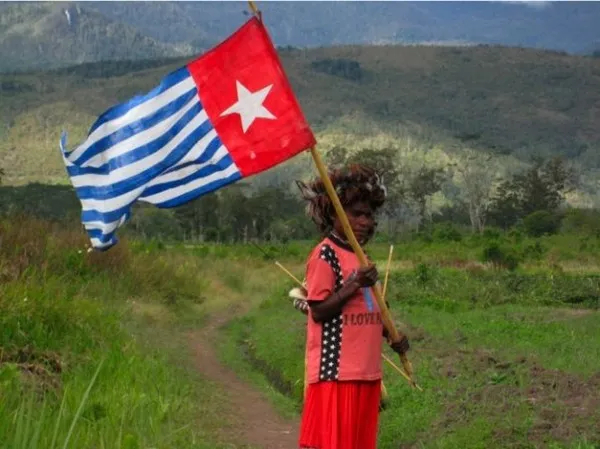
It has been argued that nonviolent struggles to liberate occupied countries – such as West Papua, Tibet, Palestine, Kanaky and Western Sahara – have failed far more often than they have succeeded but that secessionist struggles (that have sought to separate territory from an existing state in order to establish a new one) conducted by nonviolent means have always failed. See 'Why Civil Resistance Works: The strategic logic of nonviolent conflict'. http://cup.columbia.edu/book/why-civil-resistance-works/9780231156820

BANGKOK, Thailand -- U.S. officials announced the arrest of Roger
Clark in Thailand for extradition to New York for alleged narcotics
and money laundering conspiracies when he worked at Silk Road, "a
secret online marketplace for illegal drugs, hacking services, and a
whole host of other criminal activity."
The Federal Bureau of Investigation (FBI) and Internal Revenue Service
(IRS) along with the Drug Enforcement Administration (DEA), Department
of Homeland Security (DHS) and others led Thai police to arrest Clark
on December 3.
They nabbed Clark where he was residing on Thailand's touristy
tropical island of Koh Chang near the Cambodian border, according to
the Justice Department's announcement on December 4 which included
investigators' statements.
"Clark may have thought residing in Thailand would keep him out of
reach of U.S. authorities, but our international partnerships have
proven him wrong," FBI Assistant Director Diego Rodriguez said.
Clark, a Canadian, was being held in Thailand pending extradition to
BANGKOK, Thailand -- The U.S. State Department has quietly approved
the sale of 16 missiles -- plus training -- to Thailand in a $27
million deal, the Pentagon's Defense Security Cooperation Agency said.
China and Thailand meanwhile began their first joint military air
exercise with 180 Chinese officers and top pilots this week, at a Thai
base used by the U.S. Air Force to bomb Vietnam, Laos and Cambodia
during the Vietnam War.
The U.S. missiles deal, and the newest integration of Chinese and Thai
forces, are the latest successes by Bangkok's coup-installed junta to
attract military support from both Beijing and Washington, despite
pro-democracy activists demanding an end to the regime.
China and Thailand are conducting their Falcon Strike air exercise at
the Royal Thai Air Force Base at Korat city, also known as Nakhon
Ratchasima, from November 12 to November 30.
"For years, indeed decades, this [Thai-Chinese] cooperation would have
been not only politically unthinkable, but technically impossible, as
the RTAF [Royal Thai Air Force] was almost wholly dependent on the
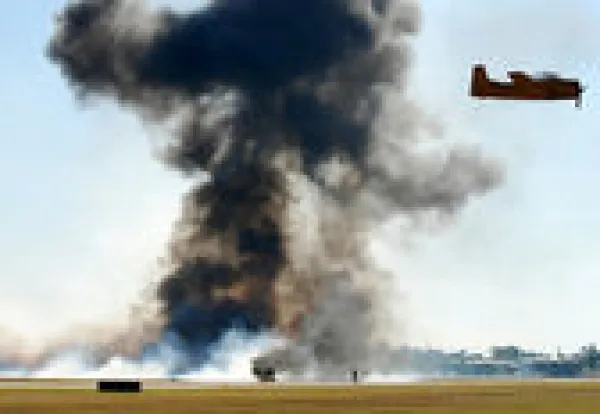
“We tried to take a look into one of the burning buildings. I cannot describe what was inside. There are no words for how terrible it was. In the Intensive Care Unit six patients were burning in their beds.”
So said Lajos Zoltan Jecs, a nurse at the hospital the U.S. bombed in Kunduz, Afghanistan, killing 22 people: doctors, staff, patients (including three children). This image is now spiraling through the Internet and across the global consciousness.
The hospital was not “collateral damage”; it was deliberately targeted, deliberately destroyed, in multiple bombing runs that lasted at least half an hour. Médecins Sans Frontières (Doctors Without Borders), which operated the hospital, contacted its sources in the U.S. government immediately, pleading for the attack to stop — to no avail. The bombing continued until the hospital, with more than 180 occupants, was destroyed.
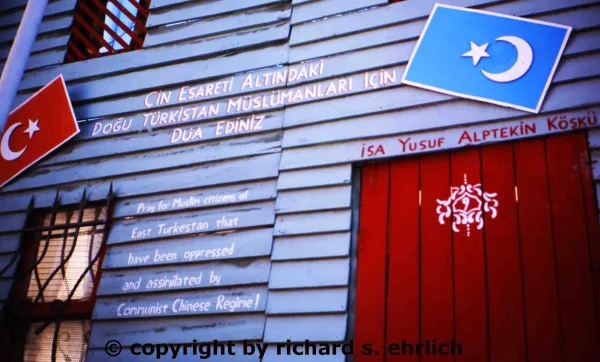
across the Taklimakan Desert found a friendly and seemingly naive
collaborator five weeks ago, when Thailand's coup-installed military
junta forcibly deported 109 minority ethnic Uighur Muslim men and
women back to Beijing.
Today however Thailand, China, Turkey, Malaysia, Bangladesh and other
countries are grimly investigating how a group of Uighurs
("WEE-gurs"), allegedly traveling on Turkish and Chinese passports,
enabled an unidentified man to explode a pipe bomb on August 17 at a
Hindu shrine in Bangkok crowded with mostly ethnic Chinese visitors.
The evening blast killed 20 people, most of them ethnic Chinese
visitors, and injured more than 100 others in the bloodiest bombing in
Bangkok since World War II.