
THE G-20 IN PITTSBURGH
by Tom Over 9-23-09
<br><br>
On Tuesday, Sept 22, activists from Philadelphia, New York City, Pittsburgh and other cities held a mock funeral procession to demand better policies for addressing the AIDS pandemic, a day ahead of the arrival of delegates for the G-20.
<br><br>
The approximately 50 participants in the New Orleans-style funeral march drew a mix of interest, irritation, and amusement from onlookers in the business district of downtown Pittsburgh.
<br><br>
At the head of the funeral march where pallbearers carried a cardboard coffin, a man shouted into a microphone while someone else carried a portable amplifier, “when people with AIDS are under attack, what do we do ?” and marchers shouted in unison, “fight back!”
<br><br>
Amidst the early afternoon bustle of an weekday, the demonstrators repeated this call-and-answer and similar chants as the funeral march made its way around the perimeter of the David L. Lawrence Convention Center, the site of the G-20 Summit later this week.
<br><br>
Erica Goldberg works with ACT UP Philadelphia. She said global health is not on the agenda of the G-20 Summit.
“One of the things that some of the G-20 nations have promised us is funding for the global fund to fight, TB, malaria, and HIV/AIDS. This is all really important, especially if we want to meet the United Nations’ Millennium goal of eradicating these diseases by 2015. As of right now, this won’t be met. We have to hold our leaders accountable. They are the ones making decisions for the poorer countries,” Goldberg said.
<br><br>
She commented on the timing of the demonstration. “We wanted this to be the first thing they (the G-20 delegates) see. They’re coming here tomorrow. We’re holding them accountable. This needs to be on the agenda.”
<br><br>
She said AIDS activists chose Sept 22, two days before the official start of the G-20 Summit, and one day before the arrival of the delegates, so as to not have to compete with other protests. Also, she said the AIDS activists figured there would be less of a chance of conflict with police if they staged their protest earlier in the week.
<br><br>
“We hope that this will hit the papers tomorrow, that it’s the first thing they see when they walk in, that they have this on their conscience and know we’re not going away,” Goldberg said. She urges people to contact legislators about supporting the Global Fund to Fight AIDS, Tuberculosis, and Malaria.
“President Obama, as much as I love him, went back on his promise to fulfill the funding,” Goldberg said.
<br><br>
She commented on how drug companies factor into all of this. “ Medication does not need to be this expensive. They can definitely lower their prices. We have big drug interests lobbying to prevent AIDS medication from getting” to developing nations.
<br><br>
Goldberg said debt cancellation for developing nations is a factor that comes into play.
“When you don’t cancel debts of nations and they have to pay back loans to the IMF and the World Bank, they won’t have the funds necessary for getting AIDS medication, or they might get the medication but can’t pay the health professional because of their debt.
<br><br>
She said vested interested motivated by huge profits stand in the way of doing a better job of addressing tuberculosis, malaria, and HIV/AIDS. “We have the power, the ability, and the medication.”
World News
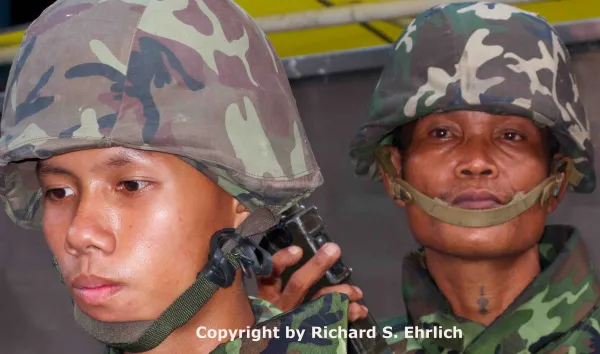
BANGKOK, Thailand -- The U.S. did not meet Thai military officials in
Hawaii during March to plan their 2016 multinational military training
exercise and instead indefinitely postponed future contact, signaling
an ongoing rift between the two allies after Gen. Prayuth Chan-ocha
seized power in a coup last year.
"Decisions concerning the exercise will be made over the course of the
next months in consultations with Thailand, the co-host of the
exercise, and other participating countries," said a statement issued
by the U.S. Pacific Command (USPACOM) and the U.S. Embassy in Bangkok,
according to Stars and Stripes which is an authorized Department of
Defense news outlet.
"The United States has indefinitely postponed a planning meeting with
Thailand for next year's Cobra Gold exercise, a decision that comes
months after the U.S. scaled down its part in one of the world's
largest multinational military events," Stars and Stripes reported
from Tokyo on April 16.
Shortly after the U.S.-Thai meeting fell through, Gen. Prayuth

BANGKOK, Thailand -- Russian Prime Minister Dmitry Medvedev's visit to
Bangkok last week resulted in trade deals, revived relations and a
public snub at Washington by Thailand's heavily criticized coup leader
who praised Moscow's friendship when "a friend is in trouble."
But on April 13, stung by published accusations that Bangkok was using
Moscow as a tool to slap Washington, coup-installed Foreign Minister
Tanasak Pantimapragorn said: "We have never befriended anyone because
we want to make other jealous"
Mr. Medvedev began his two-nation tour in Vietnam, sparking
speculation that the Kremlin was trying to "pivot" toward Southeast
Asia and mirror President Barack Obama's initiative to engage the
region, still scarred from the Vietnam War which America lost 40 years
ago.
Here in Thailand, Mr. Medvedev's April 6 to 8 visit was examined by
analysts to determine if Moscow would benefit by filling the vacuum
created when the U.S., Europe and several other countries diminished
their support for Bangkok after Gen. Prayuth Chan-ocha toppled the
By the time I leave Kentucky's federal prison center, where I'm an inmate with a 3 month sentence, the world's 12th-largest city may be without water. Estimates put the water reserve of Sao Paulo, a city of 20 million people, at sixty days. Sporadic outages have already begun, the wealthy are pooling money to receive water in tankers, and government officials are heard discussing weekly five-day shutoffs of the water supply, and the possibility of warning residents to flee.
With the 51 day Israeli attack on Gaza in the summer of 2014 that killed over 2,200, wounded 11,000, destroyed 20,000 homes and displaced 500,000, the closing to humanitarian organizations of the border with Gaza by the Egyptian government, continuing Israeli attacks on fishermen and others, and the lack of international aid through UNWRA for the rebuilding of Gaza, the international Gaza Freedom Flotilla Coalition has decided to again challenge Israel’s naval blockade of Gaza in an effort to gain publicity for the critical necessity of ending the Israeli blockade of Gaza and the isolation of the people of Gaza.


Four years after the multiple explosions and melt-downs at Fukushima, it seems the scary stories have only just begun to surface.
Given that Japan’s authoritarian regime of Shinzo Abe has cracked down on the information flow from Fukushima with a repressive state secrets act, we cannot know for certain what’s happening at the site.
According to the New York Times, a sample of powdered tea imported from the Japanese prefecture of Chiba, just southeast of Tokyo, contained traces of radioactive cesium 137. Photo credit: Shutterstock
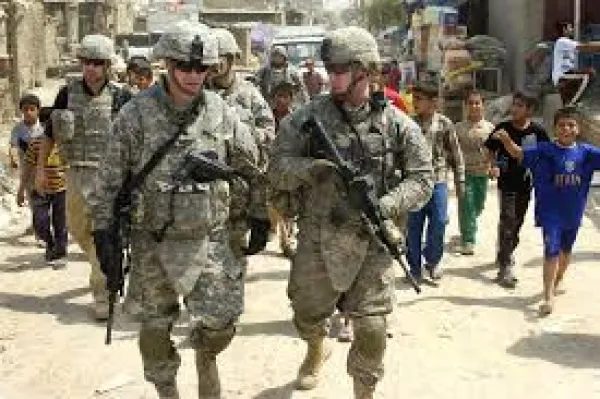
Good and evil leap from the headlines: “Egyptian planes pound ISIS in Libya in revenge for mass beheadings of Christians.”
It’s nonstop action for the American public. It’s the history of war compressed into a dozen words. It’s Fox News, but it could be just about any mainstream purveyor of current events.
Once again, I feel a cry of despair tear loose from my soul and spill into the void. Our politics are out of control. There’s no sanity left — no calmness of strategic assessment, no impulse control. At least none of that stuff is allowed into the mainstream conversation about national security, which amounts to: ISIS is bad. The more of them we (or our allies of the moment) kill, the better. USA! USA!
The president doesn’t “love” America?
Would that it were true. Would that Rudy Giuliani’s five-star Republican nightmare actually paced the Oval Office, pondering how to disarm, demilitarize . . . defang American exceptionalism.
Would that the president felt a responsibility to the global future and, at the same time, could summon our real past, grieve for its victims and vow with every fiber of his being to atone for our history of slavery and conquest: the “white terrorism” of manifest destiny. Would that the president didn’t “love” our myths but truly hated them and felt that his obligation to the future was to help lay these myths bare and, above all, stop perpetuating them.
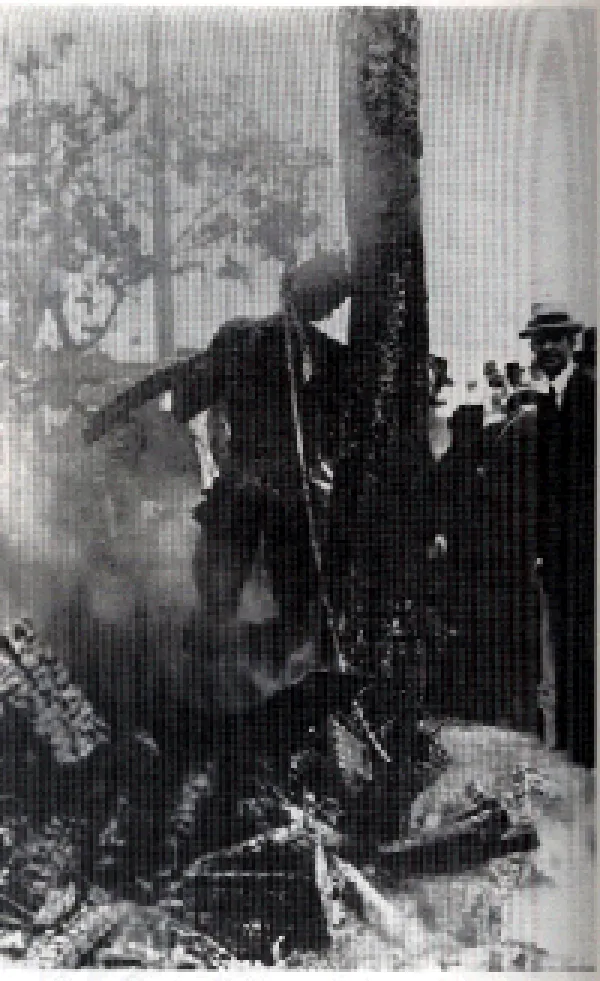
“The actual process of lynching was morbid and incredibly violent. Lynching does not necessarily mean hanging. It often included humiliation, torture, burning, dismemberment and castration. Victims were beaten and whipped, many times in front of large crowds that sometimes numbered in the thousands. Coal tar was frequently used to douse the unfortunate victim prior to setting him afire.
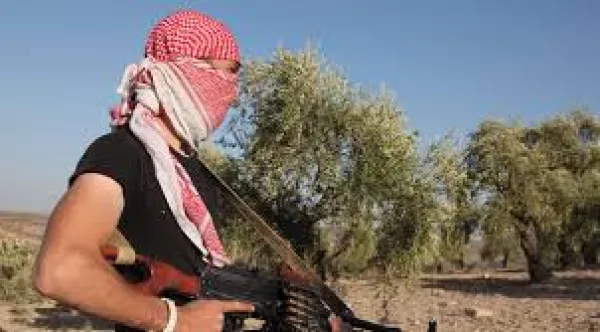
Here's Time Magazine's David von Drehle: "The greatest threat that ISIS poses -- even to the poor souls living under ISIS rule -- is the unintended damage that might follow from the effort to eradicate the group. . . . As dangerous as it is to have a terrorist kingdom in the middle of the world's geopolitical tinderbox, ousting ISIS will be every bit as dangerous."
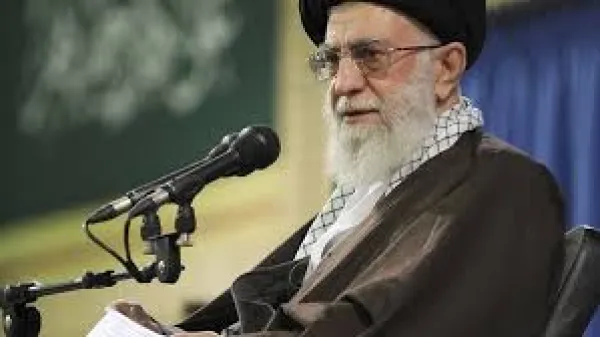
Most people in the United States have little contact with Iran or its culture. Iran comes up as a scary threat in the speeches of demagogues. A range of debate is offered between obliterate it and pressure it into compliance with our civilized norms, or at least the civilized norms of some other country that doesn't obliterate or pressure people.
So how do Americans view Iran? Many view it, like all governmental matters, through the lens of either the Democratic or the Republican Party. The Democratic President has come to be seen as on the side of preventing a war with Iran. The Republican Congress has come to be seen as pushing for that war. In this framework, something remarkable happens. Democrats begin recognizing all of the arguments against war that ought to be applied to every war.