
Global

The biggest AI threat isn’t artificial superintelligence wiping out humanity in a fit of mechanical vengeance like some digital Old Testament God, it’s the same oligarchs and empire managers as usual inflicting the same evils and abuses as usual upon their fellow man.
We’re already presently watching the empire building AI into its killing machines and causing all kinds of horrifying problems while these technologies become more and more complex and unpredictable.
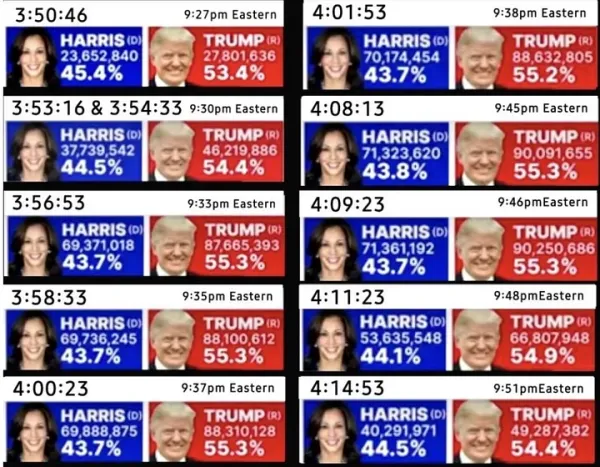
n case you missed it, on Election Night 2024, the Decision Desk HQ feed showed Trump’s reported vote total jumping from 46,219,886 to 87,665,393 between 9:30 p.m. and 9:33 p.m. At 9:32 p.m. Elon Musk tweeted, “Game, set and match.” As the injection of 41,445,507 votes for Donald Trump appeared in the election system. Votes were injected, removed, and reallocated for both candidates throughout the night, and Trump’s final total landed at 77,302,580. Once again, no one at the state level was able to explain why these wild fluctuations were happening, and officials have remained quiet about the fake county vote banks we discovered last fall. Reminder: voting is an additive process. Which is why we began investigating. Mainstream Media Finally Clocks In The texts referenced in the recent NPR article are between Elon Musk and former conservative influencer and mother of one of his children, Ashley St. Clair. “Director Alex Gibney’s forthcoming documentary Musk reveals text messages between the tech mogul and his ex-girlfriend, Ashley St. Clair, a former MAGA influencer. The messages, which NPR has obtained and authenticated, are perplexing.
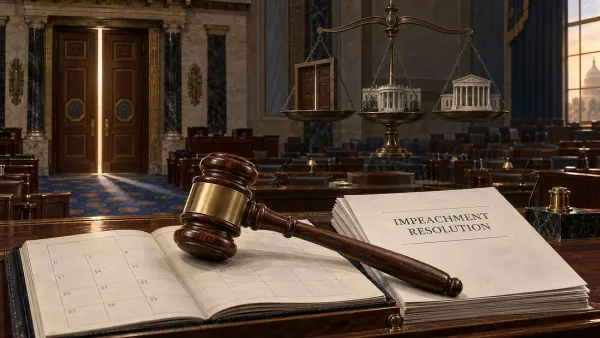
House Speaker Mike Johnson (R-LA) is the Punxsutawney Phil of Capitol Hill. Like the fabled groundhog who emerges from his burrow in the late winter, Johnson emerged from his Capitol Hill office last Wednesday, looked at Congressman Thomas Massie’s Impeachment of Secretary Hegseth, saw the shadow of defeat, quickly adjourned the House, and then burrowed back to his office until after the November General Election.
Instead of six more weeks of winter, we will have at least six more weeks of war, brought to us by Secretary Hegseth and his boss, President Trump, with the help of Speaker Johnson who avoided a procedural vote, taking it upon himself to adjourn, under the Rule 1, Clause 13, of the House of Representatives.
Consider. The Administration, compelled by Israeli interests, has driven America into a war of choice against a nation that represented no threat to our country. The war against Iran is becoming more dangerous every day, more casualties, more expense, and more devastating economic and moral consequences.

See page for author, CC BY 4.0, via Wikimedia Commons
Media Double Standards
We often hear that “both sides” of the political spectrum engage in objectionable behavior. There are countless radio hosts, streamers, podcasters, and talking heads who spew hate, disinformation, and crackpot conspiracy theories for fame and fortune. That understood, I’m not talking about any of them, as important as some may be.
I am focusing on an appalling assortment of extreme right wing crooks and kooks who aren’t just pontificating about politics from the sidelines. I’m talking about people currently in elected office, in the White House and the Cabinet, and running the Republican Party. People who are or were in top Trump administration positions, shaping public policy, directing agencies, spending $billions of tax dollars to mislead voters, rigging elections, and turning cruelty into policy. I call these highly important and influential people “The Crass Menagerie.”

I still believe humanity is headed toward a mass awakening, as unfashionable as that is to admit here in the late 2020s.
The fashionable thing to say these days is that everything’s fucked and we are headed to our doom, and that if anything changes it will be because the insanity of our capitalist system causes our material conditions to deteriorate so drastically that we are forced into revolution to survive. That things are bad because we’re a rotten people with selfish hearts who haven’t forced the revolutionary changes the world needs because, deep down, we actually like things the way they are.
People who want to look cool and smart in revolutionary political circles tend to say that if a mass-scale transformation of human consciousness were going to happen, it would have happened by now. That everyone’s already basically aware that we live in an abusive, propaganda-saturated dystopia ruled by tyrants, therefore our continued compliance with status quo politics is a conscious and deliberate choice made by the overwhelming majority of the western world.


As a candidate for U.S. Senate, I recently traveled to Cuba to help deliver 30 tons of critical medical aid to the Cuban people. What I witnessed on the ground shook me to my core. It should shake Ohioans too.
Cuba has achieved one of the highest doctor-to-patient ratios in the world, a universal healthcare system, free education from cradle to grave, and other social programs benefiting working people. Yet, for 64 years, the U.S. blockade has systematically prevented the island from securing its most basic needs. The crisis has reached a breaking point since the U.S. cut off oil exports from Venezuela, following the illegal kidnapping of President Nicolás Maduro in January, which has severely limited the island’s access to fuel for its power grid.
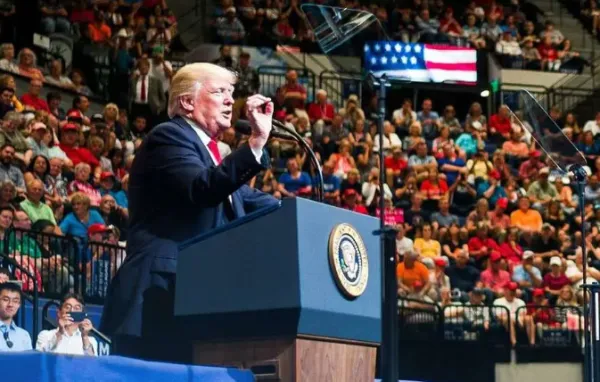
In the high-stakes arena of modern American political power, performance art often threatens to eclipse substance. As the political machinery under federal executive leadership continues to reshape governance, public discourse, and institutional frameworks, critical observers are raising alarms about a troubling phenomenon: the persistent reliance on political spectacle, performative politics, and racialized tokenism to obscure systemic inequities and legal overhaul. This dynamic—where high-stakes policy decisions and constitutional principles are reframed as transactional entertainment—draws direct parallels to an enduring historical farce: The Minstrel Show.
Performative Governance vs. Institutional Reality
Fifth Estate reporting centers on holding state and federal power structures accountable. In evaluating current administrative moves, policy shifts, and public posturing, several distinct patterns emerge:

Today is the International Day of Peace. It arrives 10 days after September 11, which some have turned into a day of bigotry and willful ignorance.
After a quarter-century of calming down, it's now possible in some corners of this country to talk rationally about how massive, counterproductive U.S. militarism contributed to the horrific crime of 9/11/01 — without excusing or justifying it — and how doubling down on that militarism ever since has fueled greater hostility and violence.
Back then, adjusted for inflation, U.S. military spending was at $588 billion, and a bill in Congress now would explode it to $1.5 trillion.

When Dr. Mohammad Tawfiq left his medical practice in Egypt and traveled to Gaza in the middle of a devastating war, he knew he was entering a place where even the most basic medical care had become a struggle.
What he may not have known was that Gaza would change him forever.
Tawfiq, an Egyptian ophthalmologist, entered the Gaza Strip on May 1, 2024, before the Rafah crossing was closed. He stayed for 20 days, working under conditions few doctors would ever encounter.
There was an immediate problem: there was no operating room properly equipped for eye surgery.
So, he and the medical team did what they could. They searched for the necessary equipment, secured what was available, and worked to establish a functioning operating room so that patients could receive the surgeries they desperately needed.
Then, despite everything he had already witnessed, Tawfiq returned to Gaza for a second time.