
Global

Introduction
This post offers a position against Trump and his administration policies during his first and second presidential terms of authorizing the separation of children from their families and treating them in abhorrent ways. It’s part of their efforts to deport immigrants and the promises they made to their base to do so. Such policies deserve our criticism and scorn. There is also something new currently, that is, to push for the end of birthright citizenship.
----------
Looking Back to Trump’s first presidential term
Caitlin Dickerson looks Back at the Family Separation Policy of Trump’s first term, writing for the American Immigration Council, Oct 30, 2025
(https://americanimmigrationcouncil.org/report/family-separation-policy). Here are comments and excerpts.
Family separation during the first Trump administration
Watch Palast on the Thom Hartmann Show today, November 24, at 10 AM Pacific.
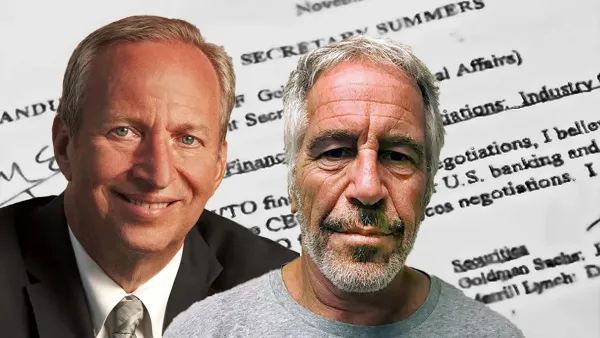
Forgive me, but I have to send a little thank you to Jeffrey Epstein. The latest cache of the predator’s memos have finally brought down Lawrence Summers, once President of Harvard University, once US Secretary of the Treasury and the dark eminence behind banking deregulation and mass home foreclosures. And worse.
The newly released emails revealed that Epstein agreed to be Summers’ “wing man,” advising Summers on how to use coercive power to maneuver his female protégé into the sack.
I should write, “The Honorable” Larry Summers. He keeps his “Hon.” honorific as a former Cabinet member, though I wonder how honored Larry’s wife feels having to read the icky Epstein emails in the New York Times.
Summers was also a frequent flyer on Air Epstein.
Those of us whose memories trace back to the afternoon of November 22, 1963, remember exactly where we were, to the moment, when we learned President John F. Kennedy was assassinated.
Sister Justicia, the Principal of Cleveland’s St. John Cantius Catholic High School called me from the study hall I was monitoring and shared the shocking news that President Kennedy had been shot. I suggested we link the school’s public address system to a network radio broadcast, so that the entire student body would know.
It had been a little more than a week since I had joined my senior classmates on a trip to Washington, D.C., where we excitedly witnessed, on November 11, 1963, President Kennedy laying a wreath at the Tomb of the Unknown soldier.
It was the closest I had come to the President who spoke to my soul , and I am sure to the soul of many young Americans when, in his Inaugural Speech he said:
“Let the word go forth, from this time and place, that the torch has been passed to a new generation of Americans…”.
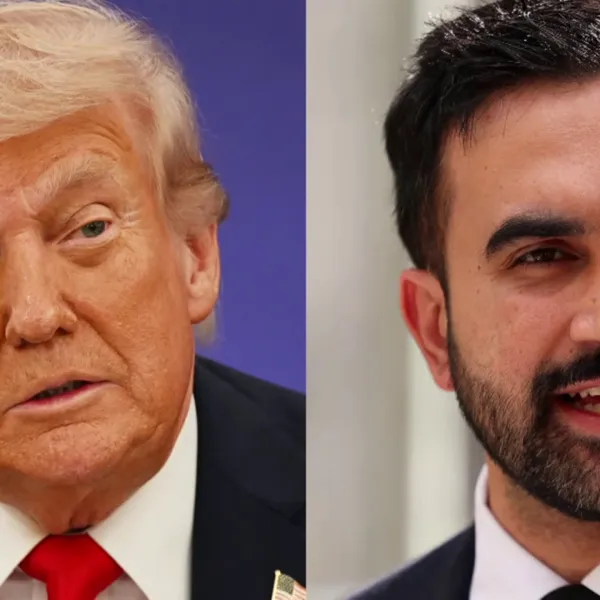
A little over two weeks after endorsing his rival on Election Eve, President Donald Trump will welcome New York City Mayor-elect Zohran Mamdani in the Oval Office on Nov. 21.
Trump is going to get SCHOOLED on class, wit, and intelligence. Trump with his 2nd grade way of speaking and juvenile behavior that only flies with MAGA. Their sit-down is scheduled for 3 p.m. ET, according to the White House. It is currently listed as being closed to the press. That's the sad part. Perhaps the White House is trying to avoid Zelenskyy's style fiasco or another embarrassment like of MBS that happened yesterday with ABC News courageous reporter Mary Bruce.
My advice to Mamdani before meeting Trump:
* Tell President Trump, "Do not stop me from making NYC Great Again,"
* Don't cut off the federal funds which is a fraction of federal taxes New Yorkers pay.
* Show the President little gratitude by saying "Thank you for endorsing Cuomo!"
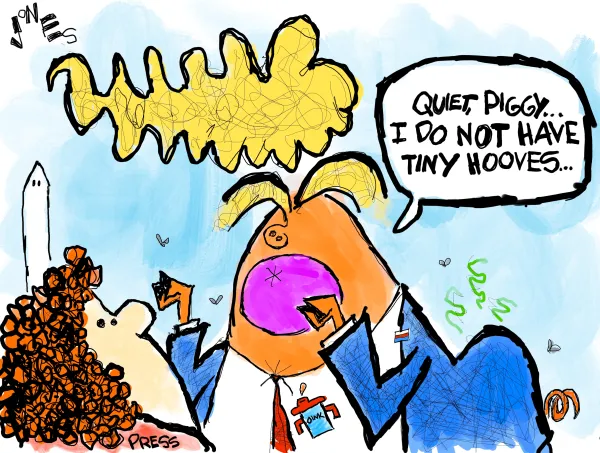
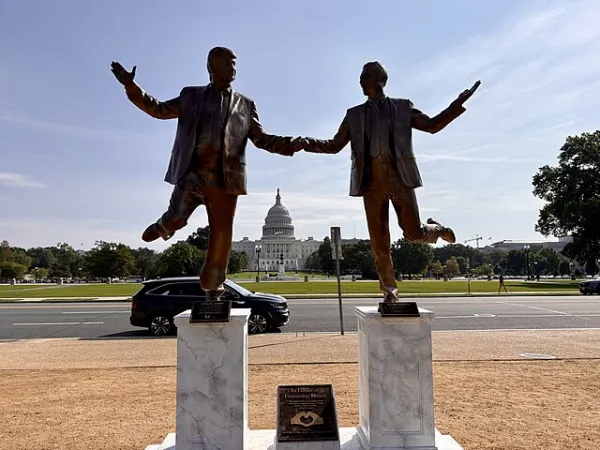
President Donald Trump and his merry menagerie that inhabit the White House have had a couple of exciting weeks bringing “peace or pieces” to half the world while also pulling back the curtain on what that naughty character Jeffrey Epstein just might have been up to while spending hundreds of millions of dollars setting up venues for screwing and filming fifteen year old women being sexually abused. And it was all funded by Jewish billionaires and plausibly Mossad to benefit Epstein and his “clients” including possibly Bill Clinton and Donald Trump himself as well as good old Israel.

The so-called Gaza ceasefire was not a genuine cessation of hostility, but a strategic, cynical shift in the Israeli genocide and ongoing campaign of destruction.
Starting on October 10, the first day of the announced ceasefire, Israel transitioned tactics: moving from indiscriminate aerial bombardment to the calculated, engineered demolishing of homes and vital infrastructure. Satellite images, corroborated by almost hourly media and ground reports, confirmed this methodical change.
I’m sure my mom was proud to see me as the closing speaker at the No Kings Day rally in San Diego. While she couldn’t be there physically, she joined me in a symbolic manner: I brought with me the American flag that draped her coffin. I received the flag at her funeral, held with full military honors, recognizing her service as the first woman ever to join the US Coast Guard.
No Kings in San Diego was a helluva party, 50,000 celebrating — while at the same time fearing for — that delicate thing called democracy. A thousand American flags fluttered. America at its best. Hell, it could turn you into a patriot. I’m sure mom, a union organizer, schoolteacher, rights activist, and anti-fascist super-patriot, would have loved it.
Frederick Douglass would not have. I could see his ghost, with that astonishing mane of hair, shaking his head.
Douglass, once enslaved, but by 1848 an international bestselling author, was one of the few men to sign the Seneca Falls Declaration of Sentiments, the foundational document of the movement for women’s rights.
But Douglass famously warned the women warriors:
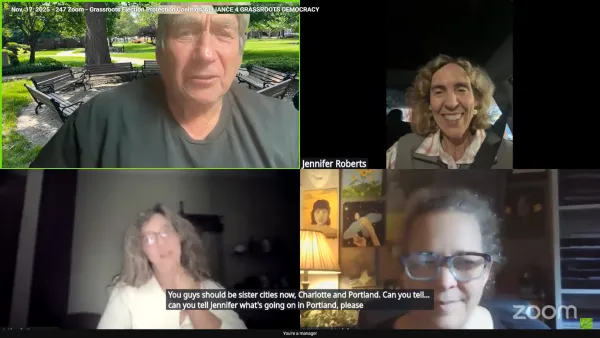
We start GREEP #247 with our Laureate MIMI GERMAN’S poetic Hallelujah for last week’s honored guest, the new US Rep Adelina Grijalva, on the brink of changing the world.
From Waldport, Oregon we hear from organizer TONY & Mayor HEIDE LAMPERT in the midst of an anti-Trumpian fight for democracy itself.
We link them to former Charlotte Mayor JENNIFER ROBERTS of the Carter Center, herself fighting for democracy against Border Patrol fascists running rampant in Charlotte, NC.
From HARTZELL GRAY we meet an extremely articulate & powerful GenZ rising star now running for Congress & a better world in Kansas City, Mo.
We’re then honored by the presence of the great RAY MCCLENDON with an in-depth report on the critical RICO case against Trump for the attempted theft of Georgia’s 2020 election.
From JOMAR LLOYD, of Food & Water Watch, we get the latest on the Renew Act now being proposed in Maryland to study damage done by fossil fuel burners & then to mandate polluters to pay into a state fund to support remedial action through an update infrastructure.