
Global
As state and federal political cycles dominate headlines, national media outlets remain focused on legislative margins and upcoming candidate match-ups. A prominent example is the analysis featured in the CBS News Midterm Elections Overview, which details how competitive House and Senate contests across the country—including high-stakes races right here in Ohio—will shape federal power. While following candidate races provides insight into partisan strategy, it also highlights an enduring truth: electing candidates is not enough to secure civil liberties or guarantee government accountability.
Candidates come and go, majorities shift, and campaign promises fade. To achieve permanent protection for fundamental freedoms, we must look to Ohio's own history and enforce accountability directly through structural constitutional reform.

BANGKOK, Thailand -- Authorities exhumed four human corpses Wednesday (September 16) buried in an illegal "Jewish Cemetery" amid escalating investigations into Israelis allegedly breaking the law by deceptive real estate deals and lucrative businesses, sparking tension between Bangkok and Tel Aviv.
The gruesome disinterring occurred while Thai security forces and ministries' officials focused on tourist-packed commercially active areas in Bangkok, Phuket, Pattaya, Koh Samui, Koh Phangan and Pai.
Investigations, arrests, property seizures, deportations and ongoing cases involving foreigners -- especially Israelis -- have hit a sensitive nationalistic nerve here in conservative, Buddhist-majority Thailand.
Voicing the anti-Israeli sentiment, popular Thai rock star Aed Carabao aka Yuenyong Opakul released his newest song in September titled, "Where Do Jewish People Come From?"
Its Thai title is "Kon Yiw Ma Jak" -- literally "Person Jew From Where?"
The lyrics warn: "Zionist, Zionist, Zionist / Israel is not Thai / Thai soil is not Canaan / Thai soil is not Israel."

This Week in Solartopia:
THE RATS ARE FLEEING PALISADES' SINKING RADIOACTIVE SHIP
Featuring: Michigan based investigative journalist, author, film producer and playwright ROGER RAPOPORT
Length: 27:58 minutes - Available on the Pacifica Network Audioport
California Solartopia / Solartopia @ Pacifica
Hosted by HARVEY "SUNNY" WASSERMAN
Co-Hosted by KEVIN KAMPS (Director of Don't Waste Michigan)
From legendary investigative reporter ROGER RAPOPORT we get the breaking scoop that top management at the rookie New Jersey firm trying to restart Michigan’s Palisades reactor has fired much of its top staff.
Joining co-host KEVIN KAMPS in western Michigan, Roger reports from Muskegon that Holtec, which owns Palisades, has prompted deep public concern about the safety of the dead “zombie” nuke where it’s now loading fuel.

As American rapper Macklemore becomes a frontline for renewed mainstream discourse about Israeli atrocities in Gaza, Israel apologists have been falling all over themselves to circulate the demonstrably false narrative that the artist has a history of antisemitic behavior.
Zionist billionaire Robert Kraft defended his intervention to remove Macklemore from the Ed Sheeran tour for saying “Free Palestine” onstage, falsely claiming in a statement that the artist has a “history of antisemitic rhetoric and imagery that we believe has been deeply offensive and hurtful to the Jewish community.”
The Anti-Defamation League falsely claimed that Macklemore’s onstage pro-Palestine rhetoric is colored by the artist’s “record of demonizing Israel and Israelis, falsely accusing Israel of genocide and engaging in antisemitic rhetoric and behavior.”

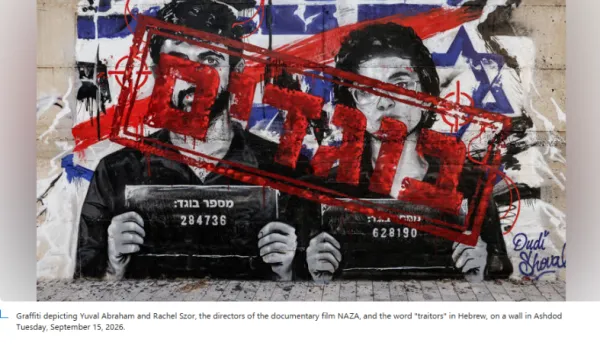
Crime Minister Benjamin Netanyahu has joined Israeli ministers in attacking the Venice-winning documentary NAZA.
Yuval Abraham and Rachel Szor are brave journalists and filmmakers. Yet they are being attacked by people who have not even seen the film—many of the same people who are quick to boast about their commitment to “freedom of speech.”
Hiding or denying the reality of what is happening in Gaza will not make it disappear, nor will it prevent the world from learning about it. Journalists and filmmakers have a right—and, some would argue, a responsibility—to document what they witness, even when their work is deeply uncomfortable for those in power.
You cannot claim to defend free expression while trying to silence filmmakers whose work you have not even watched. If there are factual errors or legitimate objections to the film, address them openly. Challenge the evidence. Debate the filmmakers’ conclusions. But attacking the filmmakers and attempting to suppress their work before people have even seen it is fundamentally at odds with the principle of free expression.

Solar responds to record load demand
U.S. electricity consumption will likely grow 2 percent in 2026 and another 2 percent in 2027, reaching "record levels, according to the Energy Information Administration (EIA) in their latest Short-Term Energy Outlook report.
The growth will be led by the commercial sector (think data centers), which will account for 63 percent of all new demand this year and 56 percent of the increase in 2027.
Generation will need to increase to meet this new demand. Natural gas generation is expected to grow 2 percent this year and another 1 percent in 2027, while coal generation will decline 8 percent and 6 percent, respectively.
EIA projects that solar generation will grow by 21 percent in 2026 and by an additional 18 percent in 2027, while wind generation is set to increase 7 percent this year and 5 percent in 2027.
PJM, the grid covering 13 states from Illinois to New Jersey, will make up nearly 45 percent of the national growth in power demand, however other regions, particularly Texas, will also see significant load demand increases.
This article first appeared here
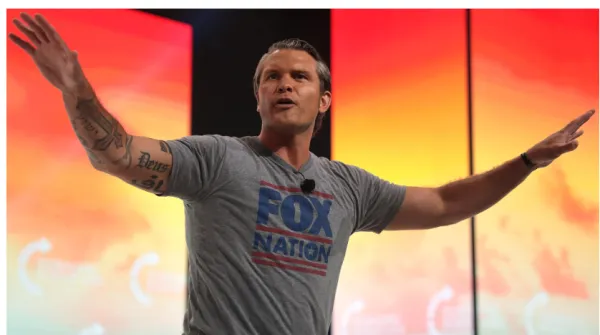
Thank you, GOP Congressman Thomas Massie of Kentucky, for courageously drafting and presenting yesterday in Congress eight Articles of Impeachment which demonstrated that Secretary Hegseth has pursued war, death and destruction at his own instance. He has, in the name of the United States, illegally swept aside the Constitution and U.S. laws to carry out murderous actions which are totally illegal.

Fifteen years ago, during President Obama's first term, we co-founded RootsAction as an online progressive group challenging not only Republicans but also the corporatism and militarism of the Democratic Party. RootsAction supported Bernie Sanders for president in 2016 and 2020. Two years before the 2024 election disaster that returned Donald Trump to the White House, RootsAction launched the Don’t Run Joe campaign, with the warning that the renomination of Joe Biden by Democrats “would be a tragic mistake.”
Despite polls showing as early as 2022 that strong majorities of Democrats wanted a 2024 nominee other than Biden, the “Don’t Run Joe” message went unheeded until Biden’s debate debacle in June 2024. By then, it was too late for the open primary process needed to produce a ticket that could inspire activists – and defeat the fascistic faux-populism of Trump.