
Global



It has been 25 years since the terrorist attacks of September 11, 2001. Many Americans still remember that day with remarkable clarity. According to a recent Pew Research Center survey, 83% of Americans who were born before 2001 remember exactly where they were or what they were doing when they heard the news. Among those who were at least 10 years old at the time, the figure is 93%. Source: Pew Research
I happened to be one of them.
Here is what I remember most.

Wars are usually evaluated through the vocabulary of victory. Territory is seized or recovered. Military capabilities are destroyed. Governments are coerced. Leaders surrender or fall. Eventually, one side is declared the winner. But not every war ends that way. Some wars end in a less satisfying but more consequential equilibrium: both sides retain the ability to impose costs, neither can achieve its maximal objectives, and the costs of continuing the conflict begin to exceed the plausible benefits. At that point, the strategic question changes. It is no longer simply who can inflict more damage. It becomes whether either side can obtain through continued war what it ultimately wants, and, if not, whether there is a political settlement that both sides would prefer to the alternative.


The only way to truly have dignity and integrity as a westerner is to put your energy into opposing the empire under which you live.
Under the individualism of our capitalist society, we are indoctrinated with the belief that the most important and interesting things about us are the personal characteristics which distinguish us from other people: our likes and dislikes, our lifestyle, our interpersonal relationships, our sense of fashion, how successful we are professionally, academically and romantically, etc.
But when you live under the most murderous and tyrannical power structure on the planet, your individual little quirks and facets are a lot less significant than the extent to which you oppose the abuses that your rulers are inflicting upon human beings around the world. If you met a German in 1940, you would probably be a lot less curious about his taste in music and fondness for dapper suits than you would be about his level of support for Adolf Hitler.


A shocking article today from the People's Pharmacy asks "Could you or someone you know have ADHD without realizing it?" and lists the warning signs.
Why is this shocking?
Because People's Pharmacy has a long history of side-stepping the industry symptom mongering that is designed to sell drugs--suggestible, judgement-call, self-diagnosed diseases siphoned through Ask Your Doctor ads to create "demand," customers and hypochondria.
Today's People's Pharmacy cajoles, "Are you always late for appointments?" "Do you start projects but have trouble finishing them?" and Pharma thanks them if not pays them. As comedian Chris Rock once joked, "Do You Fall Asleep and Wake Up in the Morning? You May Be Suffering From..."
Welcome to the world of Ask Your Doctor ads in which an ad which warns about stroke, fatal bleeding, blood clots and "permanent paralysis" can still somehow sell product.
People's Pharmacy is not the only outlet unexpectedly conveying industry messages.
This summer the once-respected Bloomberg news trumpeted, "The $360 Billion Market that Medicine Got Wrong for 20 Years," about the new menopause market.
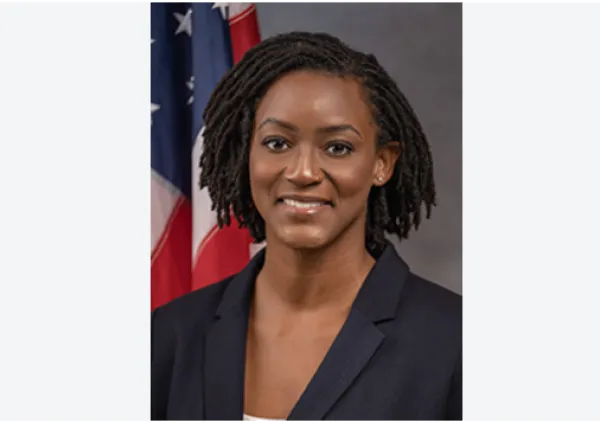
Heartbeat Movement Inc. stands in absolute solidarity with Black women in leadership who continuously face coordinated, dehumanizing attacks designed to undermine their authority, silence their advocacy, and erase their contributions to systemic reform. We strongly condemn both the explicit, racist hostility directed at elected Black women across the country and the establishment political double-dealing that sacrifices constitutional civil rights for partisan convenience across the state of Ohio.
1. The Weaponization of Explicit Racism Against Black Female Leaders
When Black women step into positions of authority to challenge entrenched institutional power, political bad actors frequently abandon policy debate in favor of vicious personal destruction. We saw this dynamic clearly when far-right political activist Laura Loomer targeted Florida State Representative Angie Nixon—the first Black woman to win the Democratic nomination for U.S. Senate in Florida—alongside Supreme Court Justice Ketanji Brown Jackson and Congressional leaders including Representatives Ayanna Pressley, Ilhan Omar, and Cori Bush.

A quarter-century has passed since the terrorist attack that killed almost 3,000 people in the United States on Sept. 11, 2001. During the first seven years after that mass atrocity, Pentagon spending doubled. The aftermath of 9/11 was also a huge boost for “the intelligence community.” Despite – and because of – their failure to prevent the carnage on that day, the CIA and the National Security Agency as well as 14 smaller spy agencies boomed with enormous jolts of funds.
Along the way, some line items paid for torture that persisted during the George W. Bush presidency under the euphemism of “enhanced interrogation techniques.”