
Global
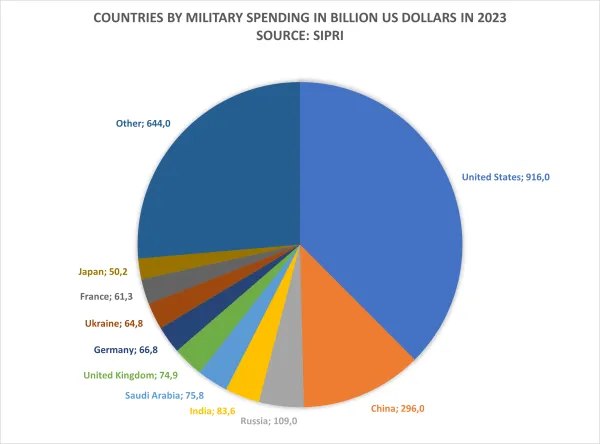
It is Presidents’ Day, and President Donald Trump has made a bold statement regarding military spending—one that no other president in modern history has made. He claims he could cut the Pentagon budget by about 50%.
President Trump has suggested a major cut in defense spending, proposing that the United States, Russia, and China each reduce their military budgets by 50%. He has also expressed a desire to begin denuclearization and arms control discussions with both Russia and China to accomplish this objective.
Military contractors poured $4,440,605 into Kamala Harris’s campaign—more than double what they contributed to Donald Trump. Yet, even with the support of establishment figures like Dick Cheney, their favored candidate fell short. The defeat of the military contractor’s candidate may have consequences for the industry.
Now, with President Trump in office and a bold initiative to cut Pentagon spending by 50%, the defense industry faces a challenge unlike any before.

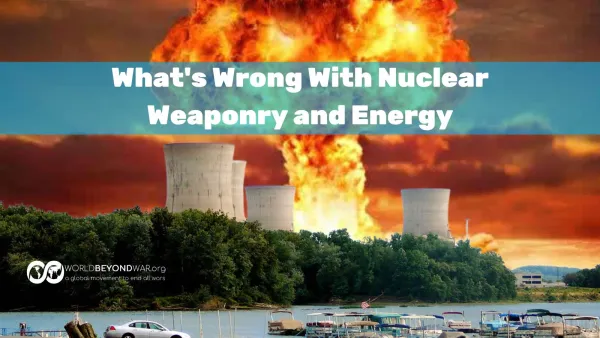
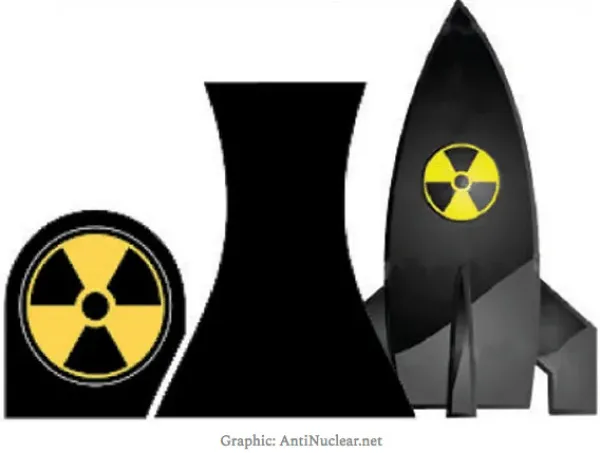
Is It An Inalienable Human Right to Self-Destruct and Take Others With You?
Are a few decades of electric power really worth future millennia of radioactive waste deadly to all living things?
Nuclear Logic
Atomic reactors were originally developed to produce plutonium for nuclear weapons. Using the heat of their operation to produce steam pressure to drive turbines to generate electric power was a convenient cover story necessary to overcome people’s fear and repugnance against using nuclear weapons after the horror of Hiroshima and Nagasaki.
Since nuclear reactors’ inception, over 50 years of repeated official promises to ban nuclear weapons have never been honored.
Every nuclear power reactor in every nuclear nation, and the accumulated radioactive spent fuel from its operation, is a potential nuclear weapon-in-place for saboteurs and terrorists.
Uranium mining, milling, enriching, fuel fabrication and nuclear reactors are also the industrial foundation for nuclear weapons production.
The ‘inalienable right’ to have nuclear power therefore also carries with it the right to make nuclear bombs.

By World BEYOND War, February 15, 2025
https://worldbeyondwar.org/start-a-lasting-peace-in-ukraine-now/
We are heartened to learn that the U.S. government is communicating with the Russian government, and are only sorry that such a basic step seemingly required a presidential election, when a glance at the Doomsday Clock ought to have been sufficient.
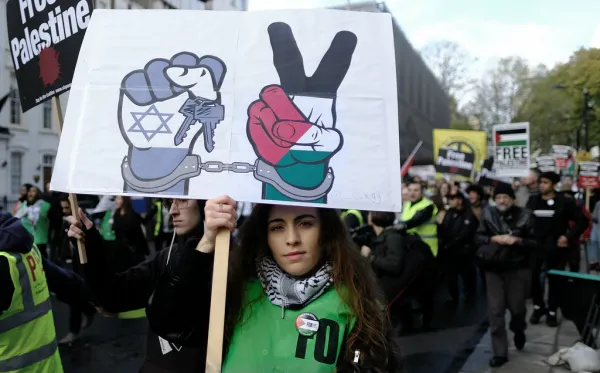
Let's be clear: the forced displacement of Palestinians is not a new idea. US President Donald Trump's latest proposal to take “long-term ownership” of Gaza, to “clean out” the “mess”, and to turn it into a “Riviera of the Middle East” is just the latest iteration of efforts aimed at ethnically cleansing Palestinians from their homeland.
What makes Trump’s comments dangerous is not the immediate threat of US military intervention in Gaza followed by the expulsion of its 2.2 million residents. The real danger lies elsewhere.
First, Israel may interpret Trump’s words as a green light to push Palestinians out of Gaza or the West Bank. Second, the US could tacitly endorse another Israeli offensive under the guise of fulfilling the president’s wishes. Third, Trump’s remarks suggest his foreign policy on Palestine will remain largely unchanged from his predecessor’s.

As concerned citizens, we urge our elected officials to protect international laws.
1. Support for S.Res. 68, a Senate resolution which says the U.S. should not occupy Gaza and displace its residents.
2. Support for Welch's S.5388 bill asking to restore UNRWA funding. UNRWA is an essential UN program built to support Palestinians in refugee camps as they work for their right to return to the land they were ethnically cleansed from in the Nakba.
3. Demanding full protection for healthcare workers and Institutions everywhere, ensuring they can provide lifesaving care without fear of attack, detention, or persecution.