Global
On June 27, 2024, then President Joe Biden participated in a nationally televised debate with former president Donald Trump, and by most accounts it was a disaster for him. Trump was his usual bombastic self, spinning conspiracies, spouting lies, disseminating disinformation and half-truths, bragging, interrupting, and whining. The lack of a moderator and fact checkers was a boon for him. Yet if non-MAGA Republicans weren’t embarrassed, they should have been. Trump’s continued support, popularity and subsequent re-election show just how low American politics has sunk. The silence of the institutional Republican Party speaks volumes. The party of Abraham Lincoln, Teddy Roosevelt, Robert Taft, Dwight Eisenhower, and yes, even Richard Nixon will be forever tainted.
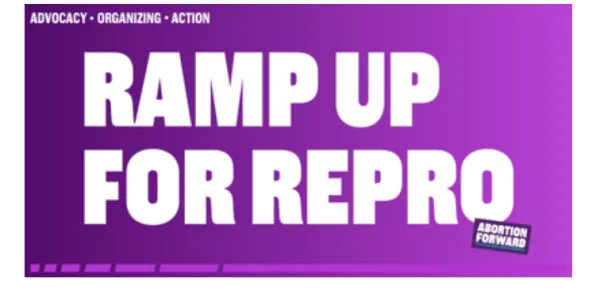
Tuesday, August 25, 2026 6 to 7:30PM
Online via Zoom
Our monthly Ramp Up for Repro trainings will further acquaint you with political advocacy tactics, repro lingo, and help you find the best way to get involved. Every month, we'll dive into movement ecology, abortion messaging, the current landscape of abortion access, and provide next steps for you to take action! The majority of the content of this training does not change between sessions, with the exception of current events and policy updates. In an effort to create a safe and secure space for all participants to engage, these trainings are not recorded. Zoom link will be emailed to attendees separately.
Haga clic aquí para español - Click here for Spanish
When news broke that Louisiana police arrested ICE agent Thomas Bailey for breaking into his ex-partner’s home, it was a chilling reminder of how unchecked authority metastasizes. As commentator Lynn Tramonte observed, it parallels law enforcement officers using Flock surveillance cameras to spy on women.
There is a pervasive mindset among certain agents that their badge grants them total access to our spaces, our privacy, and our minds—a dangerous entitlement fueled by impunity.

Pigs are considered unclean in Islam, which is why Muslims do not consume pork. But the idea that Muslims are somehow “scared of pigs” is simply naive and ignorant.
The Old Testament also explicitly forbade the consumption of pork. In the Hebrew Scriptures, pork was classified as “unclean” under the Mosaic Law. Leviticus 11:7–8 and Deuteronomy 14:8 state that the pig is unclean and that its meat should not be eaten.
Christians generally understand the New Testament to teach that these dietary restrictions no longer apply to them. Regardless, the historical fact remains that prohibitions against pork are not unique to Islam.
So, why don’t those who use pigs to insult Muslims place pig heads in front of synagogues or Jewish homes? An inquiring mind wants to know.
Leaving a severed pig’s head in front of a mosque is not simply an expression of an opinion about Islam. In that context, it can be an act intended to intimidate, provoke, and spread religious hatred and bigotry.

I still find myself fuming at the way ostensibly well-informed individuals can stand right in the heart of the empire denouncing its targets, as we saw in the open letter that a group of left-wing western individuals addressed “to Iran’s political prisoners” framing Iran as a “source of oppression” equal to the US and its allies.
It’s crazy this even needs to be said, but if you are a westerner your ONLY job is to oppose the abuses of the western empire. Not Iran. Not China. Not Russia, Cuba or North Korea.
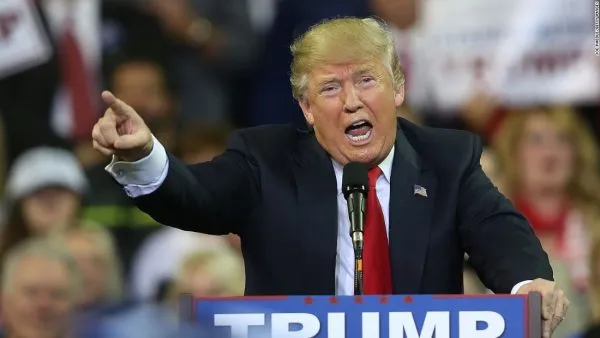
As I have observed in the past, it is possible to be entertained nearly every week by the antics of President Donald J Trump, though one’s amusement often changes to annoyance or even to disgust when the consequences of the behavior become clear. To be sure, it would be difficult to top the just surfaced account of February’s chickenhawk parade involving the Air Force One plane-switching in Ankara after a NATO meeting. It was unparalleled for its sheer me-first Trumpean disrespect for the poor bastards who are forced to travel with the president and endure the vicious prattle of America’s top golf cheater. When Trump’s Press Secretary Karoline Leavitt resigned several days later, possibly connected to her being set up by the president as one of the victims of a possible terrorist attack, Trump posted on his Truth Social site a picture of himself with the caption “The Best Press Secretary.” He was putting down Leavitt with an insult and nominating himself!
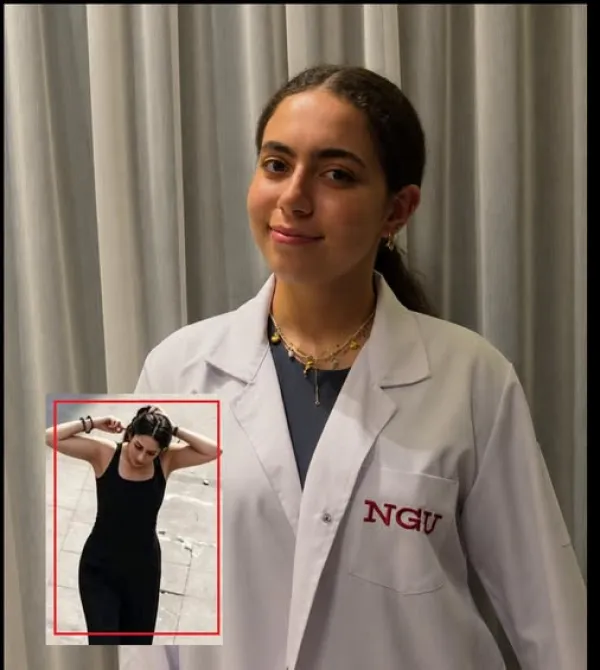
Haya Amr Fawzy, an Egyptian medical student, became widely known after helping injured people during the Arabella Plaza Mall fire and explosion in New Cairo on August 13, 2026. Egyptian media have described her as the “heroine” of the Arabella Mall incident.
Who is Haya Amr Fawzy?
Fawzy is a third-year medical student at New Giza University’s Faculty of Medicine.
She happened to be at Arabella Plaza when the incident occurred. According to her account, she heard a friend screaming and realized that something serious had happened.
Rather than simply leaving, she began assessing and assisting injured people, using the first aid and emergency-response skills she had learned during medical school.
What did she actually do?
Her account is particularly striking.
After the explosion and fire, she saw people lying injured and blood on the ground. She tied her hair back and began helping. She said the gesture was instinctive because she wanted to concentrate on treating people.
One of the first people she approached had already died. She asked others nearby to cover the person’s body out of respect.